
Decorating with Plants: What Works, What Struggles, and What to Expect in Real Homes

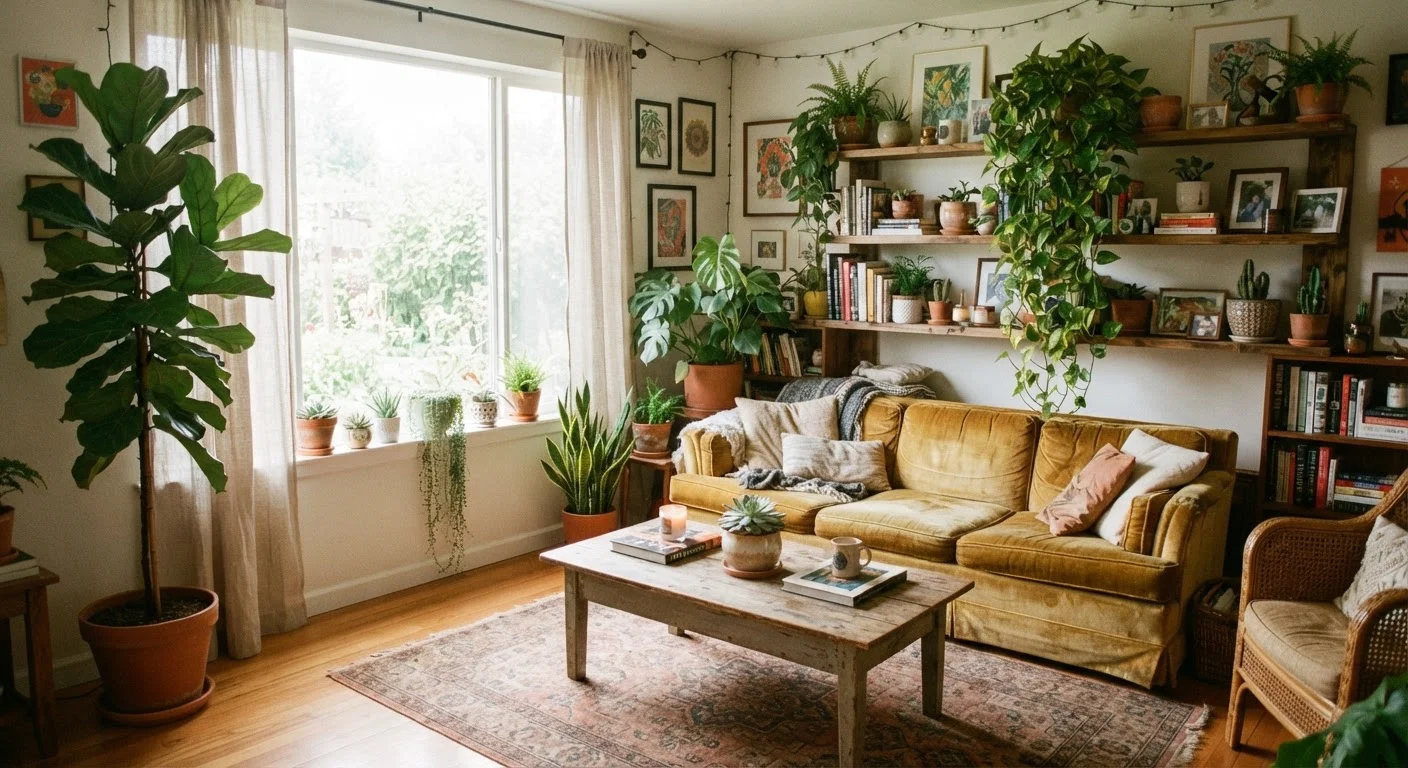
Photo: faqsvault.com editorial
Key Takeaways
- Light availability is the single most important factor in determining which plants will thrive indoors.
- Plants add texture, color, and a sense of life to interiors that few other decorating elements can replicate.
- Overwatering — not underwatering — is the most common reason houseplants fail.
- Some popular plant choices can be toxic to pets and young children; always research before buying.
- Matching plant size and placement to the room's scale prevents visual imbalance.
- Even low-maintenance plants require consistent attention to light, humidity, and seasonal changes.
Adds organic texture no manufactured item replicates
Varied leaf shapes, sizes, and shades introduce visual depth that complements both minimalist and maximalist interiors. This layering effect is difficult to achieve with furniture or artwork alone.
Accessible entry point at almost any budget
Many popular houseplants — pothos, spider plants, snake plants — are widely available at low cost and propagate easily, allowing a collection to grow over time without significant ongoing expense.
Softens hard architectural lines and corners
A tall plant placed in an empty corner or trailing greenery along a bookshelf can visually soften spaces dominated by straight lines, particularly in modern or industrial-style rooms.
Creates focal points and anchors room arrangements
A large specimen plant — such as a monstera or fiddle-leaf fig — can serve as a natural focal point in the same way a piece of statement furniture does, drawing the eye and grounding the room.
Connects indoor spaces to natural rhythms
Watching plants grow, change seasonally, and respond to care adds a dynamic quality to a room that static decor cannot provide, which many homeowners find deeply satisfying.
Light requirements are frequently underestimated
A room that feels bright to human eyes may offer far less usable light than most plants need. Without adequate light, plants decline gradually, making it easy to misattribute the problem to watering.
Overwatering kills more plants than neglect does
Root rot from excessive moisture is the leading cause of houseplant death. Many popular plants — including succulents, snake plants, and ZZ plants — prefer to dry out significantly between waterings.
Some species are toxic to pets and children
Common decorative plants including philodendrons, pothos, and peace lilies are toxic to cats and dogs if ingested. Researching toxicity before purchasing is essential for households with pets or young children.
Seasonal changes disrupt care routines
Light angles, indoor humidity, and heating systems all shift across seasons, meaning a care routine that works in summer may lead to overwatering or dehydration in winter months.
Pest infestations can spread quickly between plants
Spider mites, fungus gnats, and mealybugs are common indoor plant pests. An infestation on one plant can spread to others in the same space if not identified and addressed promptly.
Larger plants require ongoing repotting and maintenance
Fast-growing species will eventually outgrow their containers, requiring repotting — a task that involves appropriate soil, container sizing knowledge, and some physical effort.
Why Plants Belong in the Interior Decorating Conversation
Interior decorating is often framed around paint colors, furniture arrangements, and textiles — but plants occupy a unique position in the toolkit. They introduce organic texture, movement, and color in a way that manufactured objects simply cannot. A trailing pothos cascading from a high shelf or a sculptural snake plant anchoring a corner does something no throw pillow can: it signals that a space is alive.
Plants also work across budgets and styles. Whether you're furnishing a studio apartment or refreshing a family room, greenery can be incorporated for very little money. That said, this isn't a "set it and forget it" decorating strategy. Before diving in, it's worth reading through our room planning checklist to assess your light exposure, traffic flow, and available surfaces — factors that directly determine whether your plants will thrive or struggle.
The Real Advantages: What Plants Genuinely Deliver
Understanding what plants authentically contribute — rather than what marketing suggests — helps you make smarter placement choices.
Adds organic texture no manufactured item replicates
Varied leaf shapes, sizes, and shades introduce visual depth that complements both minimalist and maximalist interiors. This layering effect is difficult to achieve with furniture or artwork alone.
Accessible entry point at almost any budget
Many popular houseplants — pothos, spider plants, snake plants — are widely available at low cost and propagate easily, allowing a collection to grow over time without significant ongoing expense.
Softens hard architectural lines and corners
A tall plant placed in an empty corner or trailing greenery along a bookshelf can visually soften spaces dominated by straight lines, particularly in modern or industrial-style rooms.
Creates focal points and anchors room arrangements
A large specimen plant — such as a monstera or fiddle-leaf fig — can serve as a natural focal point in the same way a piece of statement furniture does, drawing the eye and grounding the room.
Connects indoor spaces to natural rhythms
Watching plants grow, change seasonally, and respond to care adds a dynamic quality to a room that static decor cannot provide, which many homeowners find deeply satisfying.
~1 in 3
US households actively keep houseplants
According to data from the National Gardening Association, houseplant ownership has grown steadily over the past decade, with younger adults driving much of the increase.
#1 mistake
Overwatering cited as top cause of plant death
Horticultural extension services consistently identify overwatering and poor drainage as the most common reasons houseplants fail in home environments.
Plants also pair naturally with other natural materials. If you're already working with wood, linen, or wicker in a room, greenery deepens the effect. The article on natural materials in the home explores how to layer these elements without the space feeling overwhelming.
The Honest Drawbacks: What Plants Demand in Return
Every experienced plant keeper has a graveyard of good intentions. The challenges aren't reasons to avoid plants, but they're worth knowing before you invest time and money.
Light requirements are frequently underestimated
A room that feels bright to human eyes may offer far less usable light than most plants need. Without adequate light, plants decline gradually, making it easy to misattribute the problem to watering.
Overwatering kills more plants than neglect does
Root rot from excessive moisture is the leading cause of houseplant death. Many popular plants — including succulents, snake plants, and ZZ plants — prefer to dry out significantly between waterings.
Some species are toxic to pets and children
Common decorative plants including philodendrons, pothos, and peace lilies are toxic to cats and dogs if ingested. Researching toxicity before purchasing is essential for households with pets or young children.
Seasonal changes disrupt care routines
Light angles, indoor humidity, and heating systems all shift across seasons, meaning a care routine that works in summer may lead to overwatering or dehydration in winter months.
Pest infestations can spread quickly between plants
Spider mites, fungus gnats, and mealybugs are common indoor plant pests. An infestation on one plant can spread to others in the same space if not identified and addressed promptly.
Larger plants require ongoing repotting and maintenance
Fast-growing species will eventually outgrow their containers, requiring repotting — a task that involves appropriate soil, container sizing knowledge, and some physical effort.
Placement missteps are also common — and they connect to broader decorating pitfalls. A too-small plant on a large empty wall reads the same as furniture that's out of scale. Our guide on decorating decisions that backfire covers how proportion affects a room's overall feel.
Getting Placement Right: Light Is Non-Negotiable
The single most reliable predictor of indoor plant success is light — specifically, how much direct or indirect sunlight a given spot receives throughout the day. North-facing rooms receive the least light and suit low-light tolerant species like ZZ plants, cast iron plants, and certain ferns. South- and west-facing windows deliver stronger light suitable for succulents, most herbs, and many flowering plants.
How to Actually Measure Your Indoor Light
Artificial lighting can supplement natural light in darker spaces — grow lights on a timer can extend the viable range of plants you can keep. If you're already thinking about how light affects your space more broadly, the piece on lighting as decoration is a useful companion read.
In smaller rooms, scale matters just as much as light. A towering fiddle-leaf fig can overwhelm a compact space, while a single small succulent may disappear entirely. For strategies on decorating with proportion in mind, see small space decorating strategies.
What to Realistically Expect Over Time
New plant owners often expect steady, Instagram-worthy growth from day one. Reality is more gradual. Most houseplants go through an adjustment period after being moved — leaves may yellow or drop as the plant acclimates to different light and humidity levels. This is normal and not an immediate sign of failure.
Seasons affect indoor plants more than many people realize. Growth slows significantly in winter months when light levels drop, and watering needs decrease accordingly. Overwatering during winter is one of the most common mistakes. Checking soil moisture before every watering — rather than following a rigid schedule — is a more reliable approach.
If you develop an interest in the broader world of plant care and outdoor growing, our Garden & Outdoors hub covers gardening techniques suited to every experience level. For those considering watering systems for larger indoor collections or sunrooms, understanding drip irrigation versus sprinkler options may also be relevant.
Start with two or three plants you've researched thoroughly. Observe them for a full season before expanding your collection. This measured approach prevents the frustration of mass die-offs and gives you a realistic sense of your home's growing conditions.
All published content on this website is for informational and educational purposes only and should not be taken as professional advice. We recommend that readers seek expert opinion before making any decisions. The website is not responsible for any actions taken based on the information provided on this website. We are not liable for any inaccuracies, modifications, or omissions in information. Moreover, external links or third-party content are provided for convenience; we are not liable for their correctness. Users are advised to verify every piece of information before they use it for any purpose.