
Drylining, Plastering, and Render: Which Wall Finish Suits Your Project?

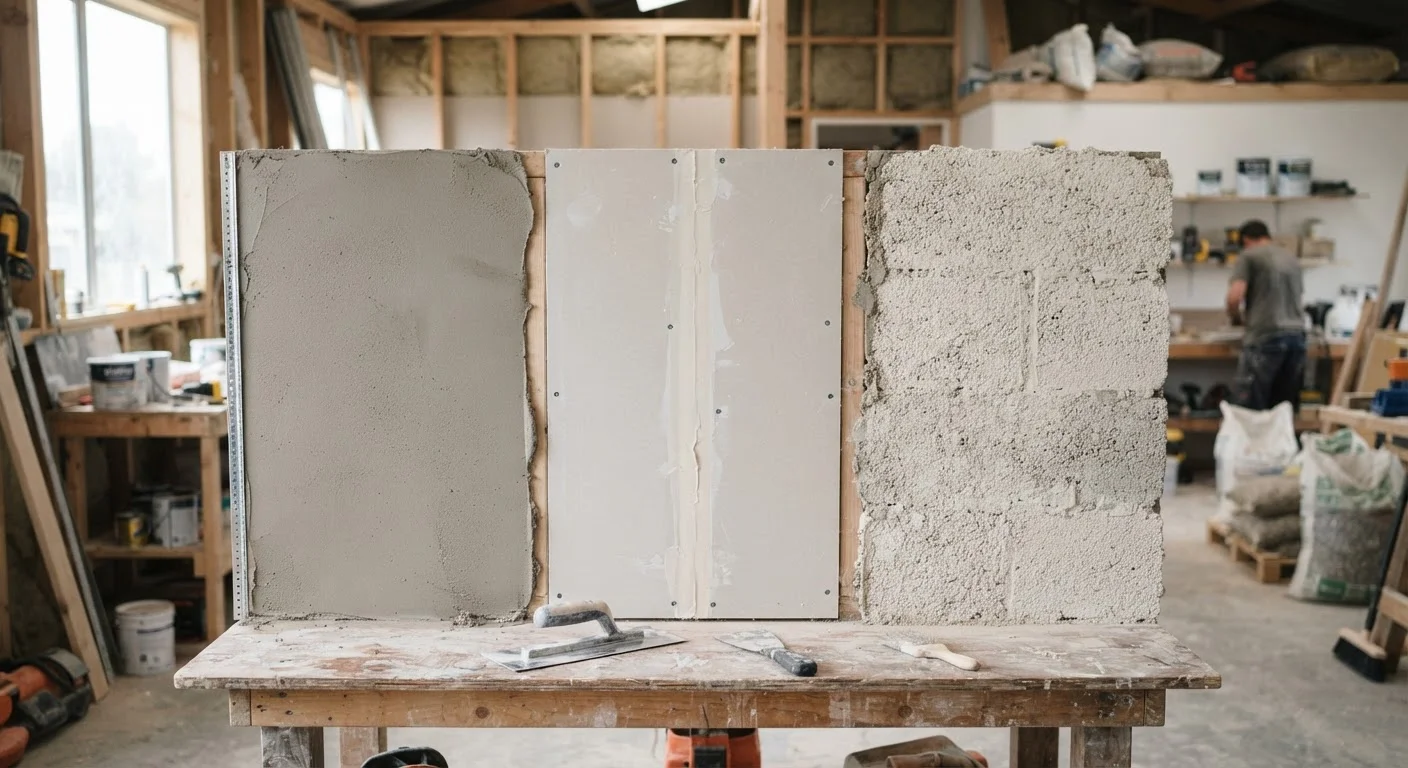
Photo: faqsvault.com editorial
Key Takeaways
- Drylining is faster, requires less drying time, and suits new builds or walls with insulation needs.
- Wet plastering delivers a harder, more durable finish ideal for high-traffic interior walls.
- Render is designed for exterior surfaces and must be matched carefully to the substrate material.
- Each method has different skill demands — some steps are DIY-friendly, others require a licensed tradesperson.
- Wall condition, location (interior vs. exterior), and budget all influence which finish is appropriate.
Understanding the Three Approaches
When it comes to finishing walls — whether inside a new extension or outside a Victorian terrace — the three most common methods are drylining, wet plastering, and render. Each addresses a different set of conditions, and picking the wrong one for your situation can lead to cracking, damp issues, or premature failure.
Drylining involves fixing rigid boards (typically plasterboard) directly to a wall or onto a studwork frame, then finishing the surface with jointing compound or a thin skim coat of plaster. Wet plastering applies two or more layers of wet plaster directly onto a masonry or lathe surface, building up to a smooth, hard finish. Render is a cement-, lime-, or acrylic-based coating applied to exterior walls to protect against weather and provide a decorative surface.
Understanding what each method is built to do — and where it falls short — is the first step toward making a confident decision for your project. If you're also considering structural changes as part of a wider renovation, the guide to load-bearing vs. partition walls is a useful starting point before any wall work begins.
Drylining: Speed and Practicality
Drylining — sometimes called dry walling or boarding — has become the go-to method in modern construction, largely because it's fast. Plasterboard panels are fixed to metal or timber framing (or directly to masonry using adhesive dabs), and the joints are taped and filled. The result can be skimmed with a thin plaster coat or finished directly with paint-ready compound.
The practical advantages are significant. There's no waiting weeks for wet plaster to cure — drying times are measured in days rather than weeks, and the wall can be decorated relatively soon after finishing. Drylining also creates a cavity that can house insulation, pipework, or electrical cables without chasing into the masonry — a real asset during renovations.
However, drylining does reduce room width (even marginally), and the boards are more vulnerable to impact damage than a traditional hard-plaster wall. Hollow-wall fixings are needed for hanging anything substantial, and the finish is generally less hard-wearing than solid plaster. It's also less suited to walls that are out of plumb or uneven — in those cases, a thicker dot-and-dab approach or a studwork frame adds considerable complexity.
When to Call in a Professional Plasterer
Drylining is well-suited to DIY-capable homeowners for straightforward stud walls and simple boarding jobs. However, achieving a seamless, professional skim coat on top of the boards typically requires a skilled plasterer — attempting this without experience usually results in visible trowel marks and uneven surfaces.
Wet Plastering: Durability and a Hard Finish
Traditional wet plastering involves applying a base coat (known as the scratch or brown coat) directly onto masonry, followed by a finishing coat that's troweled smooth. The result is a solid, dense surface that's highly resistant to knocks and dents — something drylining simply can't replicate.
In older homes especially, wet plastering is often the more sympathetic choice. Lime-based plasters, in particular, allow walls to breathe, which matters enormously in properties where moisture management is a concern. If you're dealing with any history of damp issues, the complete guide to damp in the home explains why vapor-permeable finishes are so important in certain wall types.
The trade-offs are time and skill. Wet plaster takes considerably longer to dry — full cure can take several weeks depending on conditions — and the application requires genuine expertise to achieve a flat, consistent finish. Attempting large areas of wet plastering without experience typically ends in a rough, wavy surface that's difficult to correct after the fact. Professional plastering is also more labor-intensive and generally more expensive per square foot than drylining.
| Drylining | Wet Plastering | Render | |
|---|---|---|---|
| Primary use | Interior walls and ceilings | Interior masonry walls | Exterior walls |
| Drying / cure time | Days (skim coat) | Weeks (full cure) | Days to weeks by product |
| Durability | Moderate; impact-sensitive | High; hard surface | High if correctly applied |
| Insulation capability | Yes, cavity allows insulation | Limited | None (surface coat only) |
| Breathability | Moderate | High (lime-based) | Depends on render type |
| DIY suitability | Boarding: moderate; skimming: hard | Not recommended | Not recommended |
| Relative cost (labor) | Lower | Higher | Variable by product/access |
Render: The Exterior Wall Solution
Render is specifically formulated for exterior applications, though some lime renders are used internally on solid-wall period properties. Its primary job is to protect the underlying masonry from rain penetration, wind, and freeze-thaw cycles — all while providing a decorative finish that can be painted, textured, or left as-is depending on the product.
Choosing the right render type matters. Traditional sand-and-cement render is widely used but relatively rigid — it can crack if applied over moving substrates or onto walls with active moisture ingress. Lime render is more flexible and breathable, making it the preferred option for older stone or soft brick walls. Acrylic or silicone-modified renders offer excellent weather resistance and come pre-colored, but they trap moisture if applied over breathable substrates. Matching the render to the wall material is critical; mismatches are a leading cause of render failure.
Render work on external walls at height, or any work that involves scaffolding, should always be carried out by a qualified tradesperson. Surface preparation — including treating any existing cracks, cleaning biological growth, and applying appropriate bonding agents — is as important as the render itself. Skipping prep is the most common reason renders bubble, crack, or delaminate within a few years.
Once your walls are finished and ready to decorate, the decision of what goes on them is equally important. Explore the options in our guide to wallpaper vs. paint to plan the next stage of your interior.
Making the Right Choice for Your Project
The decision ultimately comes down to three factors: where the wall is (interior or exterior), what condition it's in, and what you need the finished surface to do. Interior walls in newer builds or renovation projects where speed and thermal performance matter lean toward drylining. Interior walls in older or solid-wall properties where durability and breathability are priorities favor wet plastering. Any exterior surface that needs weather protection points clearly to render.
Budget and timeline play a role too. Drylining generally comes in at a lower labor cost and a shorter project duration. Wet plastering costs more in skilled labor but produces a harder, longer-lasting surface. Render costs vary considerably based on product type, wall area, and accessibility — scaffolding alone can represent a significant portion of the total.
For those planning a broader interior refresh once walls are finished, the gallery wall planning guide offers practical advice on making the most of freshly finished wall surfaces — without causing damage in the process.
This article provides general guidance for educational purposes only. For work involving structural elements, electrical services, gas lines, or regulated trades, always consult a licensed professional and verify local permit and code requirements before proceeding.
All published content on this website is for informational and educational purposes only and should not be taken as professional advice. We recommend that readers seek expert opinion before making any decisions. The website is not responsible for any actions taken based on the information provided on this website. We are not liable for any inaccuracies, modifications, or omissions in information. Moreover, external links or third-party content are provided for convenience; we are not liable for their correctness. Users are advised to verify every piece of information before they use it for any purpose.