
Energy Efficiency Upgrades That Change How a Home Actually Feels

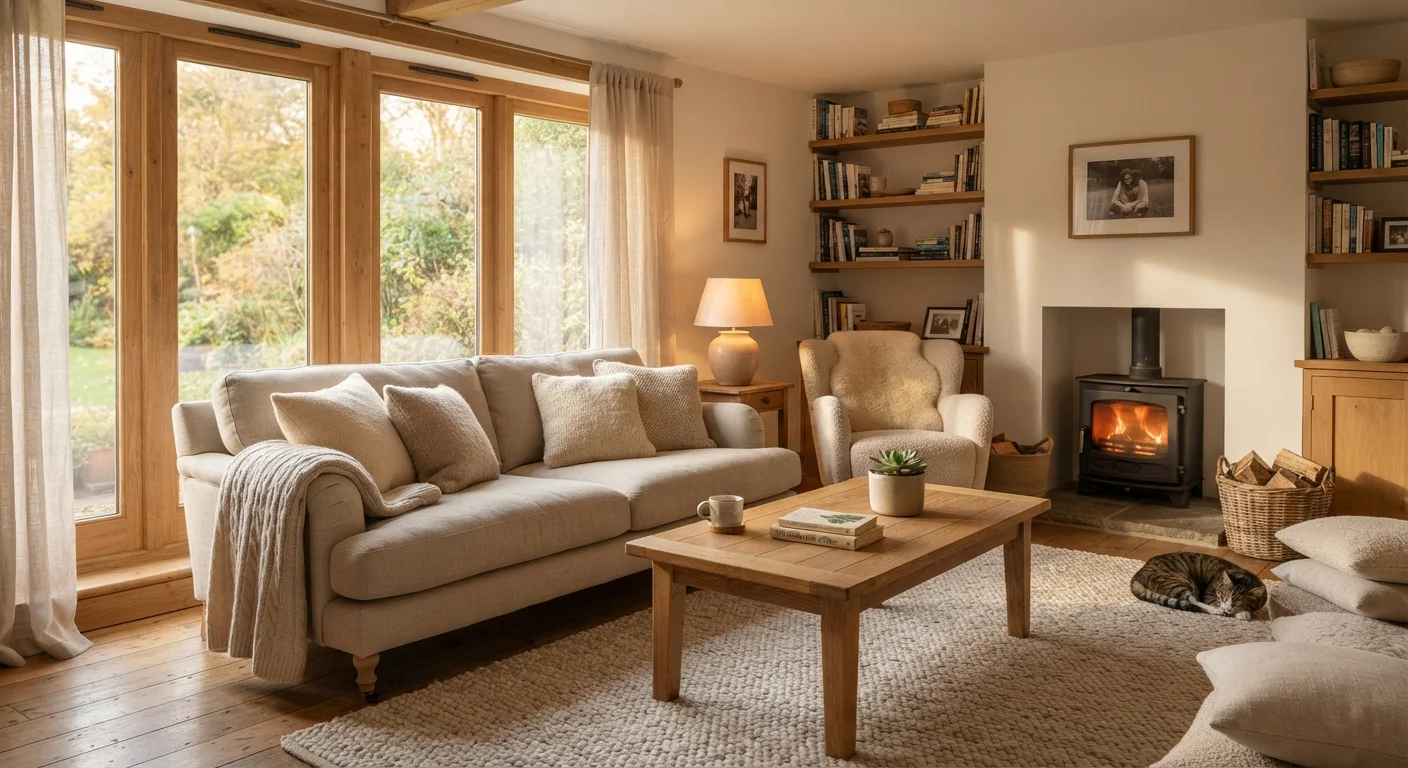
Photo: faqsvault.com editorial
Key Takeaways
- Air sealing is one of the most cost-effective upgrades homeowners can make before tackling larger projects.
- Insulation and glazing improvements reduce drafts, cold spots, and temperature swings that affect daily comfort.
- Mechanical ventilation addresses indoor air quality problems that insulation alone can actually worsen.
- Strategic upgrades vary significantly by home age, climate zone, and existing construction — a professional assessment helps prioritize.
- Many efficiency improvements are DIY-friendly; others involving gas or structural systems require licensed contractors.
Why Efficiency Upgrades Are Really a Comfort Story
Most homeowners think about energy efficiency in terms of monthly bills. That's a reasonable starting point — but it misses what these upgrades actually deliver day to day. A well-insulated, properly sealed, and adequately ventilated home doesn't just cost less to run. It feels fundamentally different: fewer cold drafts, more even temperatures room to room, quieter interiors, and air that doesn't feel stale or dry.
The problem is that efficiency improvements vary wildly in their real-world impact. Some are transformative; others are modest. Some are safe weekend DIY projects; others require a licensed professional, especially when they involve gas systems, structural modifications, or electrical work. This list focuses on the upgrades that genuinely change the lived experience of a home — and is honest about where to draw the DIY line.
If you're planning wider improvements alongside these upgrades, the room-by-room home renovation checklist can help you sequence tasks efficiently.
Air Sealing: The Invisible First Step
Before adding insulation or upgrading windows, sealing the gaps where conditioned air escapes makes every other upgrade more effective. Common leakage points include electrical outlets on exterior walls, gaps around plumbing penetrations, attic hatches, and the junction between the top plate of walls and the attic floor.
Many of these areas are accessible to confident DIYers using canned spray foam and weatherstripping. However, identifying all the leaks accurately benefits from a blower door test — a diagnostic tool used by certified energy auditors that pressurizes the home to reveal where air is moving. This test is typically offered by utility programs or independent energy auditors.
Where it matters most: Older homes, particularly those built before the 1980s, tend to have significant air leakage that insulation alone won't solve.
Sealing air leaks before adding insulation makes every other upgrade more effective.
Attic Insulation: The Highest-Return Surface
Heat rises, and in under-insulated homes, a significant portion of heating energy escapes through the ceiling into an unconditioned attic. Adding or upgrading attic insulation is consistently cited by building science professionals as one of the most impactful single improvements for thermal comfort.
Blown-in cellulose or fiberglass insulation can be installed by experienced DIYers using rented blowing equipment, though the attic must be properly air-sealed first. The recommended R-value — a measure of thermal resistance — varies by climate zone. The U.S. Department of Energy publishes zone-specific recommendations that are worth consulting before purchasing materials.
Where it matters most: Top-floor rooms that are too hot in summer and too cold in winter are a strong signal of insufficient attic insulation.
Attic insulation is consistently among the highest-return single improvements for home thermal comfort.
Window and Door Glazing Upgrades
Single-pane windows are a major source of heat loss in winter and unwanted heat gain in summer. They also create cold radiant surfaces near seating areas, making rooms feel chilly even when the air temperature is adequate. Upgrading to double- or triple-pane units with low-emissivity (low-e) coatings addresses both problems and noticeably changes how comfortable it feels to sit near a window.
Full window replacement is a significant investment and typically a job for a professional installer to ensure correct weatherproofing. A more accessible intermediate option is interior or exterior storm windows, which add a second pane over existing frames at lower cost. Door weatherstripping and threshold seals are straightforward DIY improvements that address another common leakage point.
Where it matters most: Living areas with large window areas facing north or exposed to prevailing winter winds benefit most immediately.
Cold radiant surfaces from single-pane windows make rooms feel chilly even when air temperature is fine.
Crawl Space and Basement Encapsulation
In homes with vented crawl spaces or uninsulated basements, moisture and cold air migrate upward into living spaces, contributing to cold floors, musty odors, and in some cases, mold growth. Crawl space encapsulation — sealing the floor and walls with a heavy vapor barrier and often adding insulation — can dramatically improve ground-floor comfort.
This work ranges from straightforward (laying a vapor barrier on a dry crawl space floor) to complex (addressing standing moisture, inadequate drainage, or existing mold). Any visible mold or persistent moisture issues should be assessed and remediated by a professional before encapsulation traps problems in place.
Where it matters most: Homes with cold first-floor floors in winter, or persistent musty smells rising from below, often trace directly to an unmanaged crawl space.
Crawl space encapsulation can eliminate cold floors and musty odors that insulation in walls won't touch.
Mechanical Ventilation for Tighter Homes
There's a well-known principle in building science: seal tight, ventilate right. As a home becomes more airtight, natural air exchanges that used to dilute indoor pollutants — from cooking, cleaning products, off-gassing materials, and occupants themselves — are reduced. Without a strategy to replace that air exchange, indoor air quality can decline even as comfort improves.
Mechanical ventilation options include exhaust-only systems (bathroom fans running on a timer), supply-only systems, and balanced HRV or ERV units that exchange stale indoor air for fresh outdoor air while recovering a significant portion of the thermal energy. HRV and ERV installation should be handled by an HVAC professional to ensure correct sizing and duct integration.
Where it matters most: Any home that has undergone significant air sealing or insulation work, or that has known indoor air quality concerns.
Sealing a home without adding mechanical ventilation can quietly worsen indoor air quality.
Thermal Mass and Interior Strategies That Complement Upgrades
Not every comfort improvement requires construction. Thermal mass — the ability of dense materials to absorb and slowly release heat — can be leveraged through interior choices. Tile, concrete, and stone flooring in south-facing rooms absorb daytime solar heat and release it gradually. Heavy curtains on poorly glazed windows reduce nighttime heat loss. Rugs over cold floors provide immediate comfort while longer-term improvements are planned.
These strategies work best as complements to structural upgrades, not substitutes. They're also a natural bridge between efficiency work and interior design — decorating choices that improve comfort can be surprisingly effective when paired with a home that's already better sealed and insulated.
Where it matters most: Rooms with significant south-facing glazing in climates with cold winters and sunny days benefit most from passive thermal mass strategies.
Heavy curtains and thermal-mass flooring can meaningfully reduce heat loss while structural upgrades are planned.
Putting It All Together
Efficiency upgrades work best as a system rather than isolated fixes. Air sealing and insulation work in tandem; improved glazing pairs well with interior thermal comfort strategies. It's also worth understanding that tightening a home's envelope can concentrate indoor pollutants if ventilation isn't addressed at the same time — this is why mechanical ventilation often follows major insulation work.
Get a Home Energy Audit First
Before committing to any significant project, an energy audit from a certified home energy assessor can identify where your home is actually losing conditioned air and heat. The results are often surprising — the biggest gains are rarely where homeowners expect them. For homes undergoing broader changes, it's also worth reading about the thermal trade-offs in open layouts: open-plan conversions can affect how hard these systems need to work.
None of these upgrades replaces good interior design, but they set the conditions for it. Lighting choices and textile decisions feel more impactful in a home where the temperature is stable and drafts aren't competing with your atmosphere. Efficiency and comfort, it turns out, are two sides of the same investment.
All published content on this website is for informational and educational purposes only and should not be taken as professional advice. We recommend that readers seek expert opinion before making any decisions. The website is not responsible for any actions taken based on the information provided on this website. We are not liable for any inaccuracies, modifications, or omissions in information. Moreover, external links or third-party content are provided for convenience; we are not liable for their correctness. Users are advised to verify every piece of information before they use it for any purpose.