
Before You Redecorate a Room: A Planning Checklist to Save Time and Effort

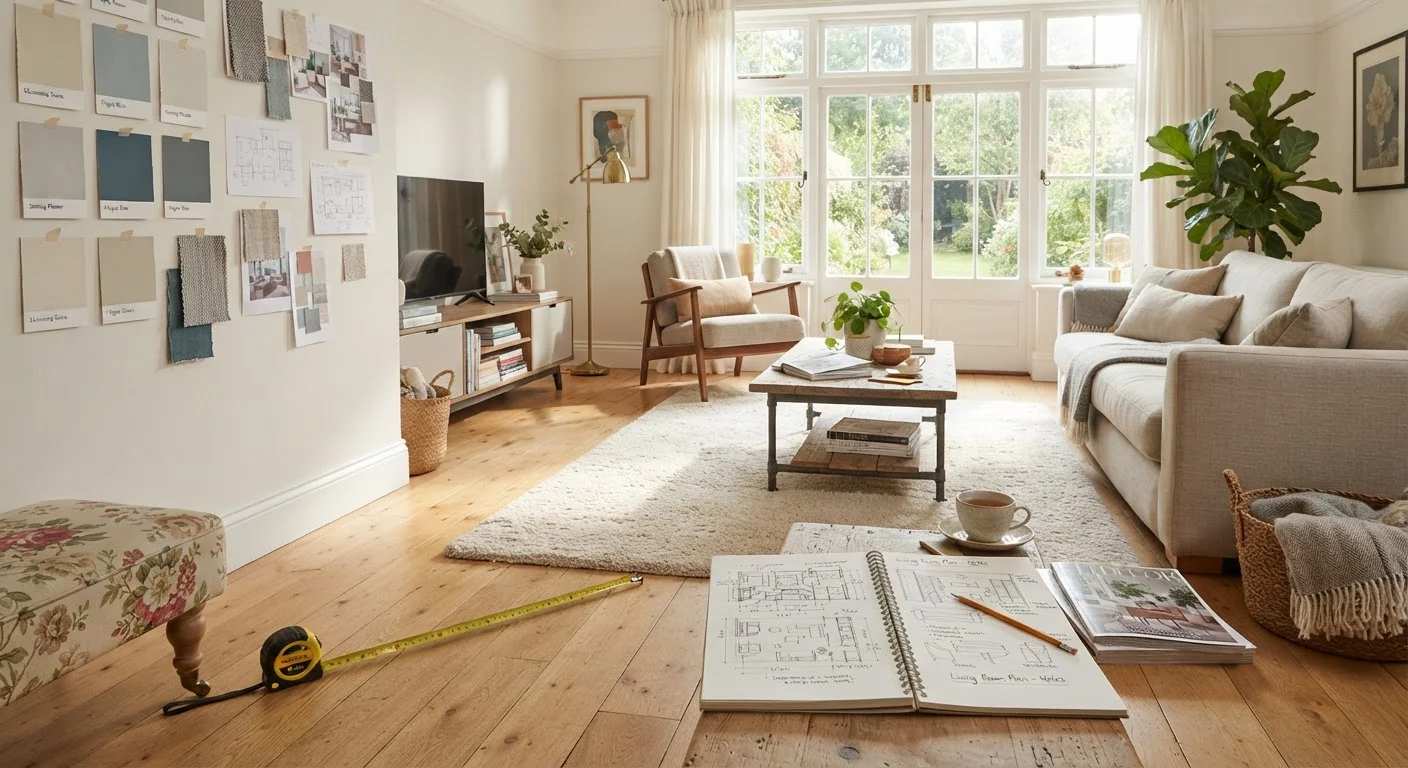
Photo: faqsvault.com editorial
Key Takeaways
- Accurate room measurements prevent costly furniture and material misjudgments before you spend a dollar.
- Understanding natural light patterns in a room dramatically affects color and material choices.
- Traffic flow and daily habits should shape furniture layout decisions more than aesthetics alone.
- Storage needs and lifestyle requirements must be mapped out before selecting any decorative elements.
- Setting a realistic budget with a contingency buffer helps keep the project on track.
Why Planning Before Redecorating Actually Saves You Money
Redecorating a room is one of the most satisfying home projects you can take on — but it's also one of the easiest to get wrong. Most costly mistakes happen not during the work itself, but in the days before it starts, when excitement outpaces preparation. Ordering a sofa that won't clear the doorframe, painting a wall a shade that looks nothing like the swatch, or buying storage that doesn't match how your household actually lives — these are avoidable with a structured planning session.
This checklist walks you through every meaningful consideration before you commit to a color, a piece of furniture, or a layout direction. Think of it as a reset button: a way to see your room clearly instead of through the lens of what you wish it could be. Whether you're working with a modest budget or have more room to invest, the same fundamentals apply.
For projects that go beyond decorating into structural or functional changes, the Room-by-Room Home Renovation Checklist is a natural companion resource once this planning stage is complete.
Room Measurements & Spatial Audit
Natural Light & Orientation
Traffic Flow & Daily Habits
Storage Needs Assessment
Existing Elements to Keep or Remove
Budget & Contingency Planning
How to Use This Checklist
Work through each group in order — they're sequenced so that earlier decisions inform later ones. Gather your tools before you begin: a tape measure, a notepad or planning app, and ideally a few hours when the room gets both morning and afternoon light. Revisit natural light observations at different times of day before finalizing any color choices.
Tape Measure
Essential for capturing accurate room dimensions, furniture sizes, and doorway clearances.
Graph Paper or Floor Plan App
Helps you draw a scaled floor plan to test furniture arrangements before moving or purchasing anything.
Notepad or Planning Document
Keeps all your observations, measurements, and decisions in one organized place throughout the planning process.
Paint Swatches and Sample Pots
Allows you to test colors on actual walls under real lighting conditions before committing to a full paint purchase.
Compass or Smartphone Compass App
Determines which direction windows face so you can accurately predict natural light quality and color temperature.
Fabric or Material Samples
Lets you evaluate how upholstery, curtain fabric, or flooring materials look alongside other room elements in context.
Don't skip the lifestyle and habit questions — they're often the most revealing. A beautifully styled room that doesn't fit how your household actually moves through it will feel wrong within weeks. If you're considering adding plants as part of your decorating scheme, an honest look at decorating with plants can help you plan placement and light requirements realistically before committing to greenery as a design element.
Completing this checklist thoroughly typically takes 30 to 60 minutes, but the time invested upfront reliably prevents hours of backtracking — and budget overruns — down the road. For broader context on home improvement planning, keep in mind that decorating decisions often intersect with practical upgrades, especially when rethinking lighting, built-in storage, or flooring.
Don't Skip the Measurements Step
All published content on this website is for informational and educational purposes only and should not be taken as professional advice. We recommend that readers seek expert opinion before making any decisions. The website is not responsible for any actions taken based on the information provided on this website. We are not liable for any inaccuracies, modifications, or omissions in information. Moreover, external links or third-party content are provided for convenience; we are not liable for their correctness. Users are advised to verify every piece of information before they use it for any purpose.