
Natural Materials in the Home: What Wicker, Linen, Stone, and Wood Actually Bring to a Room

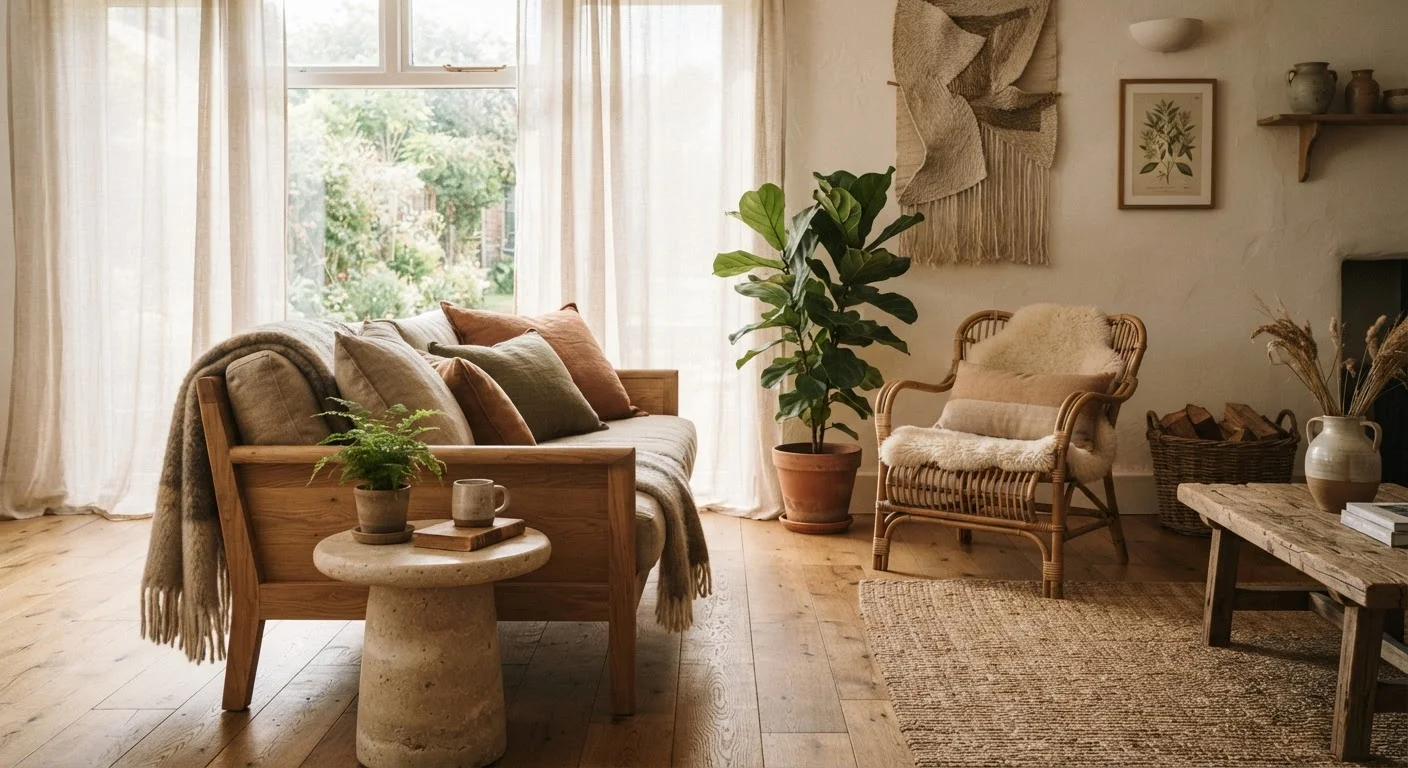
Photo: faqsvault.com editorial
Key Takeaways
- Each natural material has specific strengths — understanding them helps you place them where they perform best.
- Layering textures (rough with smooth, hard with soft) creates visual interest without visual clutter.
- Natural materials work across virtually every budget, from linen cushion covers to solid wood furniture.
- Mixing materials requires repetition — repeating a tone or finish ties disparate pieces together.
- Stone and wood are durable but need appropriate care to maintain their appearance over time.
- You don't need to redesign a room to introduce natural materials — small additions make a measurable difference.
Why Natural Materials Feel Different from Synthetic Ones
Walk into a room furnished entirely with synthetic materials — laminate flooring, polyester upholstery, plastic accessories — and something feels slightly off, even if you can't name it immediately. Now walk into a room with a worn oak floor, linen curtains, and a stone countertop. The difference isn't just visual. Natural materials have variation: grain, weave, texture, and slight irregularity that the eye reads as warmth and authenticity.
That quality isn't accidental. Wood, stone, wicker, and linen each carry the physical record of how they formed — growth rings, mineral striations, hand-woven inconsistencies. Those imperfections are exactly what makes them interesting to live with over time. They also age gracefully in a way most synthetic materials don't, developing what designers call patina rather than simply looking worn.
Understanding what each material actually brings to a room — functionally and aesthetically — helps you make choices that will serve your space for years. See how these material choices interact with color in our guide to color and mood for the complete picture.
Wicker: Lightness, Texture, and Casual Warmth
Wicker is a weaving technique applied to natural plant fibers — most commonly rattan, seagrass, willow, or bamboo. The result is a material that is lightweight, structurally strong for its weight, and rich in surface texture. In a room, wicker introduces what designers call visual breath: its open weave breaks up solid surfaces and keeps heavy arrangements from feeling dense.
Practically, wicker furniture works best in rooms that don't experience sustained moisture or direct rain, making it better suited to sunrooms and interior spaces than uncovered outdoor patios. Indoors, a wicker chair, lamp shade, or storage basket adds a casual, slightly relaxed quality that suits living rooms, bedrooms, and reading corners particularly well.
Because wicker has a relatively low visual weight, it also works in smaller rooms without crowding them. For more strategies on making compact spaces feel open, see our small space decorating guide.
Starting Small with Wicker
Linen: Softness with Structure
Linen is made from the fibers of the flax plant and has been used in homes for thousands of years — for good reason. It is breathable, durable, and gets softer with each wash without losing structural integrity. Unlike cotton, linen has a slight texture and natural variation in color that gives it a relaxed elegance rather than a polished formality.
In decorating terms, linen reads as calm. Linen curtains filter light beautifully, softening a room without blocking it. Linen upholstery adds tactile warmth to furniture while keeping the look light — especially in neutral tones like flax, sand, or soft gray. Linen bedding has a laid-back quality that suits bedrooms aiming for a restful, unforced atmosphere.
One honest consideration: linen wrinkles. For some rooms and aesthetics, that's part of the charm. In more formal settings, it may require more maintenance. Blended linen fabrics (mixed with cotton or a small percentage of synthetic fiber) wrinkle less and can be a practical middle ground.
Stone: Weight, Permanence, and Grounding Presence
Stone — whether marble, slate, travertine, granite, or limestone — brings an unmistakable sense of permanence to a room. It is heavy, cool to the touch, and visually dense in a way that anchors spaces. Used as a countertop, floor tile, fireplace surround, or even a decorative tray or bookend, stone immediately adds material credibility to a space.
Different stones have distinct personalities. Marble is associated with elegance and formality; its veining creates movement on an otherwise still surface. Slate and limestone are quieter, more matte, and suit informal or earthy interiors. Travertine, with its naturally pitted surface, bridges the gap — it has texture and warmth while still reading as refined.
Stone requires care. Unsealed porous stones — particularly marble and limestone — can stain from oils, wine, and acidic liquids. Sealing is typically recommended upon installation and periodically thereafter, depending on use. For larger projects involving stone as a wall or floor finish, consult a qualified contractor, as installation requirements vary significantly by stone type and substrate.
~7%
Annual growth in biophilic design market
Market research tracking the interior design and architecture industry has noted consistent growth in demand for nature-inspired design elements, including natural materials, in residential spaces.
3–5x
Lifespan advantage of hardwood vs. carpet
Home improvement industry estimates generally suggest hardwood flooring can last several decades with proper care, while carpet typically requires replacement every 8–15 years depending on traffic and quality.
Top 3
Most requested natural finishes in remodels
Wood, stone, and natural fiber textiles consistently appear among the most requested material categories in residential renovation surveys conducted by design industry organizations.
Wood: Versatility Across Every Room
Wood is arguably the most versatile natural material available for interior use. It functions structurally (as flooring, beams, cabinetry), decoratively (as picture frames, shelving, bowls), and as furniture across every room in a home. Its range of tones — from pale ash and birch to deep walnut and mahogany — means it works in both light, airy spaces and dark, dramatic ones.
The warmth wood brings to a room is well understood, but its acoustic quality is less often discussed: wood floors and wood-paneled walls tend to make spaces feel quieter and more contained than hard tile or bare concrete, which can reverberate sound. That acoustic softening contributes significantly to why wood-heavy rooms feel comfortable.
Wood does require maintenance. Hardwood floors benefit from periodic refinishing over decades of use. Solid wood furniture should be kept away from prolonged direct sunlight to prevent fading and away from heating vents that can cause cracking. Engineered wood products are often more dimensionally stable in humid environments — a practical consideration for kitchens and basements.
When layering wood with other natural materials, consider varying the finish: a matte rough-sawn wood shelf against a smooth stone wall, or polished hardwood floors beneath a nubby wicker chair. That contrast of textures is what keeps a room from feeling monotonous.
Layering Natural Materials Without Overwhelming a Room
The most common mistake when working with natural materials is treating them as a theme rather than a toolkit. A room where every surface is wicker, linen, stone, and exposed wood simultaneously can feel more like a catalog display than a lived-in home. Layering successfully comes down to a few guiding principles.
Limit your palette. Natural materials naturally share warm, earthy undertones — but they vary in lightness and saturation. Choose materials that cluster in a similar tonal range (warm neutrals, cooler grays, or deep earth tones) rather than mixing warm and cool freely.
Vary texture deliberately. Pairing smooth with rough, matte with slightly shiny, and soft with hard creates visual rhythm. A smooth stone coffee table feels more interesting next to a nubby linen sofa. A polished wood floor benefits from a jute rug that breaks its reflectivity.
Use repetition to create cohesion. If you have a rattan pendant lamp, echoing the material in a smaller wicker basket elsewhere ties the room together without doubling up on the same piece. Repetition of tone, material, or shape is what makes eclectic rooms feel intentional rather than accidental. Our guide to mixing decorating styles covers these principles in more depth.
Finally, don't underestimate plants as connective tissue between natural materials — they share the same organic sensibility and help the whole composition breathe. See our honest guide to decorating with plants for realistic advice on making greenery work in your space.
Frequently Asked Questions
All published content on this website is for informational and educational purposes only and should not be taken as professional advice. We recommend that readers seek expert opinion before making any decisions. The website is not responsible for any actions taken based on the information provided on this website. We are not liable for any inaccuracies, modifications, or omissions in information. Moreover, external links or third-party content are provided for convenience; we are not liable for their correctness. Users are advised to verify every piece of information before they use it for any purpose.