
When Decorating Decisions Backfire: Pitfalls That Make Rooms Feel Off

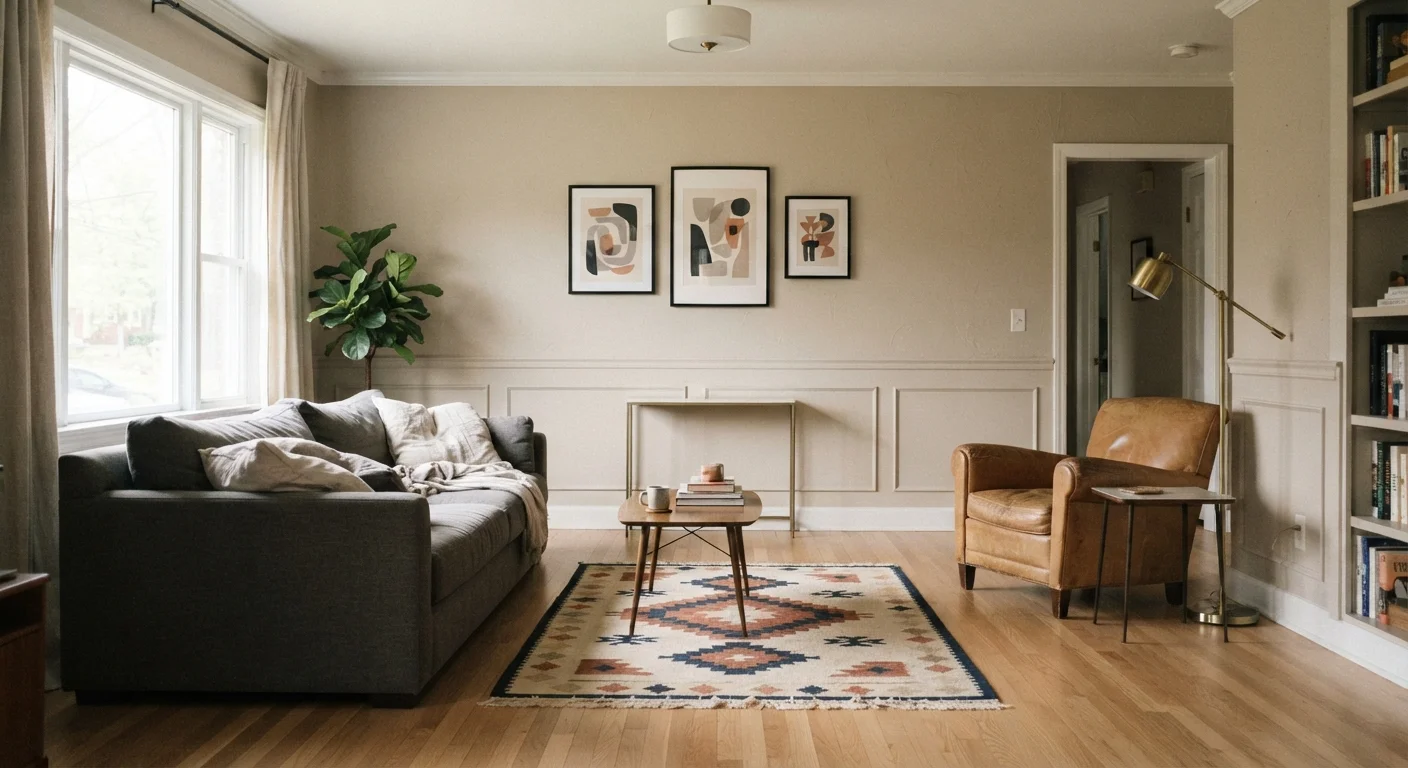
Photo: faqsvault.com editorial
Key Takeaways
- Furniture that's too small for a room creates a disconnected, unanchored look that disrupts visual balance.
- Rugs should extend under the front legs of key furniture to ground the seating arrangement properly.
- Artwork hung too high loses its connection to the furniture and wall below it.
- Lighting layered from multiple sources creates depth; relying solely on overhead fixtures flattens a room.
- Ignoring traffic flow when placing furniture can make even a beautiful room feel frustrating to use.
- Too many focal points compete for attention — rooms benefit from one clear visual anchor.
Why Rooms Can Feel Off Even When Everything Looks Fine
You've painted the walls, arranged the furniture, added some art — and yet something still feels wrong. It's one of the most common frustrations in home decorating: the instinct that a room isn't quite working, without a clear sense of why. Most of the time, the culprit is a handful of recurring missteps that quietly disrupt proportion, balance, and flow.
These aren't expensive mistakes to fix, but they are easy to overlook, especially when you're decorating piece by piece over time. Before making new purchases or starting from scratch, it's worth checking whether any of the issues below are at play. For a more systematic approach to spotting problems early, a room planning checklist can help you work through measurements, light, and layout before committing to a direction.
Common Decorating Mistakes That Disrupt a Room's Balance
The following mistakes show up in rooms of every style and budget. Recognizing them is the first step toward correcting them.
Choosing a rug that's too small for the seating area, leaving furniture legs floating on bare floor.
Hanging artwork too high on the wall, disconnecting it from the furniture and space below.
Relying on a single overhead light source to illuminate an entire room.
Placing furniture without considering how people will actually move through the space.
Filling a room with multiple focal points that compete rather than complement each other.
Choosing furniture that's consistently too small or too delicate for the room's scale and ceiling height.
If you're working through these issues while also trying to stretch a budget, it's worth knowing that cutting costs in the wrong places can compound the problem. Excessive frugality can backfire in home decorating just as in other areas — buying a rug that's two sizes too small to save money often means buying a second, correctly sized one later.
Proportion, Pattern, and the Bigger Picture
Many of these mistakes share a common root: decisions made in isolation rather than in the context of the whole room. A lamp that looks fine in a showroom may be dwarfed by a high ceiling at home. A bold pattern that works on one pillow can overwhelm a space when repeated across every surface.
Proportion is one of the hardest decorating skills to develop intuitively, partly because rooms look different empty versus furnished, and partly because we tend to focus on individual items rather than relationships between them. Understanding visual weight and contrast across styles can help train the eye to evaluate items as part of a whole composition rather than as standalone choices.
57–60"
Recommended artwork center height from floor
Interior design educators widely cite this range as corresponding to average human eye level, keeping art visually connected to the space.
30–36"
Minimum clearance for main traffic paths
Ergonomics guidelines for interior layout suggest this range allows two people to pass comfortably without furniture feeling obstructive.
3 types
Lighting layers needed for a balanced room
Designers consistently recommend ambient, task, and accent lighting working together to create depth and flexibility in any interior space.
If you've inherited a room full of existing pieces and are trying to make them work together, don't overlook the role that plants can play in softening transitions and adding organic scale. Decorating with plants offers honest guidance on where greenery helps — and where it struggles — in real home environments.
And before assuming a decorating rule is holding you back, it's worth questioning whether it's actually a rule at all. Many common decorating beliefs — like the idea that dark walls make a room smaller — don't hold up to scrutiny and may be stopping you from trying solutions that would actually work.
All published content on this website is for informational and educational purposes only and should not be taken as professional advice. We recommend that readers seek expert opinion before making any decisions. The website is not responsible for any actions taken based on the information provided on this website. We are not liable for any inaccuracies, modifications, or omissions in information. Moreover, external links or third-party content are provided for convenience; we are not liable for their correctness. Users are advised to verify every piece of information before they use it for any purpose.