
Drip Irrigation vs. Sprinkler Systems for Home Gardens

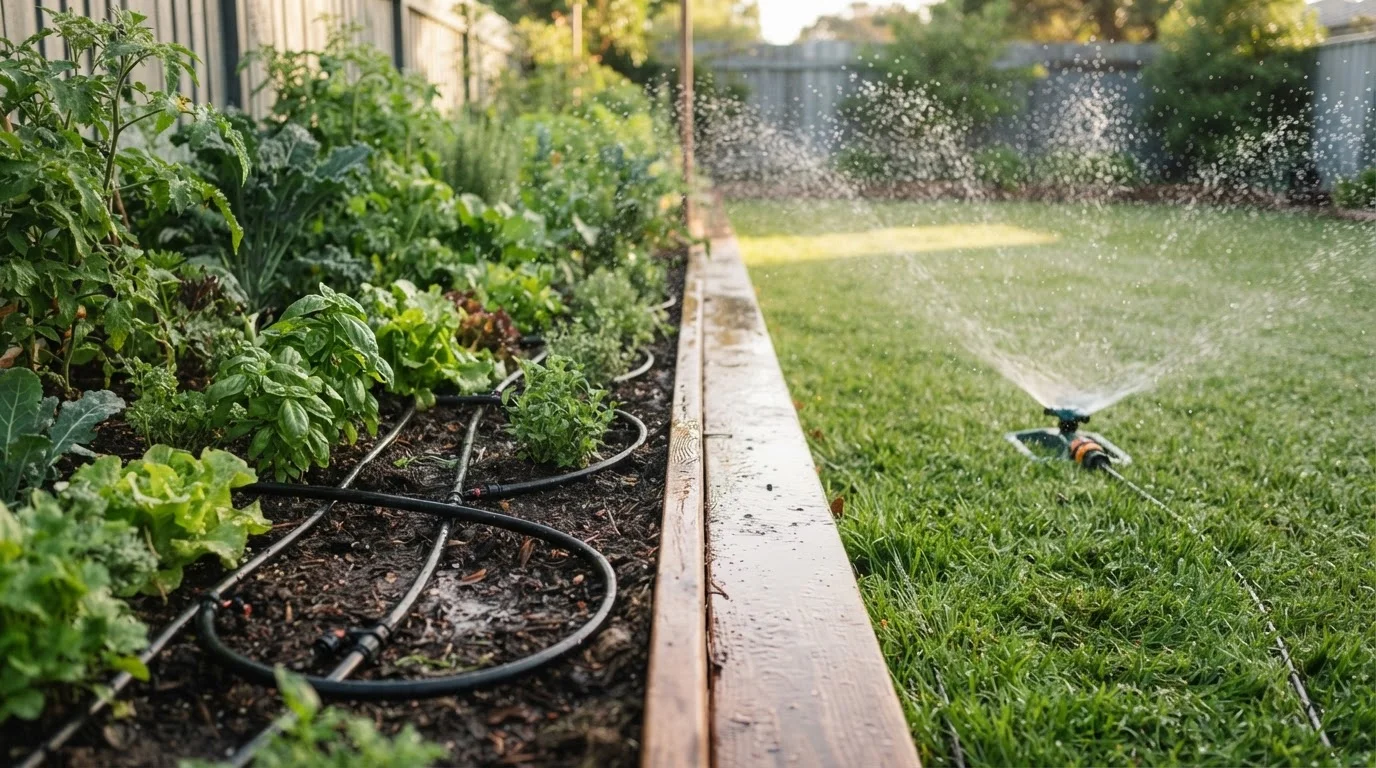
Photo: faqsvault.com editorial
Key Takeaways
- Drip irrigation delivers water directly to root zones, reducing evaporation and weed growth.
- Sprinkler systems cover larger areas quickly but lose more water to evaporation and wind drift.
- Drip setups typically cost more upfront but can lower water bills over time.
- Sprinklers suit lawns and open beds; drip works better for rows of vegetables or mixed planting.
- Both systems can be automated with timers, but installation complexity differs significantly.
- Soil type, garden layout, and local climate should all factor into your system choice.
How Each System Works
Understanding how water actually reaches your plants is the starting point for any system comparison.
Drip irrigation uses a network of flexible tubing and small emitters — sometimes called drippers or micro-sprayers — to release water slowly and directly at or near each plant's root zone. Water seeps into the soil gradually, typically at a rate of 0.5 to 2 gallons per hour per emitter, encouraging roots to grow downward where moisture is most stable.
Sprinkler systems work by projecting water through the air in an arc or mist pattern, mimicking rainfall across a defined area. Fixed pop-up heads, oscillating sprinklers, and rotary heads are all common types. Coverage is broad by design — ideal for lawns and open beds — but water must travel through the air before reaching soil, which creates opportunities for loss.
Both systems can be connected to a hose bib or main water line and fitted with timers or smart controllers for automated watering schedules. The core difference lies in delivery precision: drip systems target individual plants, while sprinklers broadcast water broadly.
Water Efficiency and Plant Health
Water efficiency is one of the most meaningful differences between these two approaches, particularly as water costs and drought restrictions become more common across the US.
Drip systems are widely recognized as the more efficient option for planted beds. Because water is delivered close to the soil surface or just below it, evaporation losses are minimal. Weed seeds between rows also receive far less moisture, which can reduce germination and the time you spend pulling weeds. Keeping foliage dry also lowers the risk of fungal diseases such as powdery mildew, which thrive in humid leaf environments. This pairs well with other moisture-retention strategies — see our guide to garden mulching for how mulch and drip irrigation work together effectively.
Sprinkler systems can lose a notable portion of water to evaporation, especially when running during warm afternoons or in windy conditions. Watering at dawn helps reduce this, but foliar wetness remains a factor. That said, sprinklers do a better job distributing water across large, irregularly shaped surfaces like lawns where drip emitters would be impractical.
One shared risk for both systems is overwatering. Automated schedules set and forgotten can saturate soil beyond plant needs. If your plants show yellowing leaves or drooping despite regular watering, the culprit may be too much moisture. Our article on overwatering signs and fixes walks through how to identify and correct this common mistake.
| Criterion | Drip Irrigation | Sprinkler Systems |
|---|---|---|
| Water efficiency | High — minimal evaporation | Moderate — evaporation and drift losses |
| Best suited for | Vegetable beds, shrubs, containers | Lawns, large open areas |
| Installation complexity | Moderate — layout planning required | Low (portable) to high (in-ground) |
| Upfront cost | Low to moderate | Low (portable) to high (in-ground) |
| Weed suppression | Good — dry soil between plants | Poor — waters entire area including weeds |
| Foliar disease risk | Low — leaves stay dry | Higher — overhead wetting of leaves |
| Automation compatibility | Yes — timer and smart controller ready | Yes — timer and smart controller ready |
| Maintenance needs | Emitter cleaning, tubing checks | Head adjustment, winterizing in cold climates |
Installation, Cost, and Maintenance
Setup complexity and long-term upkeep deserve honest attention before you commit to either system.
Drip irrigation requires more planning at the outset. You'll need to map your planting layout, calculate emitter spacing and flow rates, and account for water pressure requirements. Kits for smaller garden beds are available at most hardware stores and are manageable for a motivated DIYer with a weekend to spare. Larger or more permanent installations may benefit from professional input, particularly if you're integrating with an in-ground water line. Emitters can clog over time — especially in areas with hard water — and tubing can shift or be disturbed by digging. Regular checks each season keep the system running cleanly.
Sprinkler systems range from simple portable units to permanently in-ground systems with zone valves. A basic oscillating or hose-end sprinkler is the easiest setup of any watering method — no tools required. In-ground sprinkler systems, however, are a more substantial installation project involving trenching, valve boxes, and often a backflow preventer required by local plumbing codes. Always verify permit and code requirements with your local municipality before installing in-ground systems. Once in place, in-ground systems are low maintenance but can suffer from head damage from lawn mowers or seasonal freeze-thaw cracking in cold climates.
In terms of cost, drip components are generally affordable individually but add up across larger gardens. In-ground sprinkler systems typically carry higher installation costs, especially with professional labor involved. Both systems repay attention to your garden's specific layout — which is equally true whether you're working with raised beds or in-ground planting.
Check Local Water Regulations First
Matching the System to Your Garden
No single watering system fits every garden, and many homeowners end up using a hybrid approach — drip for planted beds and sprinklers for lawn areas.
Consider your garden's plant density and spacing. Closely spaced vegetable rows, perennial borders, and container groupings are natural fits for drip irrigation. Wide-open turfgrass, newly seeded areas, and low-growing ground covers benefit from the even coverage of sprinklers.
Soil type also plays a role. Sandy soils drain quickly, meaning drip emitters with slower flow rates give water time to penetrate rather than run off. Dense clay soils absorb water slowly, which can lead to puddling under sprinkler heads — shorter, more frequent watering cycles help manage this.
Local climate matters too. In arid or drought-prone regions, the efficiency gains from drip irrigation can translate into meaningful water savings. In areas with regular rainfall, either system may work well as a supplement rather than a primary source. If you're exploring other ways to support plant health indoors as well as outdoors, our guide to decorating with plants covers light and moisture considerations for interior spaces.
Ultimately, the right system is the one that fits your garden's layout, your comfort level with installation, and your watering habits. Both drip and sprinkler systems can support healthy, thriving plants when matched thoughtfully to the space they serve.
All published content on this website is for informational and educational purposes only and should not be taken as professional advice. We recommend that readers seek expert opinion before making any decisions. The website is not responsible for any actions taken based on the information provided on this website. We are not liable for any inaccuracies, modifications, or omissions in information. Moreover, external links or third-party content are provided for convenience; we are not liable for their correctness. Users are advised to verify every piece of information before they use it for any purpose.