
E-Readers in Everyday Life: More Than Just a Digital Bookshelf

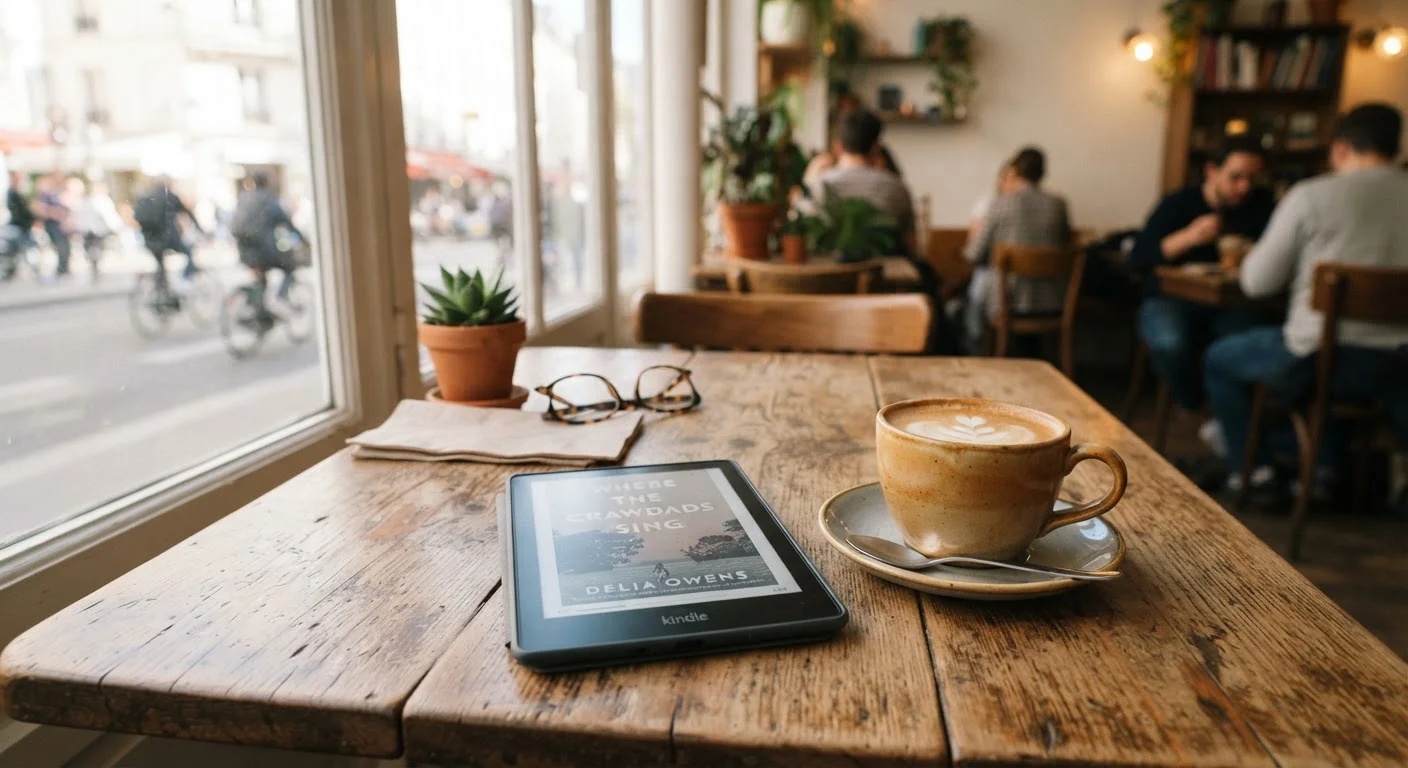
Photo: faqsvault.com editorial
Key Takeaways
- E-readers do far more than store books — they support commuting, studying, and document management.
- E Ink screens reduce eye strain compared to smartphones or tablets during long reading sessions.
- Most e-readers can connect to public library systems, making them a cost-effective reading tool.
- A single charge can last weeks, making e-readers one of the most battery-efficient gadgets available.
- E-readers can store thousands of titles in a device thinner than a typical paperback.
What an E-Reader Actually Does
Strip away the marketing language and an e-reader does something elegantly simple: it puts a library's worth of reading material in your pocket and makes it as comfortable to read as a printed page. Unlike a smartphone — which competes for your attention with notifications, social apps, and video — an e-reader is a single-purpose device built around the act of reading.
The defining feature is the E Ink display. Rather than projecting light at your eyes the way a phone or laptop screen does, E Ink mimics the appearance of real ink on paper by reflecting light from the environment around you. The result is a screen that doesn't cause the same visual fatigue associated with hours of smartphone use.
For readers who want to understand the terminology behind devices like this, the Everyday Gadget Glossary breaks down terms like E Ink, Wi-Fi bands, and battery capacity in plain language.
~3 weeks
Typical e-reader battery life on a single charge
E Ink displays consume power only during page turns, making weeks-long battery life achievable under normal reading conditions.
Thousands
Titles storable on a single e-reader device
Most e-readers offer several gigabytes of internal storage, allowing users to carry an entire reading library in a device thinner than most paperbacks.
180g
Approximate weight of a typical e-reader
Many popular e-reader models weigh less than a standard paperback novel, making them practical for one-handed use during commutes.
The Commuter's Case for an E-Reader
Anyone who takes public transit, rides in a carpool, or spends time in waiting rooms knows that idle time adds up fast. An e-reader turns that time into something purposeful without the distraction spiral that comes with pulling out a phone.
The physical advantages matter here. E-readers are typically lighter than a paperback novel of comparable length, and significantly lighter than a tablet. Holding one in one hand while standing on a subway is simply less tiring than balancing a tablet or propping up a phone.
Battery life is the other commuter-friendly feature that rarely gets enough credit. A charge that lasts weeks means there's no need to ration reading time or hunt for an outlet before heading out. For people who already manage charging schedules across multiple devices, this is a genuine relief — something explored further in our guide to managing your digital life across multiple devices.
Students and Lifelong Learners: A Practical Tool
E-readers have found a steady foothold in academic settings, though often quietly. Students can load textbooks, assigned readings, and research papers onto a single device. Built-in dictionary lookups, adjustable font sizes, and the ability to highlight passages without carrying a highlighter make them genuinely useful study companions.
The cost angle is worth noting. Many academic texts are available in digital formats at reduced prices compared to physical editions, and connecting an e-reader to a public library system through services like Libby or OverDrive can make a wide range of titles available at no cost. This matters for students on tight budgets and for lifelong learners who simply read a lot.
Adults returning to reading after a long break also report that adjustable font sizes reduce the friction of picking up longer texts — a small accessibility feature that can make a meaningful difference.
Beyond Books: Documents, Magazines, and More
One of the most underappreciated aspects of modern e-readers is their support for formats beyond standard e-books. Many devices accept PDFs, allowing users to load work documents, research papers, user manuals, or long-form journalism for distraction-free reading away from a desk.
Some e-readers have added note-taking capabilities, particularly models with stylus support. This shifts them closer to digital notebooks — useful for annotating reports or jotting down thoughts while reading. They haven't replaced tablets for heavy document work, but for review and annotation they're a capable option.
Digital magazines and newspapers are also well-supported on most platforms, often through subscription services that deliver new issues automatically. This makes the e-reader a reasonable replacement for the physical magazine pile that tends to accumulate unread on coffee tables.
Thinking about how an e-reader fits alongside your other devices? It's worth considering how screen-based tools interact with offline habits — a perspective covered in our piece on building a balanced daily stack.
The Overlooked Social Dimension
Reading has always carried a social dimension — book clubs, library visits, shared recommendations — and e-readers haven't erased that. Many platforms include features for sharing highlights, noting popular passages across a reader community, or syncing reading progress across devices for households that share content.
Libraries themselves play a larger role here than most people realize. Borrowing digital titles through a library card is often as simple as downloading an app, linking an account, and browsing a catalog. Public libraries have quietly become one of the most practical reasons to own an e-reader, particularly for readers who go through books quickly.
There's something fitting about a digital device reinforcing the value of third places like libraries and cafés — spaces that have always existed to support reading, learning, and community in parallel. An e-reader doesn't replace those spaces; for many users, it makes engaging with them easier.
Is an E-Reader Right for You?
An e-reader is most valuable for people who read regularly and want to do so more comfortably, cheaply, or conveniently. It's a focused device, not a multifunctional one — and that's genuinely its strength. If you find yourself constantly distracted when you try to read on a phone or tablet, the single-purpose nature of an e-reader may be exactly what helps you actually finish books.
It's less suited to people who primarily read illustrated content, need full tablet functionality, or rarely read long-form text. Like any tool, the value depends on how closely it matches your actual habits rather than an aspirational version of them.
For a broader look at how e-readers fit alongside other everyday gadgets, see the complete everyday gadgets overview — a useful reference for understanding which devices genuinely add value to daily life and which overlap with tools you already own.
Frequently Asked Questions
All published content on this website is for informational and educational purposes only and should not be taken as professional advice. We recommend that readers seek expert opinion before making any decisions. The website is not responsible for any actions taken based on the information provided on this website. We are not liable for any inaccuracies, modifications, or omissions in information. Moreover, external links or third-party content are provided for convenience; we are not liable for their correctness. Users are advised to verify every piece of information before they use it for any purpose.