
Digital Habits and Physical Habits: Building a Balanced Daily Stack

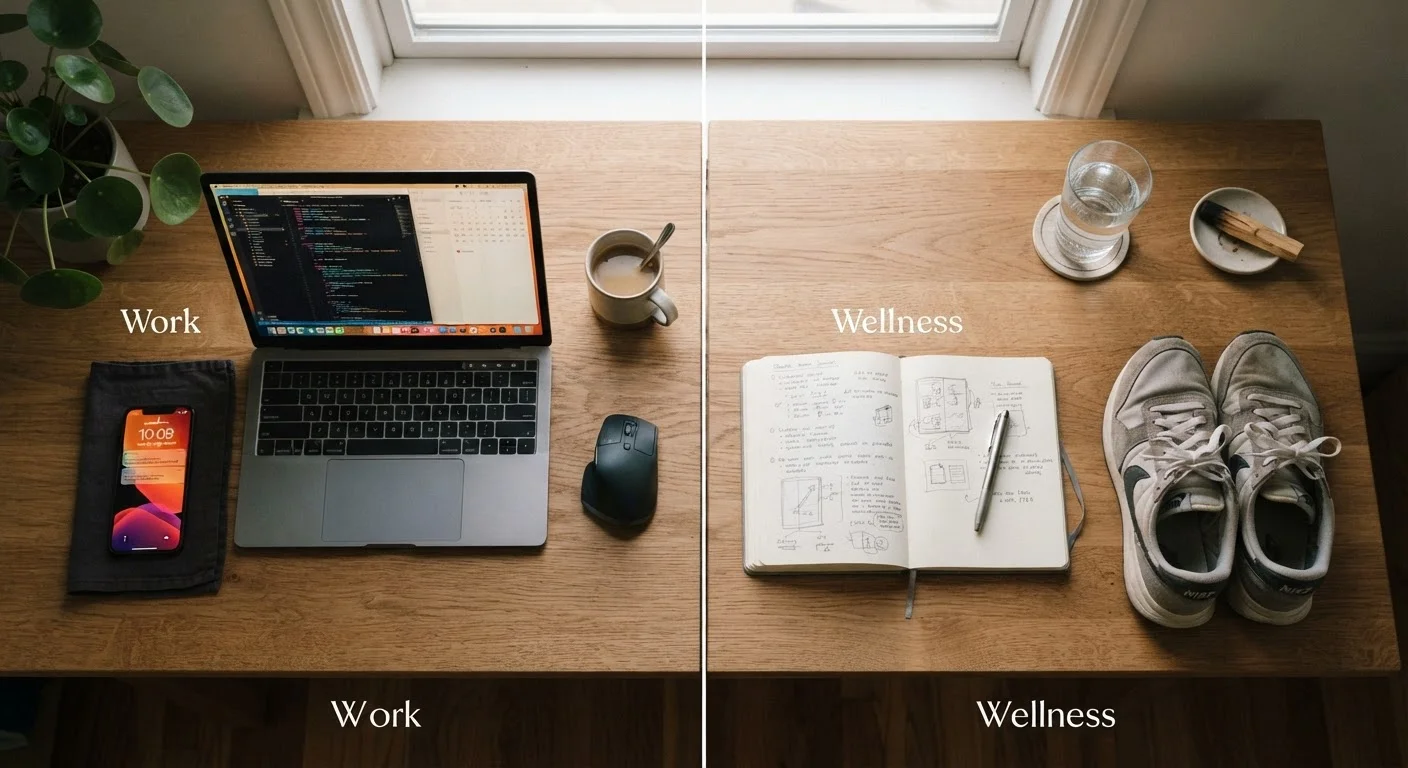
Photo: faqsvault.com editorial
Key Takeaways
- Digital and physical habits aren't opposites — they can complement each other when placed thoughtfully in your day.
- The order and timing of habits matters as much as the habits themselves.
- Small, consistent actions compound over time more reliably than ambitious overhauls.
- Auditing your current routine before adding new habits prevents overload and burnout.
- A balanced daily stack is personal — there's no universal template that works for everyone.
Why the Digital vs. Physical Framing Matters
Most conversations about habits treat screen time as the villain and physical activity as the cure. That framing is understandable but ultimately too simple. The reality is that a well-placed digital habit — a five-minute journaling app, a guided breathing exercise, a podcast walk — can actively support your physical and mental wellbeing. And a poorly timed physical habit, squeezed in out of obligation at the end of an exhausted day, may deliver less than you'd hope.
What matters more than the category of a habit is its function within your day. Does it energise or wind down? Does it require cognitive effort or allow your mind to rest? Does it come before or after something that depletes you? Understanding these dynamics is the foundation of what some habit researchers call a "daily stack" — a curated sequence of behaviours that work together rather than compete.
To understand why repetition is what makes any habit stick, see what consistent daily habits actually do to your brain. That neural context shapes everything that follows here.
Comparing Digital and Physical Habits Across Key Dimensions
Before building your stack, it helps to see how these two habit categories actually differ — and where they overlap more than you'd expect.
| Digital Habits | Physical Habits | |
|---|---|---|
| Primary benefit | Information, connection, focus support | Movement, energy, body regulation |
| Barrier to entry | Low — device usually already in hand | Moderate — may require space or equipment |
| Cognitive demand | Varies widely — from passive to intensive | Generally lower cognitive load |
| Sleep compatibility | Poor near bedtime for most people | Good, especially light stretching or walks |
| Tracking ease | Built-in via apps and device data | Requires manual or wearable tracking |
| Social component | Can connect or isolate depending on use | Often naturally social or community-based |
| Flexibility | High — location and time independent | Moderate — depends on environment |
Notice that both types of habit can serve similar ends: stress reduction, focus, energy management. The difference lies in how they deliver those outcomes and what they ask of your body and attention in return. A meditation app and a short walk both support stress regulation, for example, but through entirely different mechanisms and with different demands on your schedule.
This is why blending both categories — rather than prioritising one — tends to produce more durable routines. Building a morning routine that actually sticks explores how this principle plays out in the first hour of the day specifically.
Sequencing: How to Order Your Stack
The order in which you place habits can be just as important as the habits themselves. A few principles tend to hold across different routines and lifestyles:
- Front-load physical habits when possible. Movement early in the day — even something as brief as a ten-minute walk — supports alertness and mood in ways that often carry through later screen-heavy hours. See movement snacks for busy schedules for low-barrier options.
- Use digital habits as bridges. A short podcast, a reflective journaling app, or a structured breathing exercise can serve as a transition between high-effort tasks — softening the cognitive load rather than adding to it.
- Reserve screens-off time before bed. Research on sleep consistently suggests that winding down without bright screens supports sleep onset, though individual responses vary. Offline habits — reading a physical book, light stretching, or a brief gratitude practice — tend to fit this window well.
- Attach new habits to existing anchors. The practice of habit stacking — linking a new behaviour to something you already do reliably — dramatically improves follow-through, regardless of whether the new habit is digital or physical.
Your chronotype (whether you're naturally a morning or evening person) also shapes which anchor points work hardest for you. Morning vs. evening routines offers a more detailed look at that question.
Auditing What You Already Have
Before adding anything new to your day, it's worth taking stock of what's already there. Many people underestimate how full their existing routine already is — and adding a new habit on top of an overloaded day is a reliable route to dropping everything within a week.
A simple audit involves three questions: What habits am I actually doing consistently? Which ones feel effortful or forced? And where in my day do I have genuine, low-stress capacity for something new?
A structured weekly habit audit can help you work through this systematically. It's particularly useful for spotting habits that have quietly drifted — ones you think you're doing but have actually become irregular.
For ongoing check-ins beyond the habit level, a weekly wellbeing self-audit broadens the lens to include sleep, mood, and social connection — useful context for understanding why certain habits are sticking or slipping.
This article is for general informational and educational purposes only and is not a substitute for professional medical, psychological, or health advice. Always consult a qualified healthcare provider for guidance specific to your individual circumstances.
Building Your Balanced Stack: A Practical Starting Point
There's no universal template — a balanced daily stack for a remote worker with a flexible schedule looks very different from one built around a fixed nine-to-five with a commute. But a few structural ideas tend to translate across contexts:
- Choose one keystone habit as your anchor. A keystone habit is a behaviour whose effects ripple outward — regular sleep times, a consistent morning walk, or a daily offline reading practice. Keystone habits are worth identifying before you build anything else around them.
- Pair one digital and one physical habit per day segment. Morning, midday, and evening each benefit from at least one habit in each category — not to hit a quota, but to create natural rhythm and prevent either type from crowding the other out.
- Keep your tracking simple. Tracking habits without turning it into a second job is genuinely possible with a basic checklist or even a single daily question: did I do the thing?
- Build in review points. A weekly look at what's working — even five minutes — prevents the slow drift that unravels most routines. If life gets disrupted, keeping habits alive through disrupted seasons offers practical ways to protect your stack without rigidity.
The goal isn't a perfect day — it's a sequence that feels sustainable enough to show up for tomorrow, and the day after that.
All published content on this website is for informational and educational purposes only and should not be taken as professional advice. We recommend that readers seek expert opinion before making any decisions. The website is not responsible for any actions taken based on the information provided on this website. We are not liable for any inaccuracies, modifications, or omissions in information. Moreover, external links or third-party content are provided for convenience; we are not liable for their correctness. Users are advised to verify every piece of information before they use it for any purpose.