
Movement Snacks: Staying Active When You Can't Find an Hour to Exercise

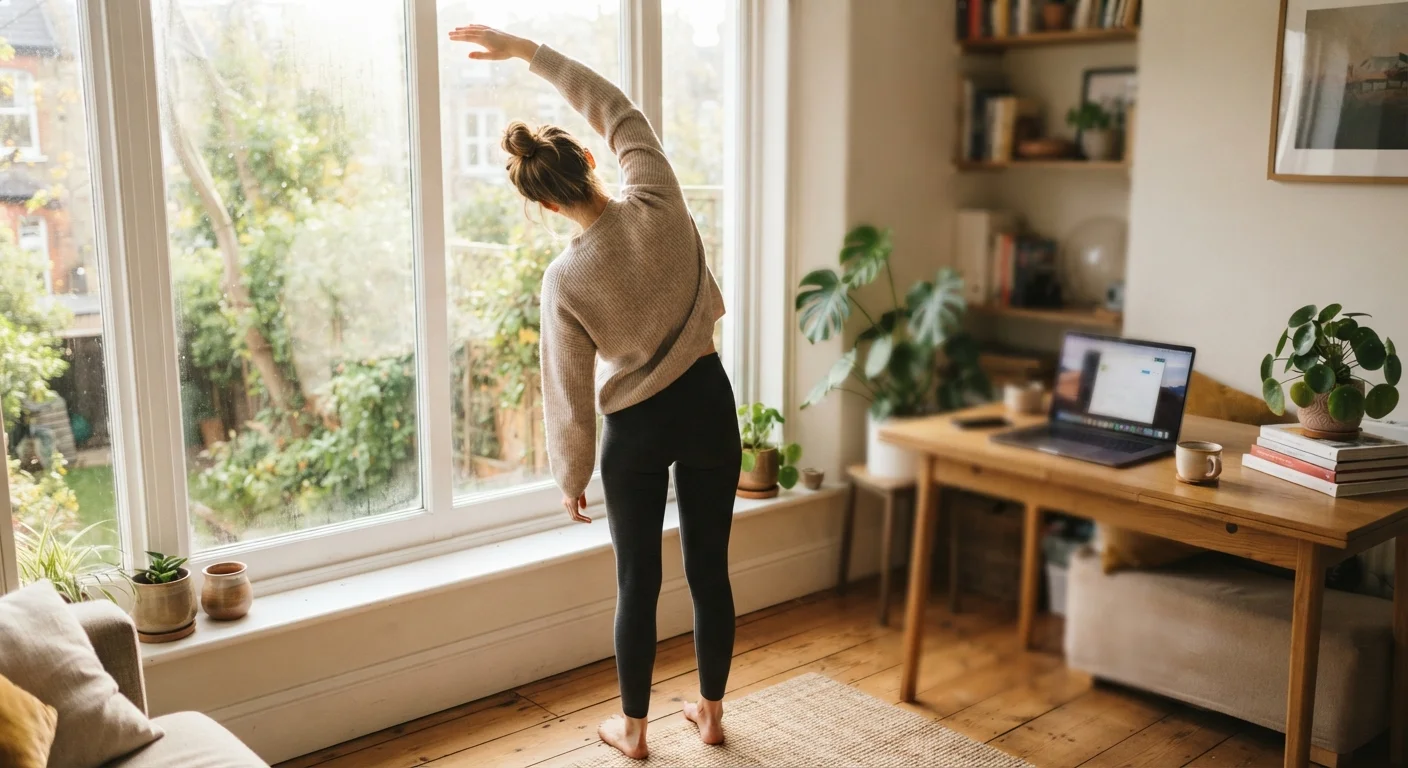
Photo: faqsvault.com editorial
Key Takeaways
- Movement snacks are brief, intentional activity breaks spread throughout the day — no gym required.
- Research suggests that accumulating short bouts of movement can offer meaningful health benefits.
- You don't need special equipment or a dedicated schedule to start movement snacking.
- Pairing movement with existing habits is one of the most reliable ways to make it stick.
- Movement snacking is not a replacement for sustained exercise when that is accessible to you — it's a practical complement.
What Are Movement Snacks?
A movement snack is exactly what it sounds like: a small, satisfying portion of physical activity taken throughout the day, rather than saved up for one long session. Think two minutes of marching in place between meetings, a set of calf raises while the kettle boils, or a quick walk around the block before you open your inbox.
The concept has gained attention in wellness research as more people recognize that sitting for long, unbroken stretches is a distinct challenge to wellbeing — separate from whether or not someone exercises in the traditional sense. Even people who do get to the gym regularly often spend the bulk of their waking hours barely moving.
Movement snacking isn't a replacement for sustained exercise when that's accessible to you. It's an accessible, low-barrier strategy for anyone who wants to weave more activity into the fabric of an ordinary day. It fits into the broader world of accessible wellness practices that don't require a gym membership or a free hour.
Movement snack
A short, intentional burst of physical activity — typically two to ten minutes — taken throughout the day rather than in one continuous workout session.
Sedentary behavior
Extended time spent sitting or lying down with little physical movement, which health researchers associate with various wellbeing risks over time.
NEAT
Non-Exercise Activity Thermogenesis — the energy your body uses for all movement that isn't structured exercise, including walking, standing, and everyday tasks.
Habit stacking
A behavior-change technique where you attach a new habit to an existing one, using the established routine as a reliable cue for the new action.
Accumulated activity
The idea that physical activity doesn't need to happen all at once — shorter bouts spread across a day can add up to meaningful totals.
Why Short Bursts of Activity Matter
For a long time, public health guidelines emphasized accumulating activity in bouts of at least ten minutes — the idea being that shorter periods simply didn't count. More recent research has shifted that thinking. Studies suggest that accumulated activity, spread across multiple short bouts, can support cardiovascular health, mood, and energy levels in meaningful ways.
What researchers consistently find is that breaking up sedentary time — even briefly — appears to have benefits distinct from longer workouts. Standing up and moving for just a few minutes can help regulate blood sugar responses and reduce the physical strain of prolonged sitting, according to general findings in exercise physiology literature.
On the mental side, brief movement has been linked to improvements in focus and mood, likely through a combination of increased blood flow and shifts in neurochemistry. For a deeper look at the language researchers use to describe these connections, the Physical Activity and Mental Health glossary is a helpful reference.
None of this means short movement sessions are a cure-all. They're one piece of a broader picture — and their value lies in consistency over time, not in any single two-minute effort.
Simple Movement Snacks to Try Today
The best movement snack is one you'll actually do. Here are some options across different settings and ability levels:
- Standing and stretching: Roll your shoulders, tilt your neck slowly side to side, and reach your arms overhead. Takes sixty seconds and counters the hunched posture of screen time.
- Stair climbing: If you have access to stairs, one or two flights at a moderate pace is a surprisingly effective short burst of cardio.
- Chair-based movement: Seated leg lifts, ankle circles, or seated torso twists work well if standing isn't comfortable or practical.
- Brisk walking: Even a lap around your home, office floor, or block resets your body and your attention.
- Bodyweight basics: A few squats, wall push-ups, or a plank hold are efficient ways to engage larger muscle groups without any equipment.
- Dance break: One song — roughly three minutes — is enough to shift your energy meaningfully. No audience required.
The goal isn't intensity. It's interruption — giving your body a break from stillness and signaling that movement is part of your normal day.
Link Movement to What You Already Do
How to Build Movement Snacking Into Your Day
Knowing what to do is the easy part. The harder part is remembering to do it when life gets full. A few approaches tend to work well:
- Use habit stacking. Attach a movement snack to a reliable anchor in your existing routine — after you pour your morning coffee, before you open a new browser tab, or while you wait for something to load.
- Set gentle reminders. A simple phone alarm or a sticky note at your desk can serve as a nudge. The goal is to make the prompt external rather than relying on memory in the middle of a busy day.
- Design your environment. If a yoga mat is rolled out in a visible spot, or your sneakers are by the door, the barrier to movement drops considerably.
- Start absurdly small. If two minutes feels manageable right now, start with two minutes. Building the identity of someone who moves regularly matters more than any single session's length.
It also helps to think about movement snacking in the context of your digital habits. Screens and sitting often go hand in hand — and building a balanced daily stack of digital and physical habits can make movement feel like a natural counterweight rather than a chore.
And when your schedule gets disrupted by travel, illness, or a chaotic season of life, movement snacks tend to be one of the easier habits to maintain. For more on keeping routines resilient, see keeping wellness habits alive through disrupted seasons.
Common Questions and Honest Expectations
People new to movement snacking often wonder whether something so small can actually matter. The honest answer is: it depends on where you're starting from, and what you're comparing it to.
If your current baseline is sitting for eight or more hours with very little movement, adding several short bursts of activity throughout the day is a meaningful change. If you're already active for 30 to 60 minutes most days, movement snacks are a useful supplement — not a significant addition to your fitness.
This Is General Information, Not Medical Advice
What movement snacking does reliably well is lower the psychological barrier to staying active. It removes the all-or-nothing thinking that leads many people to skip movement entirely on days when a full workout isn't possible. That shift in mindset — treating movement as something woven into daily life rather than a separate task — tends to be one of its most lasting benefits.
You don't need to overhaul your schedule or buy anything to start. Pick one moment in your existing day, attach one small movement to it, and see how it feels. That's genuinely enough to begin.
This article is for general informational and educational purposes only and does not constitute medical advice. Please consult a qualified healthcare professional before beginning any new physical activity routine, especially if you have a health condition, injury, or other medical concern.
Frequently Asked Questions
All published content on this website is for informational and educational purposes only and should not be taken as professional advice. We recommend that readers seek expert opinion before making any decisions. The website is not responsible for any actions taken based on the information provided on this website. We are not liable for any inaccuracies, modifications, or omissions in information. Moreover, external links or third-party content are provided for convenience; we are not liable for their correctness. Users are advised to verify every piece of information before they use it for any purpose.