
The Everyday Gadget Glossary: Terms Every Non-Technical User Should Know

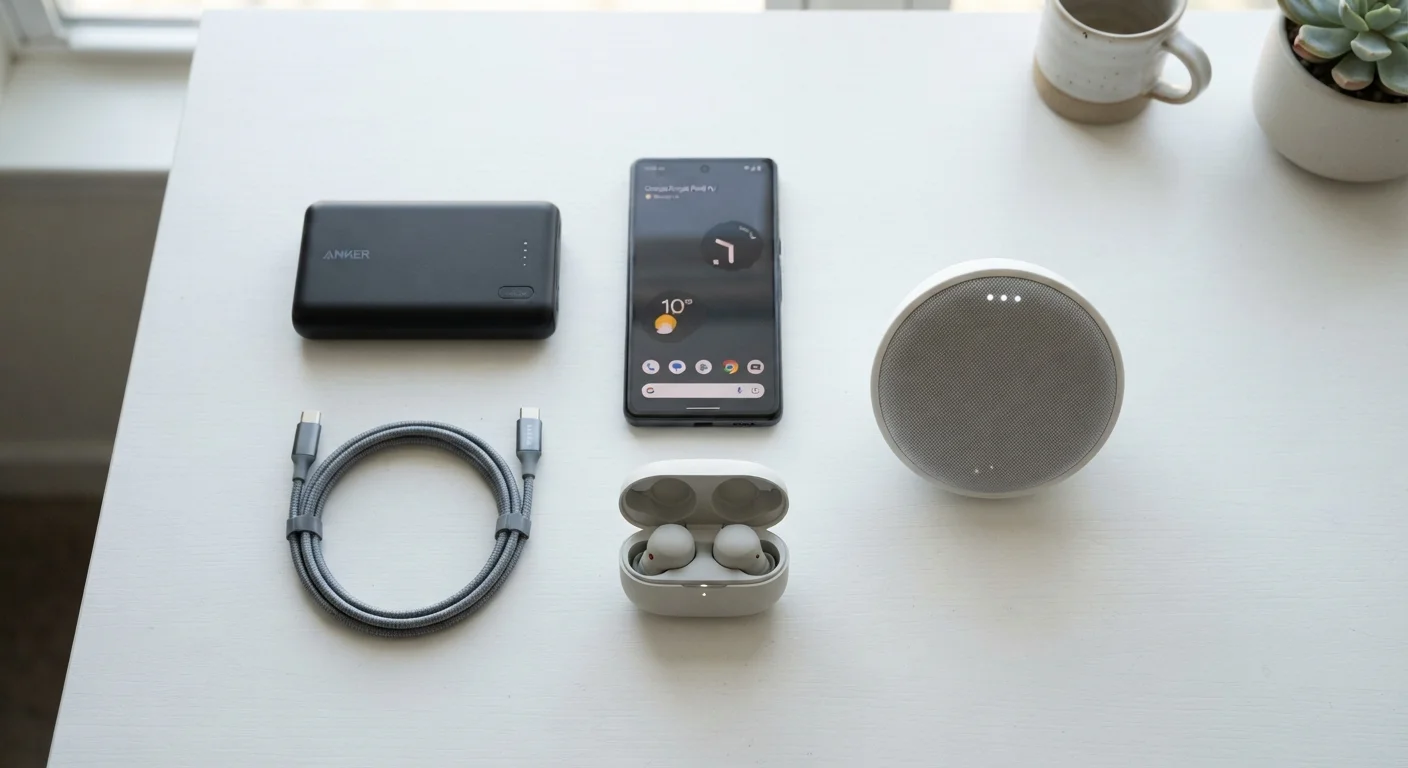
Photo: faqsvault.com editorial
Why Tech Vocabulary Actually Matters
You don't need to be an engineer to benefit from understanding the words printed on device boxes, listed in app settings, or mentioned during a tech support call. A working knowledge of core gadget terminology helps you make more confident decisions — whether you're choosing a charger, troubleshooting a Wi-Fi drop, or figuring out why your earbuds sound different than a friend's.
This glossary is designed as a lookup reference: scan it when a term puzzles you, or read it through to build a mental map of how everyday devices actually work. For a broader picture of how gadgets fit into daily routines, see our complete overview of everyday gadgets. If you're also curious how tech jargon fits into larger trend conversations, a plain-language glossary of tech trend terminology covers the broader landscape.
Bluetooth
A short-range wireless technology that lets devices communicate with each other without cables — typically within about 30 feet. It's how your phone pairs with wireless earbuds, speakers, or a car audio system.
USB-C
A small, oval-shaped connector standard used for charging and transferring data on modern phones, laptops, and tablets. Unlike older USB types, USB-C is reversible — you can plug it in either way.
mAh (Milliamp-hour)
A unit that measures battery capacity. A higher mAh number generally means a battery can hold more charge and power a device for longer before needing to be plugged in.
Wi-Fi Band (2.4 GHz vs. 5 GHz)
Wi-Fi routers often broadcast on two frequency bands. The 2.4 GHz band travels farther but is slower and more congested; the 5 GHz band is faster but has a shorter range. Many modern routers offer both.
Firmware
Low-level software embedded directly into a hardware device — like the operating instructions baked into a router or smart thermostat. Manufacturers release firmware updates to fix bugs or add features.
NFC (Near Field Communication)
A technology that lets two devices exchange small amounts of data when held very close together (usually within an inch or two). It powers contactless payments like tap-to-pay at a checkout terminal.
Codec (Audio)
A format that determines how audio is compressed and transmitted wirelessly between devices. Common codecs like SBC, AAC, and aptX affect the quality of sound you hear through Bluetooth headphones.
Latency
The delay between an action occurring and a device responding to it. Low latency is important for gaming and video calls, where even a fraction of a second of delay can be noticeable.
Cloud Storage
A service that stores your files — photos, documents, backups — on remote servers accessed over the internet rather than on your device itself. Examples include the storage features built into phones and computers.
Watt (W) and Wattage
A unit of power that describes how fast a charger delivers energy to a device. A higher wattage charger (e.g., 65W vs. 18W) can charge compatible devices more quickly.
IP Rating
A standardized scale (e.g., IPX4, IP67) that describes how resistant a device is to dust and water. The numbers indicate the level of protection — higher numbers mean greater resistance.
Ecosystem
A family of devices and services from one company designed to work seamlessly together. When your phone, tablet, and earbuds all sync automatically, that's an ecosystem advantage at work.
Quick Reference: Key Numbers and Ratings at a Glance
Numbers on spec sheets can feel arbitrary until you know what they're measuring. The figures below represent the most commonly encountered gadget metrics — understanding them means you can compare devices on your own terms rather than relying solely on marketing language.
| Bluetooth typical range | ~30 feet (10 meters) indoors (Bluetooth SIG general specification guidance) |
| USB-C reversibility | Yes — works either way up (USB Implementers Forum) |
| Average smartphone battery capacity | 3,000 – 5,000 mAh (General industry range, varies by model) |
| IP67 water resistance | Up to 1 meter for 30 minutes (IEC 60529 standard) |
| Wi-Fi 6 max theoretical speed | Up to 9.6 Gbps (Wi-Fi Alliance specification) |
| NFC operating distance | Typically under 4 cm (ISO/IEC 18000-3 standard) |
For a deeper dive into wireless standards specifically — including how Wi-Fi bands and Bluetooth versions have evolved — our wireless technology overview is a useful next step. And if you enjoy this style of reference format, you might also find value in the interior decorating terminology glossary, which applies the same plain-language approach to design vocabulary.
Tech Terms Evolve — Definitions Can Shift
Putting the Terms Together: Real-World Scenarios
Definitions are most useful when grounded in situations you actually encounter. Here's how several of these terms interact in everyday life:
- Charging your phone faster: If your charger and phone both support the same wattage standard, you'll get a quicker charge. Check the wattage (W) printed on your charger brick — a 5W charger is significantly slower than a 45W one on a compatible device.
- Pairing wireless earbuds: Bluetooth handles the connection, while the audio codec determines sound quality. If your earbuds and phone share a high-quality codec, you may notice richer audio — though the difference is subtle for casual listeners.
- Choosing where to connect on your home Wi-Fi: If your router broadcasts both 2.4 GHz and 5 GHz networks, connect devices that need speed (like a laptop for video streaming) to 5 GHz, and devices across the house to 2.4 GHz for better range.
- Checking if a device is water-resistant: Look for an IP rating. IP67 means a device can handle brief submersion in shallow water, while IPX4 only covers splashes. Neither rating guarantees waterproofing indefinitely.
For ongoing tips on navigating your devices day to day, the Digital Life Tips hub covers practical strategies across apps, devices, and online habits.
All published content on this website is for informational and educational purposes only and should not be taken as professional advice. We recommend that readers seek expert opinion before making any decisions. The website is not responsible for any actions taken based on the information provided on this website. We are not liable for any inaccuracies, modifications, or omissions in information. Moreover, external links or third-party content are provided for convenience; we are not liable for their correctness. Users are advised to verify every piece of information before they use it for any purpose.