
A Season-by-Season Gardening Calendar

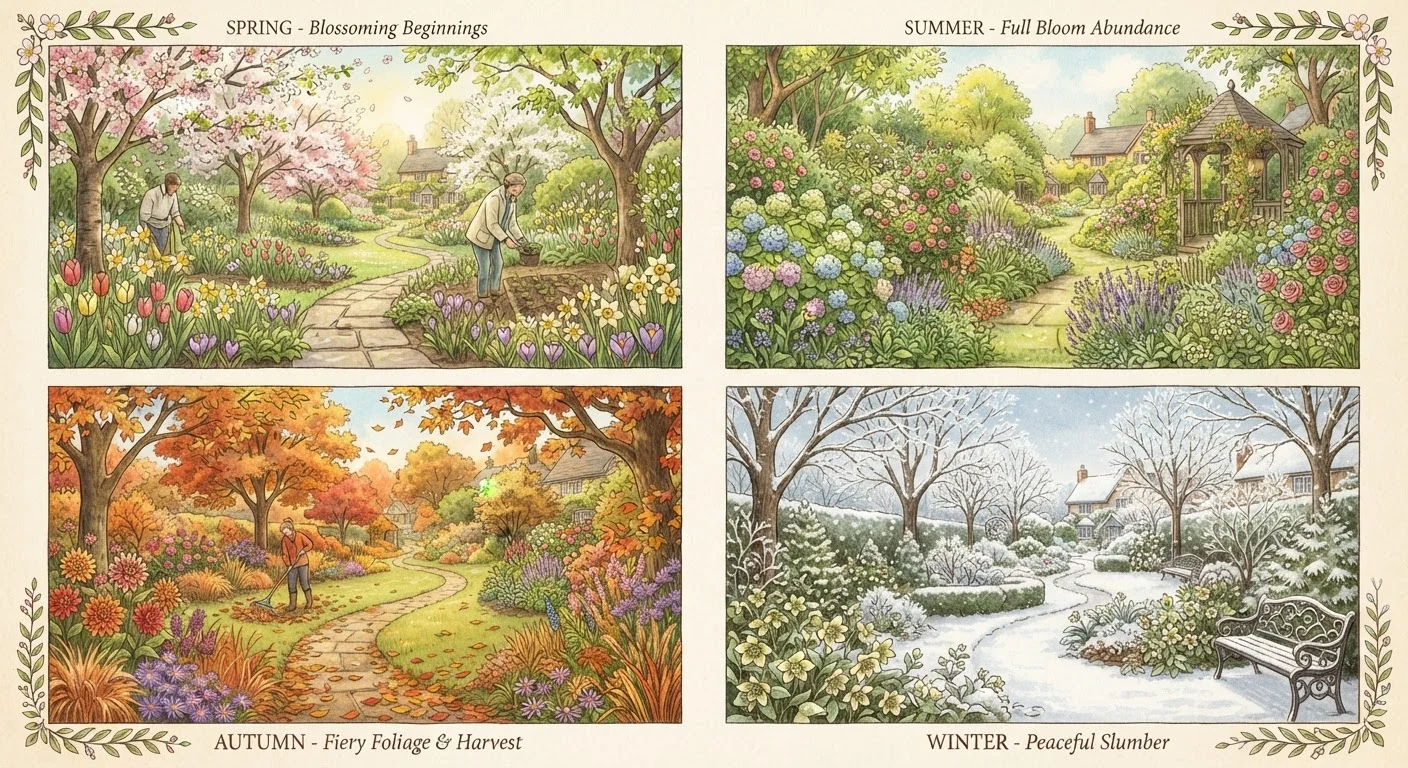
Photo: faqsvault.com editorial
How to Use This Calendar
A gardening calendar is only as useful as it is realistic. This one is built around a temperate climate — broadly applicable to much of the continental United States, particularly USDA Hardiness Zones 5–8. If you garden in the Deep South, the Pacific Northwest, or at high altitude, your timing will shift. Use this as a framework and adjust based on your local last and first frost dates.
Tasks are grouped by the four meteorological seasons. Within each season, priorities fall into five recurring categories: sow, plant, prune, feed, and harvest/maintain. Reading the calendar alongside your garden's microclimates will help you fine-tune timing even further — a south-facing wall, for instance, can push your effective start date two to three weeks earlier than open ground.
| Last frost date (average) | Late March–May depending on zone (USDA Plant Hardiness Zone Map) |
| First fall frost (average) | Late September–November depending on zone (USDA Plant Hardiness Zone Map) |
| Soil workable temperature | Above 40°F at 2-inch depth (General horticultural standard) |
| Compost top-dress frequency | Once per season (spring and autumn) |
| Container feeding frequency (summer) | Every 1–2 weeks with liquid fertilizer |
| Garlic planting window | 4–6 weeks before first hard frost |
| Crop rotation minimum interval | 3 years per plant family per bed (Standard integrated pest management guidance) |
| Winter mulch depth | 3–4 inches over tender perennials |
Spring: Wake the Garden Up
March through May is the season of preparation and early planting. Soil temperatures are rising, but overnight frosts remain a real risk through mid-spring in many regions.
- Sow indoors: Tomatoes, peppers, eggplants, and annual flowers should be started under cover 6–8 weeks before your last expected frost date. Use a seed-starting mix and provide bottom heat where possible.
- Direct sow outdoors: Once soil is workable (above 40°F at 2-inch depth), sow cool-season crops — lettuce, spinach, peas, and radishes — directly in beds.
- Prune: Cut back ornamental grasses to ground level before new growth emerges. Prune summer-flowering shrubs, roses, and fruit trees while still dormant. Avoid pruning spring-flowering shrubs like forsythia until after they bloom.
- Feed: Apply a balanced, slow-release granular fertilizer to beds as growth begins. Top-dress established perennials with compost.
- Maintain: Remove winter mulch gradually as temperatures stabilize. Divide and transplant overcrowded perennials before they leaf out fully.
If you're starting from scratch, spring is also the ideal time to lay groundwork. Our beginner's vegetable garden guide walks through planning and bed preparation step by step.
Summer: Maintain, Harvest, and Plan Ahead
June through August shifts the focus from planting to maintenance and harvest. Growth is vigorous, but so is competition from weeds, pests, and heat stress.
- Sow: Succession-sow fast-maturing crops like beans, zucchini, and salad greens every two to three weeks to extend your harvest window. Start brassica seedlings indoors in late July for fall transplanting.
- Plant: Set out heat-loving transplants (basil, sweet potatoes, okra) once nighttime temperatures stay consistently above 60°F.
- Prune: Deadhead spent flowers regularly to encourage continued blooming. Pinch back leggy herbs. Remove any diseased or damaged stems promptly.
- Feed: Container plants need more frequent feeding — every 1–2 weeks with a liquid fertilizer — since nutrients leach out with regular watering. In-ground beds generally need one mid-season boost for heavy feeders like corn and tomatoes.
- Harvest: Pick vegetables at peak ripeness, not convenience. Leaving overripe produce on the plant signals it to stop producing. Check cucumbers, zucchini, and beans daily at peak season.
Working with limited ground space? Summer is a productive season for containers and vertical growing. See growing food in small spaces for approaches that keep yields high when square footage is tight.
Autumn: Wind Down and Build Up
September through November is one of the most productive seasons for soil-building and planting long-lived garden features. Cooler temperatures reduce transplant stress and promote strong root development before the ground freezes.
- Sow: Direct-sow garlic cloves 4–6 weeks before the first hard frost for a summer harvest. Cool-season greens planted in September often produce well into November under row covers.
- Plant: Fall is ideal for planting trees, shrubs, and spring-flowering bulbs (tulips, daffodils, alliums). Roots continue to establish even as tops go dormant.
- Prune: Hold off on heavy pruning of woody plants — late-season cuts can stimulate tender growth vulnerable to frost. Deadhead and cut back frost-killed annuals. Leave ornamental seed heads for wildlife and winter interest.
- Feed: Apply a low-nitrogen, phosphorus-rich fertilizer to support root development without encouraging leafy growth. Topdress vegetable beds with 2–3 inches of compost after clearing crops.
- Maintain: Collect and compost healthy plant material. Bag or bin anything showing signs of disease rather than composting it. Begin putting beds to rest. For a comprehensive autumn close-out checklist, see end-of-season garden shutdown.
Winter: Plan, Protect, and Prepare
December through February is the garden's recovery period — and the gardener's planning season. With growth halted, attention shifts to protection, infrastructure, and next year's layout.
- Sow: Start very slow-growing crops like onions and celery from seed indoors in late winter (late January–February), giving them a long head start before spring transplanting.
- Protect: Apply a 3–4 inch layer of mulch over tender perennials and root crops left in the ground. Wrap or burlap broadleaf evergreens in exposed sites to prevent desiccation from winter wind and sun.
- Prune: Dormant pruning of fruit trees is best done on a mild winter day — it's easier to assess structure without foliage, and cuts heal cleanly before spring growth resumes.
- Plan: Order seed catalogs, map crop rotations, and sketch new bed layouts. Rotate vegetable families to reduce soil-borne disease buildup — avoid planting the same family in the same spot more than once every three years.
- Maintain: Clean, sharpen, and oil all tools before storage. Check stored bulbs and root vegetables monthly, removing any that are rotting before they affect neighbors.
For gardeners growing herbs year-round, winter is also a natural time to review what performed well outdoors. The outdoor herb growing guide covers overwintering strategies worth reading during quieter months.
Timing recommendations in this calendar are general guidance for temperate US regions. Always verify with your local cooperative extension service or check regional frost date data before making planting decisions.
All published content on this website is for informational and educational purposes only and should not be taken as professional advice. We recommend that readers seek expert opinion before making any decisions. The website is not responsible for any actions taken based on the information provided on this website. We are not liable for any inaccuracies, modifications, or omissions in information. Moreover, external links or third-party content are provided for convenience; we are not liable for their correctness. Users are advised to verify every piece of information before they use it for any purpose.