
Growing Food in Small Spaces: Containers, Walls, and Windowsills

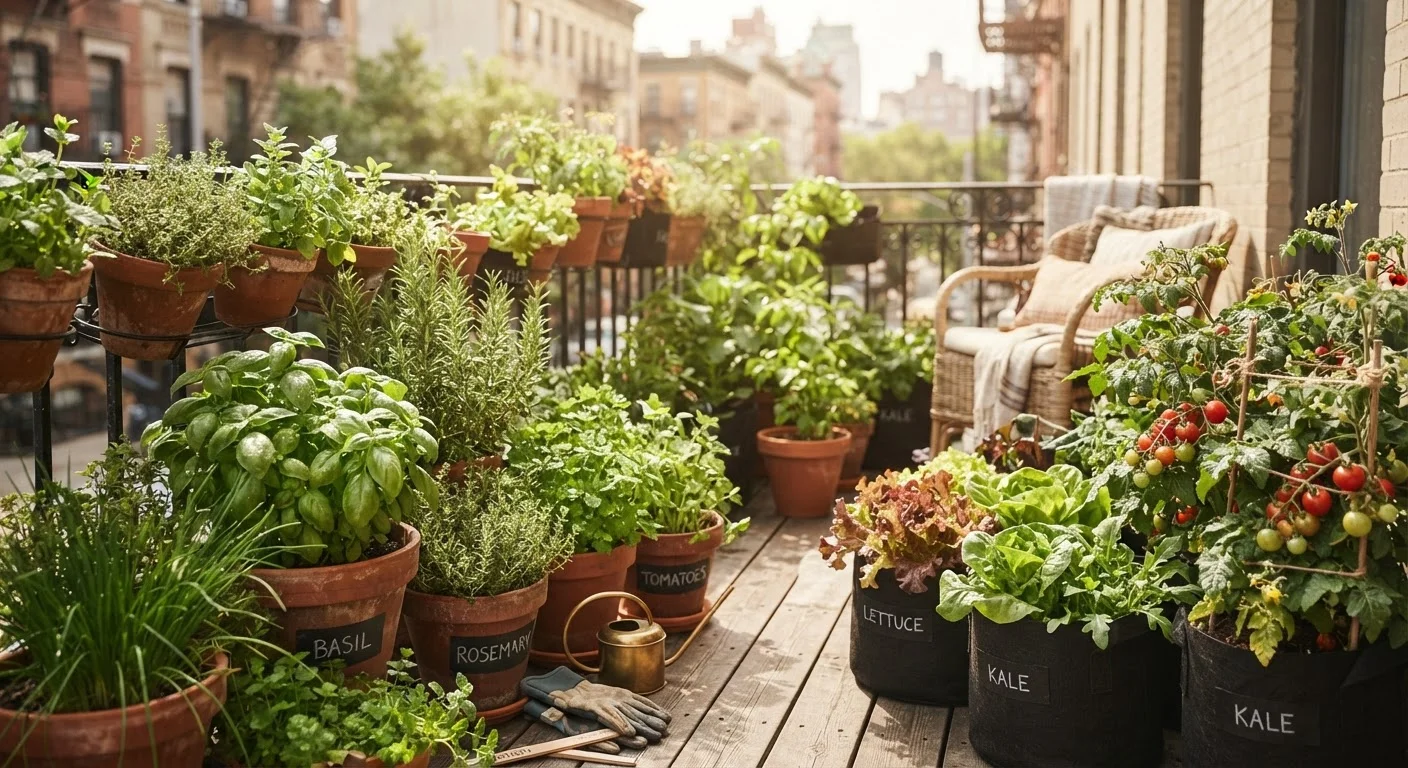
Photo: faqsvault.com editorial
Key Takeaways
- Container depth and drainage quality matter more than container size alone for healthy food crops.
- Vertical growing systems — pocket planters, trellises, and wall-mounted rails — can triple usable growing area.
- South- or west-facing windowsills receive enough light for herbs and compact salad greens year-round.
- Watering frequency increases significantly in containers; consistent moisture checks prevent most crop failures.
- Lightweight, peat-free potting mix outperforms garden soil in containers and reduces weight on balconies.
Why Small-Space Food Growing Is More Productive Than You Might Expect
The assumption that meaningful food growing requires a yard and a raised bed plot is one of the most persistent barriers for apartment dwellers and renters. In reality, container and vertical growing systems are often more productive per square foot than traditional garden beds, because every element — soil quality, water delivery, and plant spacing — is within the grower's direct control. A 10-square-foot balcony planted thoughtfully can realistically supply a household with fresh herbs, salad greens, and cherry tomatoes throughout the growing season.
The key shift in mindset is treating your available surfaces — windowsills, railings, walls, fences, and floor space — as a layered system rather than a flat footprint. For readers who have already explored how space-savvy thinking transforms interiors, the same principle applies outdoors: see small-space decorating strategies for how layering works inside the home. If you're starting entirely from scratch with no growing experience at all, our guide to starting a vegetable garden from zero provides a solid foundation to build on.
What you will need
Tools and Materials You'll Need
Small-space food growing requires less equipment than most beginners expect, but choosing the right materials from the start avoids common early failures. The list below covers what you'll genuinely need — and flags what is genuinely optional rather than just marketed as essential.
Containers (pots, fabric grow bags, window boxes)
Hold growing medium and provide rooting space for crops; size and depth vary by crop type.
Lightweight peat-free potting mix
Provides aeration, drainage, and nutrients that garden soil cannot deliver reliably in containers.
Liquid fertilizer (balanced or tomato feed)
Replenishes nutrients that regular watering flushes from the potting mix over time.
Vertical pocket planter or wall-mounted rail system
Allows crops to grow on fences or walls, freeing up floor space for larger containers.
Drip tray or self-watering reservoir insert
Reduces watering frequency and protects surfaces from drainage water.
Trowel and watering can with a rose head
Essential hand tools for planting, transplanting, and gentle watering without disturbing seedlings.
Step-by-Step: Setting Up Your Container or Vertical Garden
Follow these steps in sequence when setting up a new container or vertical growing system. Returning growers refreshing an existing setup can skip to the steps most relevant to the changes they're making.
Assess your light and space honestly
Before spending anything on seeds or containers, spend three days noting which surfaces receive direct sun and for how long. A south-facing balcony railing at noon tells you far more than a general assumption about your apartment's exposure. Most food crops need at least six hours of direct sun for good yields; leafy greens and herbs can manage on four. Note where shade falls from overhangs, neighboring buildings, or fences — these microclimates shape what will thrive. Our guide to understanding garden microclimates explains how to read and use these conditions to your advantage.
Match crops to your available light
Use your light audit to shortlist suitable crops. For windowsills with four to five hours of sun, focus on cut-and-come-again salad mixes, chives, parsley, mint, and basil. For balconies with six or more hours, dwarf tomatoes, peppers, dwarf French beans, radishes, and compact kale become realistic. Avoid large, sprawling crops — vining squash or tall corn have no practical place in container growing. If herbs are your priority, our in-depth guide on growing herbs outdoors covers site selection and care in detail.
Choose containers with the right depth and drainage
Container depth is the single most important factor after light. Salad greens and herbs do well in 6–8 inches of depth. Tomatoes, peppers, and beans need at least 12 inches; root vegetables like carrots need 12–15 inches. Every container must have drainage holes — waterlogged roots are the leading cause of container crop failure. Fabric grow bags are particularly effective because their porous walls prevent overwatering naturally. Window boxes work well for herbs and cut salads but are too shallow for most fruiting crops.
Fill containers with quality potting mix
Never fill containers with garden soil — it compacts in pots, drains poorly, and can harbor pests and diseases. Use a quality peat-free potting mix; for fruiting crops, choose one labeled for vegetable growing, which typically contains more nutrient reserves. You can blend in about 20–30% perlite or coarse horticultural grit to improve drainage and aeration in deeper pots. Fill to within an inch of the rim to allow for watering without overflow. For an eco-friendly boost, well-finished homemade compost can replace up to a third of your potting mix — see composting at home for how to produce it.
Set up vertical growing on walls and fences
Walls and fences are underused real estate in small gardens and on balconies. Fabric pocket planters hung on a fence can house twelve or more herb or salad plants in the footprint of a single pot. Wall-mounted rail systems accept hook-on containers that are easy to rearrange. For lightweight climbers like dwarf French beans, fix a simple trellis panel to a fence and train stems upward — this keeps floor space free for larger containers. When planning your vertical layers, think about taller structures casting shade on lower containers and arrange accordingly.
Water consistently and feed regularly
Containers dry out far faster than garden beds — in warm weather, some pots need watering daily. Push your finger an inch into the potting mix; if it feels dry at that depth, water thoroughly until it drains from the bottom. Avoid shallow, frequent splashes that never reach the root zone. Because watering also flushes nutrients, begin liquid feeding six to eight weeks after planting, or sooner if growth looks pale or slow. A balanced general fertilizer works for leafy crops; switch to a higher-potassium feed once fruiting crops begin to flower.
Harvest regularly to sustain production
Regular harvesting is not just about eating — it actively encourages more growth. With salad leaves, always cut the outer leaves first and leave the growing center intact. With herbs like basil and mint, pinch stems above a leaf pair to trigger bushier regrowth. For fruiting crops, pick as soon as fruits are ripe rather than leaving them to fully mature on the plant, which signals the plant to slow down. At season's end, refer to our end-of-season garden shutdown checklist to prepare containers properly for winter.
Troubleshooting Common Small-Space Growing Problems
Even well-planned container gardens run into difficulties. Here are the most frequent issues and straightforward fixes:
- Leggy, pale seedlings
- Almost always caused by insufficient light. Move containers to a brighter position or consider supplementing with a grow light on an indoor windowsill.
- Wilting despite regular watering
- Check whether the pot is root-bound — if roots are circling the base or emerging from drainage holes, it's time to pot up into a larger container.
- Yellowing lower leaves on otherwise healthy plants
- Usually a sign of nitrogen deficiency from nutrient depletion. Begin a regular liquid feeding schedule to address this promptly.
- Fungal spots or powdery mildew
- Improve air circulation around foliage by spacing containers further apart and avoid wetting leaves when watering. Remove affected foliage promptly to slow spread.
- Pests on windowsill herbs
- Aphids and fungus gnats are the most common indoor culprits. For aphids, a strong blast of water or wiping leaves with a damp cloth is usually sufficient. For fungus gnats, allow the top inch of potting mix to dry fully between waterings — they thrive in consistently moist surface soil.
Fresh homegrown produce pairs naturally with a well-stocked kitchen. Once your harvests become regular, stocking a kitchen for nutritious everyday cooking offers practical guidance on making the most of what you grow.
Think in Layers, Not Just Footprint
All published content on this website is for informational and educational purposes only and should not be taken as professional advice. We recommend that readers seek expert opinion before making any decisions. The website is not responsible for any actions taken based on the information provided on this website. We are not liable for any inaccuracies, modifications, or omissions in information. Moreover, external links or third-party content are provided for convenience; we are not liable for their correctness. Users are advised to verify every piece of information before they use it for any purpose.