
Stocking a Kitchen for Nutritious Everyday Cooking

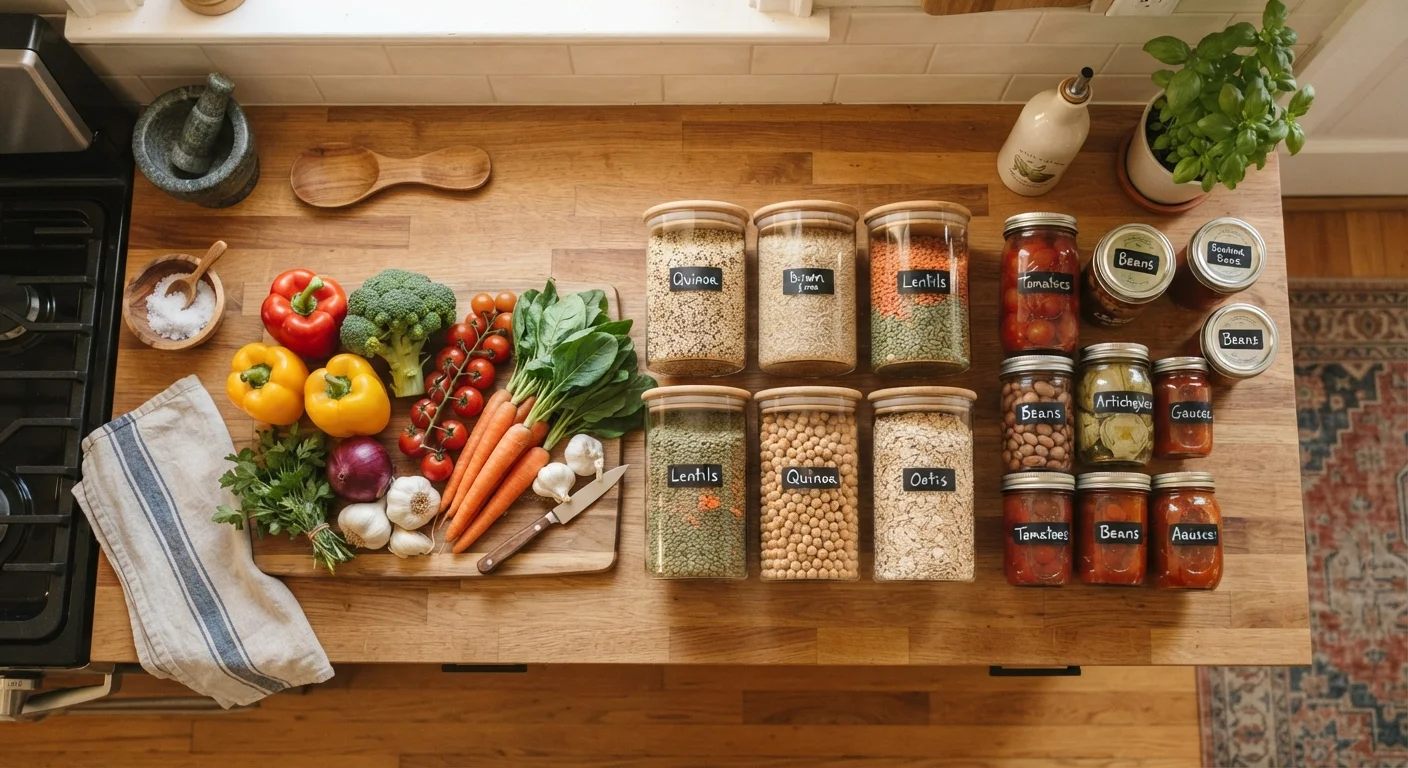
Photo: faqsvault.com editorial
Key Takeaways
- A well-stocked pantry, fridge, and freezer reduces daily decision fatigue around healthy eating.
- Whole grains, legumes, and a variety of vegetables form the backbone of most nutritious meals.
- Versatile condiments and aromatics transform simple staples into satisfying, flavorful dishes.
- Freezer staples extend shelf life and ensure nutritious options are always on hand.
- Regular pantry audits prevent food waste and keep your cooking rotation fresh.
Why What You Stock Matters
There's a well-supported idea in behavioral nutrition research: when nourishing food is the easiest option available, people tend to choose it. That means your kitchen's contents quietly shape what you eat every day — often more than willpower or meal plans alone. This checklist is designed to help you build an environment where balanced cooking happens naturally, not heroically.
The goal here isn't to overhaul your diet overnight or follow any specific eating plan. It's simply to ensure your shelves, fridge, and freezer hold the building blocks that make a variety of wholesome meals genuinely convenient. For a deeper look at how to put those ingredients together on a plate, the guide to building a balanced plate is a helpful companion read.
Use this checklist as an audit tool. Walk through your kitchen, identify gaps, and stock up gradually — there's no need to do it all at once.
Airtight glass or BPA-free containers
Store dried grains, legumes, and pantry staples visibly and accessibly while maintaining freshness.
Immersion blender or countertop blender
Quickly blend soups, smoothies, and sauces — a versatile tool that extends what you can make with pantry staples.
Instant-read kitchen thermometer
Check that proteins are cooked safely without guessing, especially useful for frozen proteins cooked from frozen.
Labeling tape and marker
Date and label freezer portions and opened dry goods to reduce waste and make stock rotation easy.
The Checklist: Pantry, Fridge, and Freezer
The items below are grouped by location and category. "Must" items appear in most balanced meals and are worth prioritizing. "Should" items add nutritional breadth and cooking variety. "Nice to have" items elevate everyday meals without being essential.
Pantry: Grains and Legumes
Pantry: Oils, Acids, and Flavor Builders
Pantry: Spices, Herbs, and Aromatics
Fridge: Vegetables and Fresh Produce
Fridge: Dairy and Dairy Alternatives
Freezer Essentials
This article is for general informational and educational purposes only and is not a substitute for professional nutritional or medical advice. Consult a qualified healthcare provider or registered dietitian for guidance tailored to your individual health needs.
Making Your Staples Work for You
Stocking a kitchen is only half the equation — the other half is reducing the friction between ingredients and finished meals. A few practical habits help bridge that gap.
Batch-cook grains and legumes. Cooking a large pot of lentils, brown rice, or chickpeas at the start of the week gives you a ready base for bowls, soups, and salads. If you're also interested in growing some of your own produce, even modestly, growing food in small spaces offers practical ideas for balconies and windowsills.
Keep sightlines clear. Store fruits, vegetables, and pre-portioned snacks at eye level in the fridge. Items you see first tend to be the ones you reach for. This small rearrangement costs nothing and can meaningfully shift daily choices.
Audit regularly. A monthly check of your pantry helps you use what you have before it expires, reduces waste, and reveals patterns in what you actually cook. Any vegetable scraps that accumulate along the way can become compost — composting kitchen scraps is easier than most people expect.
If you're following or curious about a plant-focused eating style, it's worth noting that a few nutrients — including vitamin B12, iron, and omega-3 fatty acids — benefit from intentional attention. The article on plant-based nutritional considerations covers these in an accessible, non-prescriptive way.
Finally, remember that a nutritious kitchen doesn't have to be a perfect kitchen. Gaps in your pantry are normal, and building toward a well-stocked setup over a few grocery runs is a completely reasonable approach.
All published content on this website is for informational and educational purposes only and should not be taken as professional advice. We recommend that readers seek expert opinion before making any decisions. The website is not responsible for any actions taken based on the information provided on this website. We are not liable for any inaccuracies, modifications, or omissions in information. Moreover, external links or third-party content are provided for convenience; we are not liable for their correctness. Users are advised to verify every piece of information before they use it for any purpose.