
Building a Balanced Plate: Proportions, Food Groups, and Practical Trade-Offs

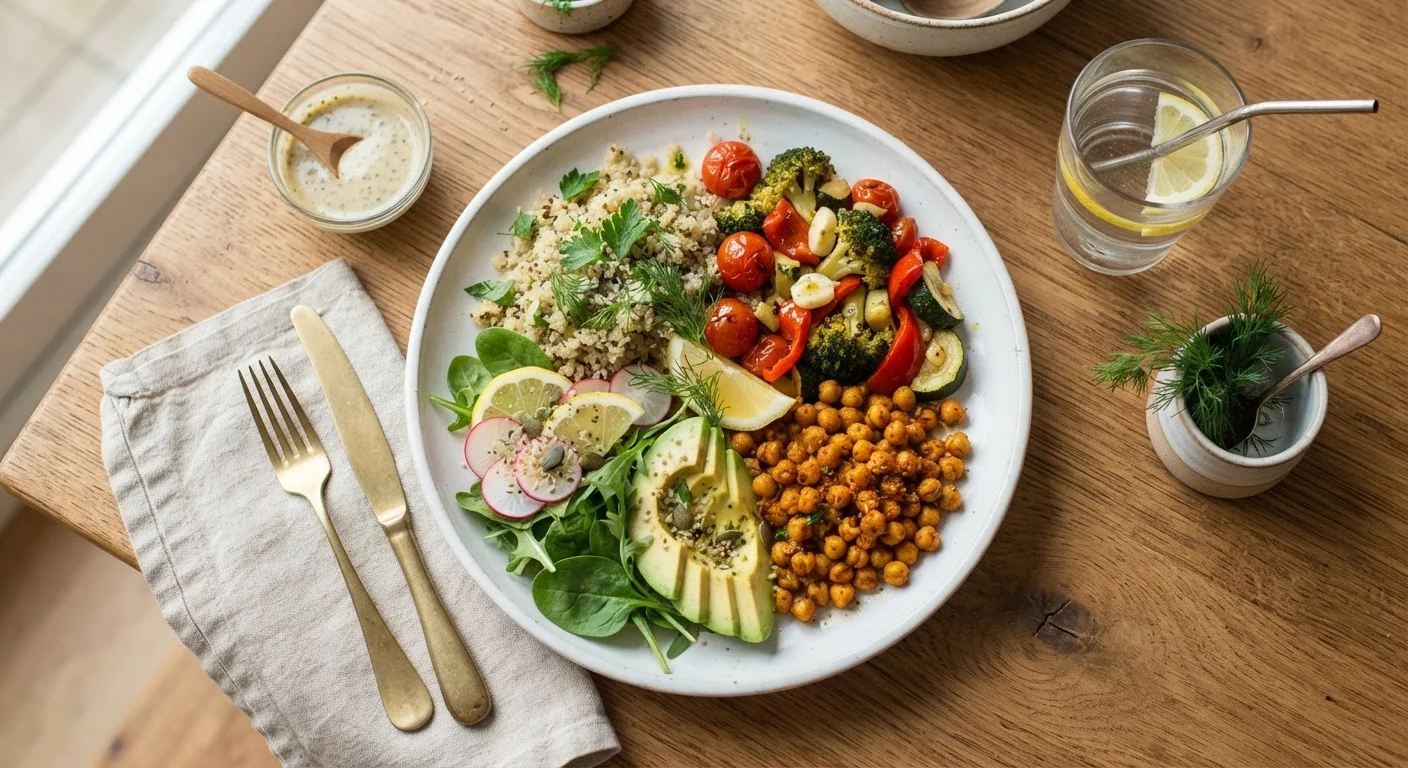
Photo: faqsvault.com editorial
Key Takeaways
- A balanced plate is about proportions across food groups, not rigid rules or perfect meals.
- Vegetables and fruits should generally fill the largest share of the plate at each meal.
- Whole grains, quality proteins, and healthy fats each play a distinct role in overall nutrition.
- Flexibility and consistency over time matter more than getting every single meal exactly right.
- Individual needs vary — a qualified dietitian can help tailor guidance to your specific situation.
What Does a Balanced Plate Actually Mean?
The phrase "balanced plate" gets used so often it can start to feel meaningless — a vague aspiration rather than a practical guide. But at its core, the concept is straightforward: it refers to assembling meals from a variety of food groups in proportions that collectively support the body's nutritional needs over time.
Notice that framing: over time. Balance isn't something that needs to happen in a single sitting. It's a pattern across meals, days, and weeks. That shift in perspective — from perfecting each plate to building a sustainable rhythm — tends to make the whole idea far less stressful and far more achievable.
This guide focuses on general, evidence-informed nutrition principles for adults in good health. If you have a medical condition, specific dietary needs, or are navigating a significant health change, please consult a registered dietitian or your healthcare provider for personalized guidance.
Macronutrients
The three main categories of nutrients the body needs in larger amounts: carbohydrates, proteins, and fats. Each provides energy and serves distinct functions in the body.
Micronutrients
Vitamins and minerals the body needs in smaller amounts to support functions like immune health, bone strength, and energy metabolism. They don't provide calories but are essential.
Dietary fiber
A type of carbohydrate found in plant foods that the body can't fully digest. Fiber supports digestive health, helps you feel full, and is associated with long-term health benefits.
Whole grains
Grains that contain all three parts of the original grain kernel — the bran, germ, and endosperm. They retain more fiber and nutrients compared to refined grains, which have had some parts removed during processing.
Antioxidants
Compounds found in many fruits, vegetables, and other plant foods that help protect the body's cells from damage. They are one reason nutritionists emphasize variety in produce intake.
The Major Food Groups and What They Contribute
Understanding why certain foods appear on a balanced plate starts with knowing what each group offers.
- Vegetables and fruits supply vitamins, minerals, antioxidants, and dietary fiber. Most nutrition frameworks prioritize this group because a wide variety of produce covers an enormous range of micronutrients in relatively few calories.
- Whole grains and starchy vegetables (such as oats, brown rice, quinoa, sweet potatoes, and whole-grain bread) provide sustained energy through complex carbohydrates and fiber. They differ meaningfully from refined grains, which are processed in ways that reduce their fiber and nutrient content.
- Protein sources — including legumes, tofu, eggs, dairy, fish, poultry, and lean meats — support tissue repair, immune function, and satiety. The quality and digestibility of protein varies across sources; see our comparison of protein sources for a closer look.
- Healthy fats from foods like avocado, nuts, seeds, and olive oil support cell function, fat-soluble vitamin absorption, and long-term cardiovascular health when consumed in appropriate amounts.
- Dairy or fortified alternatives contribute calcium, vitamin D, and protein, though many of these nutrients are also available from other food sources.
No single food group is a villain or a magic solution. Each plays a role, and the goal is to represent them in reasonable proportions — not to eliminate any without good reason.
Proportion Principles: A Simple Starting Framework
Rather than counting grams or calories, many nutrition educators use visual plate models as an accessible starting point. The general principle shared across several such models: roughly half the plate filled with vegetables and fruit, about a quarter with whole grains or starchy vegetables, and the remaining quarter with a quality protein source — plus a small amount of healthy fat incorporated throughout.
This is a framework, not a prescription. It won't apply equally to someone doing intense physical training, someone managing blood sugar, or a growing teenager. But for general adult eating, it provides a useful mental anchor when assembling a meal.
A few practical implications of this approach:
- Vegetables don't need to be elaborate. Frozen, canned (with no added salt or minimal sodium), and raw options all count.
- Protein portions don't need to dominate the plate. A palm-sized serving is a common informal reference — though individual needs vary.
- Healthy fats often get added through cooking methods (olive oil for sautéing), toppings (a handful of nuts), or ingredients (avocado in a salad) rather than as a separate plate section.
If you want to take this further, meal planning principles can help you structure this thinking across the whole week rather than one meal at a time.
Practical Trade-Offs and Everyday Flexibility
Real eating lives don't look like nutrition textbooks. Meals happen at desks, in cars, at family tables with picky eaters, and on days when cooking simply isn't happening. Balanced eating has to survive those conditions — or it won't stick.
A few realities worth embracing:
- Imperfect meals are normal. A lunch of crackers and cheese isn't a failure; it's one meal in a much longer dietary story. What matters is whether the broader pattern holds.
- Convenience foods aren't automatically unbalanced. Canned beans, rotisserie chicken, frozen vegetables, and pre-washed salad greens are all genuinely useful shortcuts that support nutritious eating under time pressure. Our guide to stocking a kitchen offers practical pantry ideas.
- Cultural and personal food preferences are valid. Balanced nutrition is achievable across vastly different food traditions. Research on global eating patterns consistently shows that no single cuisine has a monopoly on nutritious eating.
- Social and emotional dimensions of food matter too. Rigid rules that create stress, guilt, or social isolation around eating can undermine wellbeing in other ways. Flexibility isn't a compromise — it's part of what makes sustainable eating possible.
The 80/20 Mindset Can Help
Building Your Own Balanced Plate Over Time
The most useful shift anyone can make is moving from asking "Is this meal perfect?" to asking "Does my eating pattern, on the whole, give my body what it needs?" That question opens more room for enjoyment, flexibility, and gradual improvement — without the exhaustion of chasing an ideal that doesn't exist in real life.
Start with one or two small changes rather than a complete overhaul. Adding a vegetable to a meal that didn't have one, swapping refined grains for whole ones a few times a week, or including a legume-based meal once or twice weekly — these modest shifts, sustained over months, tend to compound meaningfully.
If you're also thinking about how food habits fit into your broader daily routines, building a balanced daily stack explores how physical and lifestyle habits reinforce one another.
And if you have specific health goals, chronic conditions, or simply want guidance tailored to your individual circumstances, a registered dietitian is the right resource — general frameworks are a useful starting point, not a substitute for personalized advice.
This article is for general informational and educational purposes only and does not constitute medical or nutritional advice. Please consult a qualified healthcare professional or registered dietitian for guidance specific to your health needs.
Frequently Asked Questions
All published content on this website is for informational and educational purposes only and should not be taken as professional advice. We recommend that readers seek expert opinion before making any decisions. The website is not responsible for any actions taken based on the information provided on this website. We are not liable for any inaccuracies, modifications, or omissions in information. Moreover, external links or third-party content are provided for convenience; we are not liable for their correctness. Users are advised to verify every piece of information before they use it for any purpose.