
End-of-Season Garden Shutdown: What to Do Before Winter Sets In

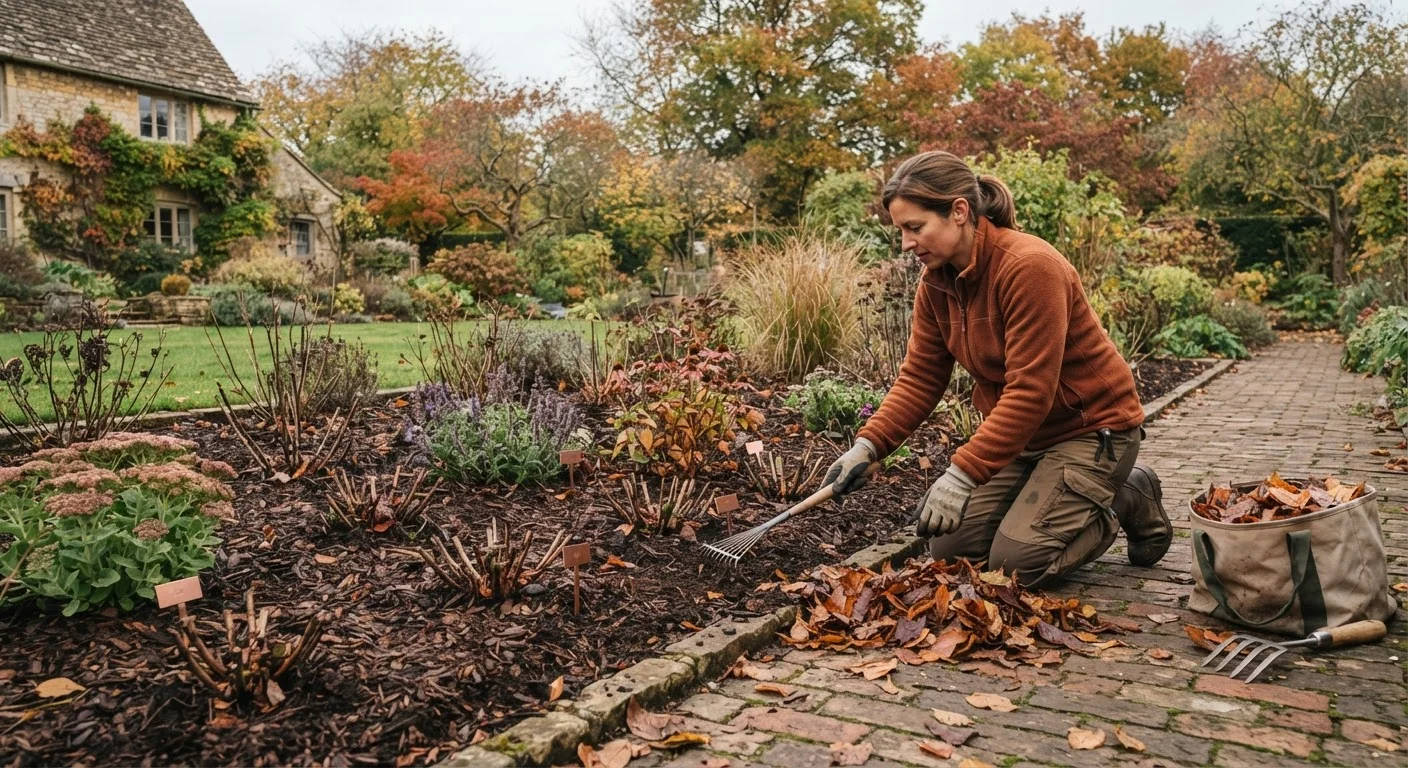
Photo: faqsvault.com editorial
Key Takeaways
- Cutting back spent plants reduces overwintering pest and disease pressure.
- Mulching beds after the ground cools—not before—protects roots without trapping warmth.
- Tender bulbs and container plants need to come indoors before the first hard frost.
- Clean, dry tools stored properly will last significantly longer and perform better.
- Soil amendments added in fall give organic matter time to break down for spring planting.
- Documenting what grew where helps you plan smarter crop rotations next season.
Why Fall Cleanup Matters More Than You Think
It's tempting to leave the garden as-is once the harvest is done and temperatures drop — after all, nature handles its own mess, right? But a deliberate end-of-season shutdown is one of the highest-return investments a gardener can make. The work you do on a crisp October weekend directly determines how smoothly your beds, lawn, and perennials bounce back the following spring.
Decaying plant debris left in place over winter becomes a nursery for fungal disease spores, overwintering insect eggs, and rodent habitat. Unprotected root systems are more vulnerable to freeze-thaw cycles that heave soil and snap delicate tissue. Tools left damp in the shed rust and seize. Containers left out crack when water expands inside porous clay or concrete.
Understanding the specific conditions of your yard helps enormously here. If you haven't already explored how walls, slopes, and paved surfaces create warmer or cooler pockets across your property, mapping your garden's microclimates can help you prioritize which areas need the most winter protection and which are naturally more sheltered.
Use the checklist below as a room-by-room walkthrough for your outdoor space. You don't have to complete everything in a single session — work through it in priority order based on your first expected frost date.
Beds and Borders
Bulbs and Perennials
Containers and Structures
Tool Care and Storage
Planning for Next Season
Tools, Supplies, and a Few Things to Know Before You Start
Before you begin, gather the supplies you'll need so you're not hunting for twine mid-task. Having everything within reach makes the shutdown feel less like a chore and more like a satisfying close to the growing season.
Garden fork or spade
Loosening and turning soil when dividing perennials or incorporating compost into beds.
Pruning shears and loppers
Cutting back spent perennials, shrubs, and herbaceous stems cleanly and safely.
Stiff-bristled brush and oily rag
Cleaning and lightly oiling metal tool surfaces before storage to prevent rust.
Wheelbarrow or garden cart
Moving compost, mulch, and debris efficiently across the garden without multiple trips.
Burlap or frost cloth
Wrapping marginally hardy shrubs or young trees to shield them from desiccating winter wind.
Bulb storage crates or mesh bags
Allowing air circulation around tender bulbs in storage to reduce rot risk over winter.
Soil test kit
Measuring pH and basic nutrient levels so you can apply targeted amendments before spring planting.
A quick note on timing: the goal is to work after most plants have gone dormant but before the ground freezes solid. In most of the continental US, that window falls somewhere between mid-October and late November. If you grow herbs outdoors, many of them — especially tender Mediterranean varieties — need special attention before temps dip below freezing. Our complete guide to growing herbs outdoors covers overwintering strategies in detail.
If you garden in containers on a balcony or small patio, don't overlook those spaces — they often need more protection than in-ground beds because pots expose roots to cold from all sides. For inspiration on making the most of limited outdoor growing space next season, see our feature on growing food in small spaces.
Don't Mulch Too Early
Diseased Plant Material Doesn't Belong in Compost
All published content on this website is for informational and educational purposes only and should not be taken as professional advice. We recommend that readers seek expert opinion before making any decisions. The website is not responsible for any actions taken based on the information provided on this website. We are not liable for any inaccuracies, modifications, or omissions in information. Moreover, external links or third-party content are provided for convenience; we are not liable for their correctness. Users are advised to verify every piece of information before they use it for any purpose.