
Building a Sense of Neighbourhood in an Age of Disconnection

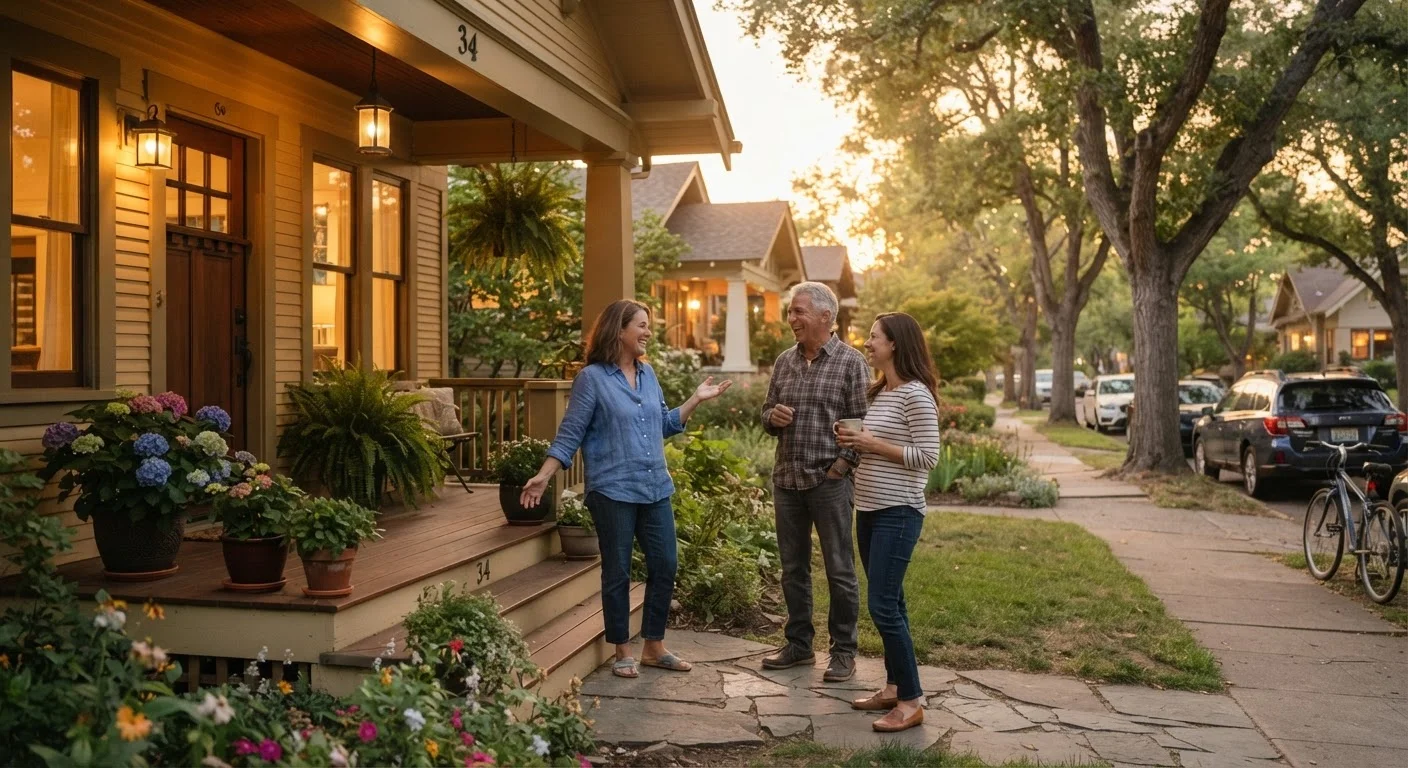
Photo: faqsvault.com editorial
Key Takeaways
- Neighbourhood connection erodes gradually but can be rebuilt through small, deliberate everyday actions.
- You don't need to organise big events — casual, low-stakes interactions are often the most effective foundation.
- Shared physical spaces like parks, libraries, and community boards are powerful catalysts for local belonging.
- Consistency matters more than intensity when building trust with the people who live near you.
- Recognising and accommodating different social comfort levels makes community-building more inclusive.
Why Neighbourhood Connection Has Quietly Slipped Away
Ask most people whether they know their neighbours well, and the honest answer is often: not really. You might recognise a face, exchange a brief nod, or wave from the driveway — but genuine connection? That feels like something from a different era. Yet the longing for it hasn't gone anywhere.
Sociologists and community researchers have observed a broad retreat from local civic life over recent decades. Longer working hours, remote work arrangements, and the gravitational pull of digital social spaces have all shifted where people invest their social energy. As a result, many urban and suburban neighbourhoods have become physically dense but emotionally sparse — full of people who technically live alongside one another while remaining strangers.
This isn't a moral failure. It's the predictable outcome of modern life's structures. But it matters more than most of us realise. Research in public health and social science consistently links strong local social ties to better wellbeing outcomes — from reduced feelings of isolation to greater resilience during difficult periods. The neighbourhood, it turns out, is not just a backdrop to your life. It's part of its fabric.
The good news is that connection doesn't require a complete lifestyle overhaul. It tends to grow from small, repeated interactions — the kind that feel almost too ordinary to count. Understanding that is the first step toward doing something about it. For a broader look at how social belonging plays out across different life contexts, our Relationships & Social Life hub is a helpful place to explore.
The Building Blocks of Local Belonging
Before diving into practical steps, it helps to understand what actually creates a sense of neighbourhood — because it's rarely what people imagine. Most people assume community is built through big organised events: block parties, neighbourhood associations, formal committees. Those things can help, but they're not the foundation. The foundation is much quieter.
Sociologist Ray Oldenburg's concept of third places — the informal social spaces that exist between home and work — gives us a useful frame here. When a neighbourhood has accessible third places (a café where regulars gather, a library reading room, a small park with a bench), casual interaction happens naturally and repeatedly. Those repeated encounters are what breed familiarity, and familiarity is the precursor to trust. Our piece on third places and community explores this idea in more depth.
Local belonging also depends on something less tangible: the feeling that your presence in a place is noticed and valued. That doesn't require grand gestures. It can be as simple as a neighbour remembering your name, or someone checking in when they haven't seen you in a while. These micro-moments of recognition accumulate into something that genuinely feels like belonging.
Low-Key Is Often the Right Key
It's also worth acknowledging that different people have very different social comfort levels. What feels warmly social to one person can feel overwhelming to another. Understanding those differences can make your community-building efforts more genuinely welcoming for everyone on your street.
Practical Steps to Start Building Connection
The following steps are designed to be low-pressure and adaptable. You don't need to commit to all of them at once — pick one or two that feel natural to where you are right now.
Start with a reliable, low-stakes greeting routine
The simplest entry point into neighbourhood connection is consistent acknowledgment. Make eye contact and offer a genuine greeting to the people you regularly pass — on the footpath, at the mailbox, walking a dog. You don't need to stop or hold a conversation. Repeated recognition over time builds a quiet foundation of familiarity that makes deeper interaction feel natural later.
Identify and use your neighbourhood's existing shared spaces
Seek out the local spots where people already gather informally — a community garden, a small park, a library notice board, a laundromat. Spending time in these spaces, rather than moving through them quickly, increases the chance of organic interaction. You're not forcing anything; you're simply making yourself available to the possibility of connection.
Introduce yourself to one new neighbour
Choose one neighbour you see regularly but have never properly met, and introduce yourself. Keep it brief and warm — share your name, perhaps mention where you live on the street, and express genuine interest in them. A simple, unhurried introduction plants a seed that can grow into a real connection over time. Most people are more receptive than the awkwardness of initiation makes them seem.
Offer small, practical gestures of mutual support
Community is often built through reciprocity rather than conversation. Offering to collect a parcel, hold a gate open, or let someone know about a local issue (road works, a lost pet notice) signals that you're a present and attentive neighbour. These gestures communicate care without demanding social energy from either party.
Participate in or initiate one local event or initiative
Once you have a few familiar faces, consider joining something that already exists locally — a community clean-up, a neighbourhood Facebook group, a local market. If nothing obvious exists, a modest initiative of your own (a shared herb garden, a street book exchange) can create a low-pressure anchor point for interaction. Start small and let it grow organically rather than setting expectations that add pressure.
If you're interested in going further and helping to organise something more structured in your area, our article on starting and sustaining a community group offers grounded, practical guidance on building something that lasts beyond initial enthusiasm.
And if you ever wonder whether your online social activity is supplementing or replacing the local connections you crave, it's worth reflecting honestly on that distinction. Our piece on online communities vs. in-person groups can help you think through what each genuinely provides.
When Connection Feels Complicated
Not every neighbourhood is an easy canvas for community-building. Renters who move frequently, people in high-rise buildings with little shared outdoor space, or individuals navigating language barriers face real structural obstacles that good intentions alone won't dissolve. Acknowledging this matters, because community-building advice that ignores context can feel quietly shaming to people who are already trying.
If your own situation makes local connection harder, it's worth remembering that neighbourhood isn't always about geography. For many people — including those in diaspora communities navigating identity across multiple cultural worlds — belonging is constructed across distance and difference. Our piece on diaspora communities and identity reflects on how people build meaningful community outside of simple proximity.
Similarly, for those whose most nourishing relationships exist outside conventional neighbourhood structures, the idea of chosen family offers a meaningful alternative frame for belonging that doesn't depend on accident of address.
The goal, ultimately, isn't to manufacture a nostalgic version of community that may never have existed for everyone. It's to find the forms of local connection that are honest, sustainable, and genuinely yours — and to take small, consistent steps toward them.
All published content on this website is for informational and educational purposes only and should not be taken as professional advice. We recommend that readers seek expert opinion before making any decisions. The website is not responsible for any actions taken based on the information provided on this website. We are not liable for any inaccuracies, modifications, or omissions in information. Moreover, external links or third-party content are provided for convenience; we are not liable for their correctness. Users are advised to verify every piece of information before they use it for any purpose.