
Chosen Family: How Non-Traditional Bonds Become Genuine Community

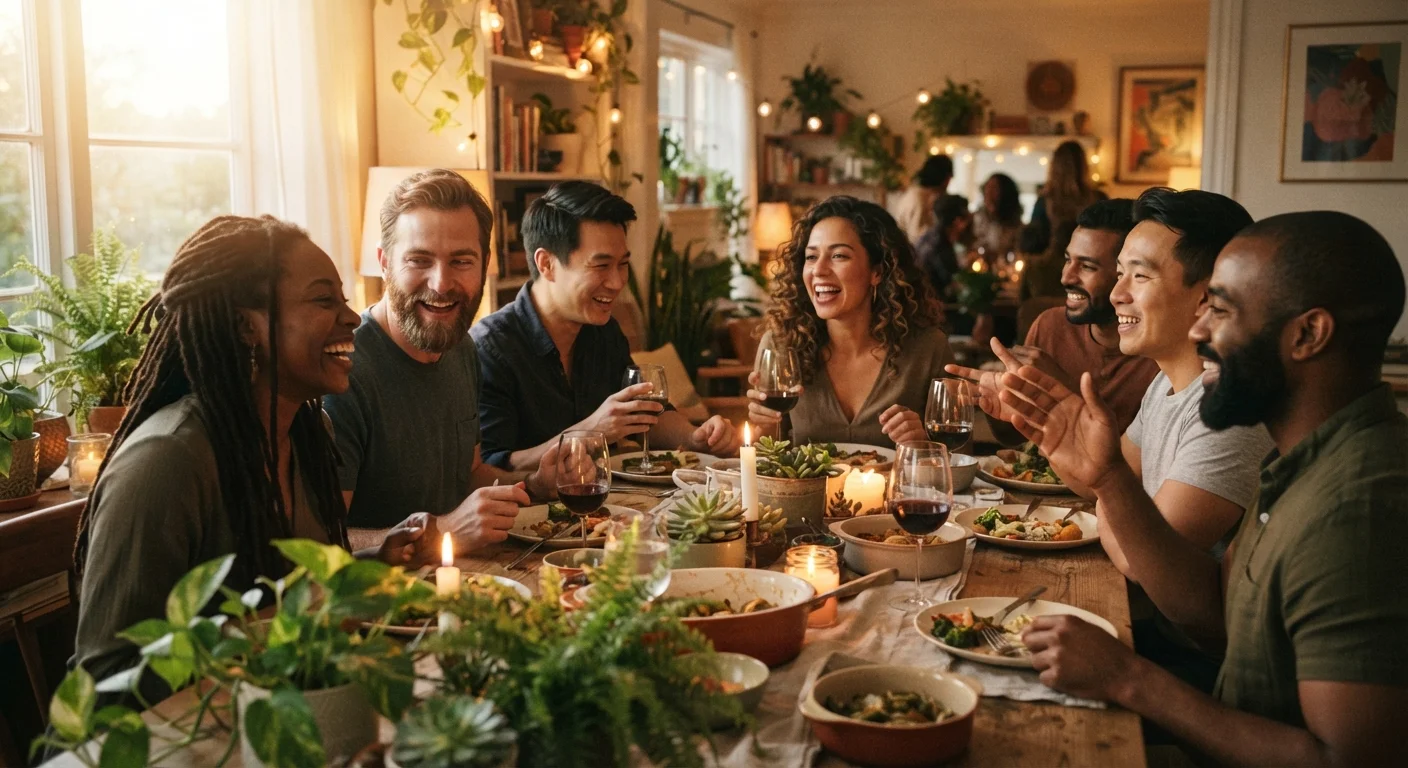
Photo: faqsvault.com editorial
Key Takeaways
- Chosen families are defined by intentional commitment, not blood or legal status.
- These bonds have been especially vital for LGBTQ+ communities, immigrants, and others separated from biological relatives.
- Shared rituals, consistent presence, and mutual accountability help chosen families grow and endure.
- Research consistently links strong social ties — regardless of their origin — to better wellbeing.
- Chosen family is not a replacement for biological family but a valid and meaningful form of kinship in its own right.
Why Some People Find Family Outside the Family
For a significant portion of Americans, the word "family" doesn't automatically conjure warmth or safety. Geographic distance, estrangement, cultural disconnection, rejection, or simply growing up in a household that couldn't offer genuine belonging — these experiences push many people to look elsewhere for their deepest sense of home.
The result isn't loneliness. It's often something quietly remarkable: a network of people who didn't have to be there but chose to be anyway. These are chosen families — relationships that carry the emotional weight of kinship without the accident of shared biology.
Understanding what belonging actually means helps explain why these bonds matter so much. Humans are wired for deep social connection, and when traditional structures don't provide it, people adapt. Chosen family is one of the most enduring and human ways we do exactly that.
Roots of the Concept: A Brief Cultural History
The phrase "chosen family" became widely recognized in the 1980s and 1990s, particularly within LGBTQ+ communities facing rejection from biological relatives and the devastating losses of the AIDS crisis. Drag houses, queer social networks, and tight-knit groups of friends stepped in as primary caregivers, mourners, and celebrants when blood family had stepped away.
Anthropologist Kath Weston's 1991 book Families We Choose documented this phenomenon among gay and lesbian communities in San Francisco, giving academic shape to what many were already living. But the practice reaches further back and wider out. Immigrant communities have long built kinship networks across bloodlines, using terms like "uncle" or "auntie" for trusted elders who carry no biological relationship. African American extended community traditions, godparent customs in Latino cultures, and clan-like bonds in many Indigenous communities all reflect the same fundamental human instinct: that family is as much about commitment as it is about genetics.
26%
Americans who feel no one knows them well
A 2018 survey by Cigna found that roughly one in four American adults reported feeling that no one truly knew them — pointing to the scale of the belonging gap that chosen family can help address.
~1 in 4
LGBTQ+ youth rejected by biological family
Research from the Family Acceptance Project suggests that a significant proportion of LGBTQ+ young people experience family rejection, making supportive chosen networks a critical resource for their wellbeing.
50%
Higher survival odds linked to strong social ties
A widely cited meta-analysis published in PLOS Medicine found that people with adequate social relationships had roughly 50% greater odds of survival compared to those with poor or insufficient social connection.
What Makes a Chosen Family Actually Work
Sentiment alone doesn't sustain a chosen family. What distinguishes these bonds from ordinary friendship is the active, repeated choice to prioritize one another — through inconvenience, through conflict, through life's unglamorous stretches.
Several elements tend to define functional chosen families:
- Consistent presence: Showing up not just for celebrations but for hospital waiting rooms, moving days, and low-grade Tuesday struggles.
- Shared rituals: Regular dinners, annual traditions, or even group chat check-ins that create a rhythm of connection. Rituals do more than mark time — as explored in how ritual sustains community identity, they actively reinforce shared belonging.
- Mutual accountability: The willingness to offer honest feedback and receive it — the kind of candor usually reserved for close relatives.
- Explicit acknowledgment: Many chosen families strengthen their bonds by naming them — by saying, out loud, "you are family to me."
These dynamics also reflect the broader tensions between individual identity and group belonging, a subject worth examining in its own right through the lens of collective vs. individual identity.
The Wellbeing Case for Chosen Family
Research on social connection consistently finds that the quality and reliability of close relationships — not their legal or biological category — is what matters most for mental and physical health. Strong social ties have been linked in numerous studies to longer life expectancy, lower rates of depression and anxiety, and greater resilience under stress.
For people who have experienced family rejection or estrangement, chosen family isn't just emotionally meaningful — it can be a genuine source of stability. This is particularly well-documented among LGBTQ+ young adults: studies have found that those with accepting chosen family networks report significantly better mental health outcomes than those without supportive relationships of any kind.
“We don't get to choose our biological families, but we do have a say in who we allow into our lives and into our hearts. That choice — and the ongoing act of nurturing it — is what transforms a group of friends into something that functions, at its best, like family.”
— Kath Weston, Cultural anthropologist and author of Families We Choose
Of course, these bonds face their own vulnerabilities. Unlike biological family, chosen family members aren't held together by legal obligation or shared history stretching back to childhood. Sustaining them requires intention — and recognizing the patterns that erode community bonds before they do serious damage.
Chosen Family Across Different Life Contexts
Chosen family isn't a single experience — it looks different depending on who you are and what you've navigated.
In each case, the common thread is the same: people reaching across the arbitrary limits of biology and circumstance to build something that functions, feels, and sustains like family. Whether you're exploring this through the lens of online versus in-person friendship, or through the practical work of starting a lasting community group, the underlying human need is consistent: to be known, accepted, and genuinely wanted.
Frequently Asked Questions
All published content on this website is for informational and educational purposes only and should not be taken as professional advice. We recommend that readers seek expert opinion before making any decisions. The website is not responsible for any actions taken based on the information provided on this website. We are not liable for any inaccuracies, modifications, or omissions in information. Moreover, external links or third-party content are provided for convenience; we are not liable for their correctness. Users are advised to verify every piece of information before they use it for any purpose.