
Diaspora Communities: Identity Across Borders and Generations

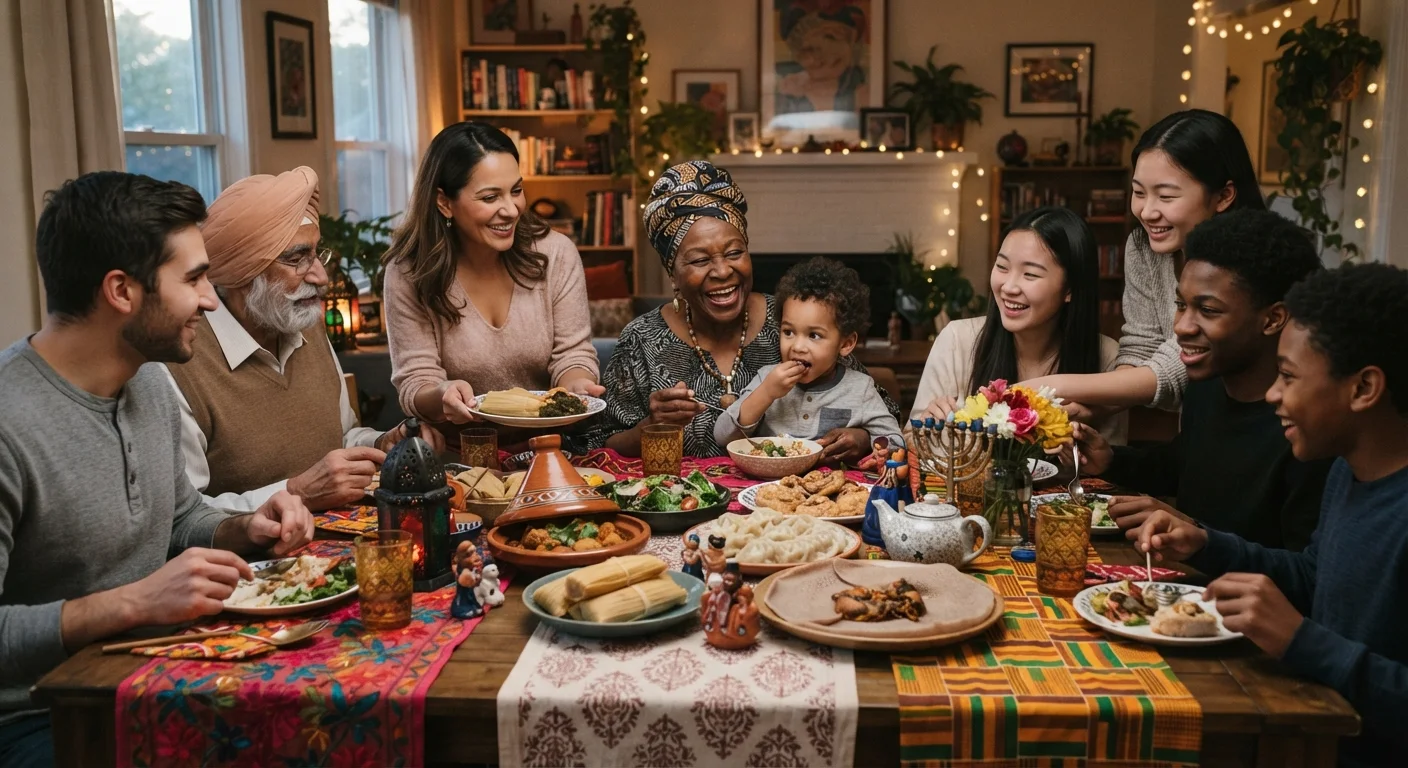
Photo: faqsvault.com editorial
What It Means to Live Between Two Worlds
Millions of people around the world carry more than one home inside them. Whether their families moved one generation ago or several, diaspora communities occupy a particular kind of cultural in-between — shaped by the place they came from and the place they now inhabit. This experience is neither simple loss nor simple gain. It is, most often, both at once.
The word diaspora originally referred to the scattering of populations from their ancestral homeland — historically applied to Jewish, Greek, and Armenian communities, among others. Today it describes any community living outside the territory associated with their ethnic, national, or cultural origin. The scale is vast: hundreds of millions of people globally live in countries different from those of their birth or heritage.
What makes diaspora identity distinctive is its layered quality. A second-generation Nigerian American, for example, may hold deep ties to Yoruba traditions at home while navigating a predominantly American cultural world at school or work. Neither identity cancels the other out. Understanding how this works — and why it matters — is a meaningful part of understanding how communities form and persist. For a broader look at how identity gets constructed in the first place, see the many ways people define their cultural identity.
Diaspora
A community of people living outside the territory associated with their ethnic, national, or cultural origin, often maintaining ties to that homeland across generations.
Third Culture
A concept used to describe individuals who grow up between two cultures — the heritage culture of their family and the host culture of the country they live in — developing a hybrid identity distinct from either.
Cultural Continuity
The ongoing transmission of cultural practices, values, language, and traditions from one generation to the next, even when communities are displaced or dispersed.
Heritage Language
A language connected to a person's ethnic or cultural background that is typically spoken at home but not the dominant language of the country in which they live.
Transnationalism
The sustained social, economic, cultural, and political connections that diaspora communities maintain with their countries of origin while living abroad.
Host Country
The country in which a diaspora community currently resides, as distinct from their ancestral or origin country.
How Identity Shifts Across Generations
One of the most revealing dynamics within diaspora communities is how identity changes — sometimes dramatically — from one generation to the next. First-generation immigrants often maintain the strongest ties to the culture of origin: they speak the language fluently, observe traditional practices, and may feel a persistent sense of belonging to the homeland even decades after leaving.
For second and third generations, the experience tends to be more complicated. They are often more fluent in the culture of the country they grew up in, yet they may feel not fully accepted there either. Researchers sometimes call this the third culture experience — a sense of belonging fully to neither the heritage culture nor the host culture, but to a distinct, hybrid space forged between them.
This generational tension can surface in everyday moments: a teenager embarrassed by a parent's accent at a school event; an adult rediscovering ancestral recipes after years of distance; a grandchild learning a language they never grew up speaking. These moments aren't simply personal — they reflect broader patterns in how cultures travel and transform over time. The tensions between group belonging and individual selfhood that diaspora families navigate are explored more deeply in our piece on collective identity vs. individual identity.
| Global diaspora scale | Over 280 million international migrants worldwide (United Nations, International Migration Report 2022) |
| Language fade | Heritage languages often lost by the 3rd generation (General linguistic research consensus) |
| Term origin | "Diaspora" derives from ancient Greek, meaning "to scatter" (Etymology — classical Greek) |
| Common cultural anchors | Food, religion, language, music, and storytelling (Widely documented in diaspora studies) |
| Generational shift | Second-generation members often navigate dual cultural allegiances daily (Pew Research Center, various immigration studies) |
Community Spaces, Digital Networks, and Keeping Culture Alive
Diaspora communities have always relied on shared spaces to sustain culture across distance — religious institutions, cultural centers, restaurants, and neighborhood enclaves have all served this function. These aren't just social conveniences; they are places where language gets practiced, recipes pass between hands, and children absorb cultural knowledge without formal instruction. Third places — libraries, cafés, community halls — play a quiet but crucial role in this cultural continuity.
In recent decades, digital platforms have added a new layer to this infrastructure. Online diaspora communities allow people separated by geography to maintain cultural connection — sharing news from the homeland, organizing virtual celebrations, and supporting one another through shared experience. For many younger diaspora members, these digital spaces are as meaningful as physical ones. To understand what each type of community uniquely offers, it's worth exploring what online communities and in-person groups each provide.
Language preservation is one of the most concrete challenges. Many diaspora families report that heritage languages fade by the third generation without deliberate effort — language classes, media in the mother tongue, and visits to the ancestral country all help, though none guarantees continuity. Food, music, religious practice, and storytelling tend to persist longer, often outlasting fluency in the original language as carriers of cultural memory.
It's also worth noting that diaspora communities are not static. They evolve, remix, and produce new cultural forms — music genres, cuisines, art movements — that influence both the host country and the homeland. This is quite different from the older assimilation model, which assumed that immigrant cultures would simply dissolve into the dominant one. The reality, as research increasingly shows, is far more dynamic. For a closer look at how assumptions about assimilation often miss the mark, see common myths about assimilation and what actually happens when cultures meet.
All published content on this website is for informational and educational purposes only and should not be taken as professional advice. We recommend that readers seek expert opinion before making any decisions. The website is not responsible for any actions taken based on the information provided on this website. We are not liable for any inaccuracies, modifications, or omissions in information. Moreover, external links or third-party content are provided for convenience; we are not liable for their correctness. Users are advised to verify every piece of information before they use it for any purpose.