
Common Myths About Assimilation and What Actually Happens When Cultures Meet

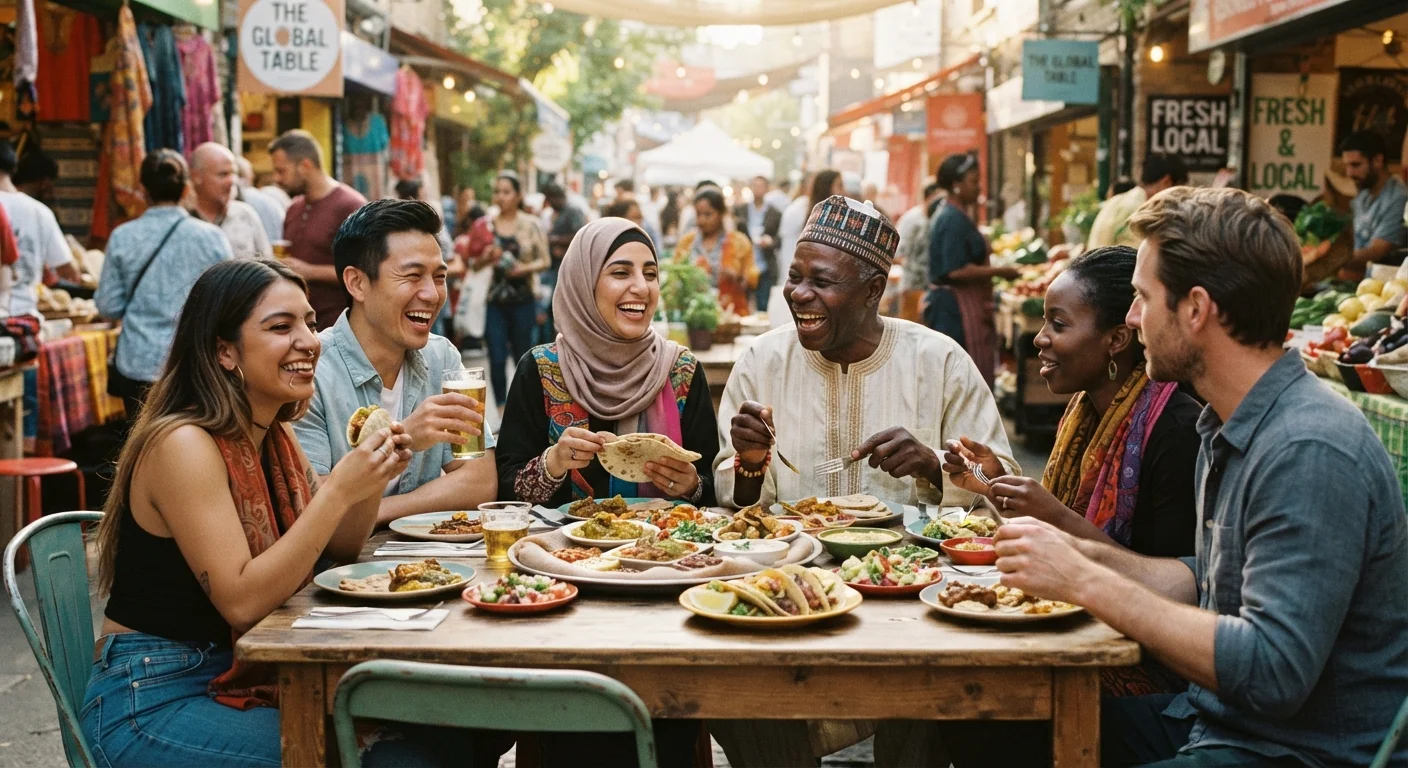
Photo: faqsvault.com editorial
Key Takeaways
- Assimilation is rarely a complete replacement of one culture with another.
- People regularly maintain multiple cultural identities at once, adapting by context.
- Acculturation research shows cultural exchange is typically bidirectional, not one-directional.
- Second and third generations often reclaim heritage their parents set aside.
- Speed of integration varies enormously by individual circumstance, not personal willingness alone.
Why the Myths About Assimilation Persist
When a newcomer joins a community — whether a family relocating across the country or an immigrant settling into an unfamiliar city — certain assumptions tend to follow. People expect visible change. They watch for accent shifts, wardrobe updates, dietary switches. Beneath that watching is a powerful, rarely examined idea: that belonging somewhere new requires letting go of somewhere old.
This idea shapes policy debates, family expectations, and personal anxieties. It also happens to be poorly supported by decades of research in sociology, anthropology, and migration studies. The reality of what happens when cultures meet is far messier, more layered, and frankly more interesting than simple replacement stories suggest. Understanding how cultural identity is actually formed is a useful starting point before untangling these myths.
The Myths — and What Research Actually Shows
Below are some of the most common misconceptions about assimilation, paired with a clearer picture of what social scientists have documented over time.
Myth
Assimilation means immigrants eventually adopt the host culture completely, leaving their original culture behind.
Fact
Most people who move between cultures develop layered, hybrid identities rather than abandoning one set of practices for another.
Sociologists distinguish between several types of cultural change, including integration (maintaining heritage while adopting new practices), assimilation (full adoption of the new culture), separation (retaining the original culture with minimal adoption of the new), and marginalization. Research by social psychologist John Berry and others has found that integration — not full assimilation — is the most commonly reported outcome among immigrant populations, and is also associated with better psychological well-being. Most people don't wholesale trade one identity for another; they build something genuinely new from both.
Myth
If someone assimilates quickly, it shows they wanted to fit in; if they take a long time, they're resisting.
Fact
The pace of cultural adaptation is shaped heavily by structural factors — employment, housing, language access, discrimination — not just personal willingness.
Attributing slow integration to personal resistance ignores the conditions people are actually navigating. Access to language instruction, legal status, economic stability, discrimination in hiring or housing, and geographic isolation all affect how quickly or deeply someone can participate in a new community's institutions. A person working three jobs in an isolated ethnic enclave is not resisting integration; they may simply lack the time, resources, or safe pathways to pursue it. Conflating circumstance with attitude leads to unfair judgments and poor policy.
Myth
Second-generation immigrants are fully assimilated and no longer meaningfully connected to their parents' culture.
Fact
Many second-generation people experience a cultural reclamation in adulthood, actively reconnecting with heritage their parents had set aside.
The assimilation story is often assumed to be linear — first generation arrives, second generation blends in, third generation is indistinguishable from everyone else. Researchers have found this arc is far more varied. Some second-generation individuals do adopt the dominant culture extensively. Others experience what scholars call ethnic identity resurgence — a deliberate reconnection with ancestral languages, foods, traditions, and communities, often in young adulthood. Third-generation return to roots has been documented across many immigrant groups in the U.S. and elsewhere. Identity across generations is better understood as a spiral than a straight line.
Myth
Cultural assimilation is a neutral, natural process that happens on its own when people live in close proximity.
Fact
Assimilation is heavily shaped by power dynamics, historical context, and deliberate policy — it is rarely neutral or automatic.
Histories of forced assimilation — including policies targeting Indigenous languages, boarding school systems designed to erase cultural practices, and legal exclusions based on national origin — demonstrate that cultural change is not simply a natural by-product of proximity. Power determines whose practices are deemed acceptable, whose languages are taught in schools, whose holidays become public, and whose food is called "ethnic" versus simply "food." Ignoring this context makes assimilation sound passive and benign when it has often been coercive and unequal. Acknowledging power doesn't deny that genuine, voluntary cultural blending also happens — it simply insists on honesty about the full picture.
Myth
When cultures mix, the result is confusion or loss — for both the newcomer and the host community.
Fact
Cultural contact consistently produces new forms of expression, language, food, music, and social practice that enrich both groups.
Anxiety about cultural mixing often centers on loss — of purity, coherence, or tradition. But documented cultural history tells a different story. Jazz, for example, emerged from the convergence of African, European, and Caribbean musical traditions. American English has absorbed thousands of words from dozens of languages. Regional cuisines evolve continuously through contact. These aren't signs of cultural confusion; they're evidence of vitality. Some traditions do fade or transform under pressure, and communities have every right to protect what matters to them. But the general outcome of cultural contact is creation as much as loss — often more so.
The Bidirectional Nature of Cultural Contact
One of the most overlooked findings in acculturation research is that cultural exchange runs in both directions. Host communities change, too. Cuisine, language, music, architecture, and social norms in the United States, for example, have been demonstrably shaped by successive waves of immigration across centuries. The people who arrived didn't simply absorb American culture — they altered it.
This dynamic is closely related to questions of cultural appropriation versus cultural exchange, debates that only make sense once we recognize how much movement happens in both directions. Borrowed foods become comfort foods. Borrowed words become standard vocabulary. Borrowed rhythms become genre-defining music.
For people living between cultures — a situation explored thoughtfully in discussions about diaspora communities and intergenerational identity — this bidirectionality is lived daily. They translate not just language but meaning, adapting in ways that shape both the communities they came from and the ones they now inhabit.
Identity Is Not a Zero-Sum Game
Perhaps the most important correction to the standard assimilation story is conceptual: cultural identity is not a fixed container that fills up with one thing and must empty another to make room. Research in social psychology consistently shows that people hold multiple, overlapping identities simultaneously — and that the salience of any given identity shifts by context, relationship, and life stage.
A person can speak Spanish at home, English at work, celebrate Diwali with family, and cheer at a Fourth of July barbecue — not because they are performing contradictions, but because human identity has always been layered. The tension between group belonging and personal uniqueness is real, and worth examining carefully, as explored in discussions of collective versus individual identity.
What helps most people navigate that tension isn't pressure to choose one identity over another. It's space — social, relational, and institutional — to hold complexity without being penalized for it. When that space exists, people tend to integrate into new communities while maintaining meaningful connections to their origins. When it doesn't, the psychological costs can be significant.
Cultural contact, in other words, is less an erasure and more an ongoing negotiation. The outcome is shaped by the specific people involved, the power dynamics at play, the policies that govern their lives, and the communities willing to make room. None of that fits neatly into simple before-and-after stories — which is exactly why those stories keep needing to be corrected.
All published content on this website is for informational and educational purposes only and should not be taken as professional advice. We recommend that readers seek expert opinion before making any decisions. The website is not responsible for any actions taken based on the information provided on this website. We are not liable for any inaccuracies, modifications, or omissions in information. Moreover, external links or third-party content are provided for convenience; we are not liable for their correctness. Users are advised to verify every piece of information before they use it for any purpose.