
The Many Ways People Define Their Cultural Identity

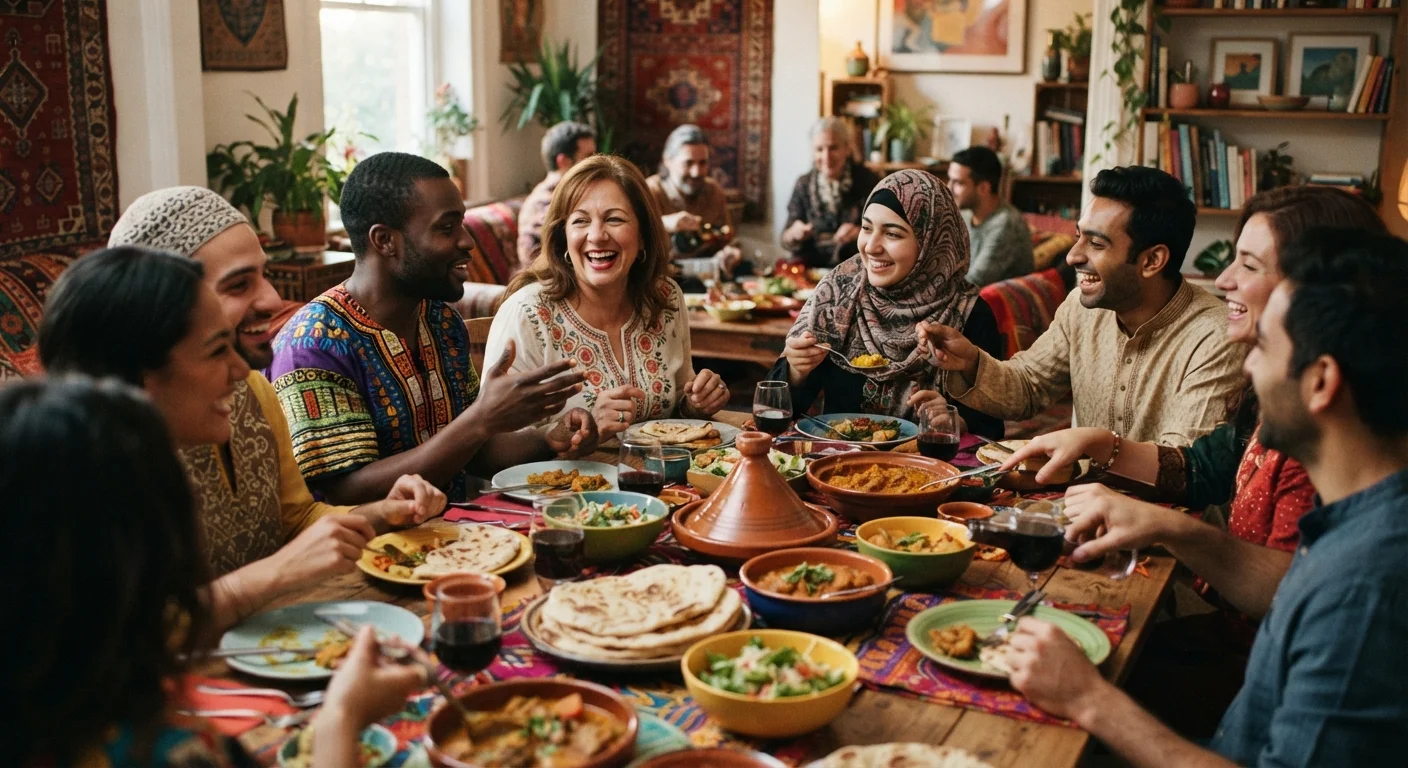
Photo: faqsvault.com editorial
Key Takeaways
- Cultural identity is rarely fixed — it evolves throughout a person's life as circumstances and relationships change.
- Ancestry, language, shared values, and lived experience all contribute to how people understand their cultural belonging.
- Identity can be inherited, chosen, negotiated, or layered — and often involves more than one community at once.
- There is no single correct way to claim or express a cultural identity.
- Understanding how identity forms helps foster empathy across communities and reduces harmful stereotyping.
Why Cultural Identity Matters
Ask someone who they are, and chances are some version of cultural identity will surface — a nationality, an ethnicity, a faith tradition, a regional hometown pride, or a sense of belonging to a particular way of life. Cultural identity shapes how people interpret the world, how they feel seen (or unseen), and how they connect with others.
Yet the concept resists a single, tidy definition. Scholars across anthropology, sociology, and psychology tend to agree that cultural identity is not a fixed label assigned at birth but a living, dynamic sense of self built from multiple sources — and subject to change. As our communities, relationships, and experiences shift, so can the way we understand our own cultural place in the world.
The list below explores some of the most meaningful dimensions through which people define and experience their cultural identity. These aren't mutually exclusive categories — most people draw on several simultaneously. For a deeper look at how these layers interact, understanding intersectionality in everyday life offers a useful framework.
Ancestry and ethnic heritage
For many people, cultural identity begins with where they — or their family — came from. Ethnic heritage connects individuals to a lineage of customs, stories, foods, rituals, and collective memory that predate their own birth. This inherited identity can carry deep emotional weight, offering a sense of roots and continuity across generations.
At the same time, ancestry-based identity is nuanced. People with mixed heritage may navigate multiple lineages simultaneously, sometimes feeling fully claimed by none. Others may have little detailed knowledge of their ethnic background — due to adoption, displacement, or gaps in family history — and still feel a meaningful pull toward exploring it. Heritage is a starting point, not a verdict.
Ancestry offers roots and continuity, but heritage is a starting point — not a verdict on who you are.
Language and communication style
Language is one of the most intimate carriers of culture. Speaking a particular language — or a dialect, creole, or regional variety of one — connects people to a shared way of naming and interpreting the world. For many bilingual and multilingual individuals, different languages access different emotional registers and relationships; switching between them is itself a form of cultural code-switching.
Even within a single language, communication styles rooted in cultural norms — directness versus indirectness, formal versus informal register, the role of silence or humor — can signal deep group membership. Losing access to an ancestral language, as many children of immigrants experience, can create a particular kind of identity grief. Reclaiming it can feel like reclaiming part of oneself.
For many bilingual people, different languages access different emotional registers and relationships.
Shared values, beliefs, and worldview
Culture transmits not just practices but also perspectives — ideas about what matters most, how individuals relate to communities, what counts as respect or success, and how people understand time, fate, and obligation. These values may be shaped by religion, philosophy, or centuries of collective experience, and they often persist even when outward traditions fade.
Someone who no longer practices the religion of their upbringing may still carry deeply internalized values from it. A person raised in a collectivist culture may find themselves navigating tension when transplanted into a more individualistic environment. These underlying worldviews are powerful, often invisible, and central to how people experience belonging — or its absence.
Cultural values often persist even when outward traditions fade, shaping how people experience belonging.
Place and geographic identity
Where someone grows up — a specific city, region, or country — leaves a lasting cultural imprint. Regional identities carry their own dialects, foods, humors, histories, and shared references. A person from rural Appalachia, coastal Louisiana, or urban Chicago brings a distinct cultural lens formed by landscape, community, and local history.
Geographic identity can also be complicated by displacement. Refugees, immigrants, and even domestic migrants often carry a powerful attachment to a place they can no longer call home in the same way. The culture of origin doesn't disappear when the geography changes — it travels inward, shaping memory, longing, and the particular creativity that comes from living between worlds.
Geographic identity travels inward when people move — shaping memory and longing long after the landscape changes.
Chosen community and lived experience
Not all cultural identity is inherited. People also build it through the communities they actively join — faith congregations, professional groups, artistic movements, social causes, or the niche subcultures that form around shared passions. These chosen affiliations can become just as foundational to identity as ancestry or birthplace.
Lived experience also shapes cultural identity in ways that demographics alone cannot predict. Shared hardship, collective celebration, and the particular texture of everyday life within a community create bonds and frameworks for understanding the world. This is why two people with identical ethnic backgrounds can have profoundly different cultural identities — their lived experiences diverged.
Chosen communities and lived experience can become just as foundational to identity as ancestry or birthplace.
Self-identification and personal narrative
Ultimately, cultural identity also involves the story people tell about themselves — the labels they claim, the communities they align with, and the aspects of their background they choose to foreground or set aside. Self-identification is a form of agency, and it matters. Research in social psychology consistently finds that how people identify themselves influences their behavior, sense of purpose, and psychological well-being.
This doesn't mean identity is entirely self-created or that external forces don't shape — and sometimes constrain — it. But the act of narrating one's own cultural identity, rather than simply receiving it, is itself meaningful. What authenticity actually means in the context of personal identity is a conversation worth having.
How people narrate their own cultural identity — the story they choose to tell — is itself a meaningful act of agency.
Identity Is a Conversation, Not a Conclusion
What stands out across all these dimensions is that cultural identity is less a destination than an ongoing dialogue — with family, community, history, and oneself. People may feel deeply rooted in one tradition while also being shaped by another; they may reclaim an identity they were once estranged from, or deliberately step away from one that no longer fits.
This fluidity can feel disorienting at times, especially when outside pressures push people to choose a single, legible label. The tension between collective belonging and individual selfhood is real and worth examining — explore how people navigate that tension for a closer look. And when cultures meet — through migration, intermarriage, or simply living side by side — the outcomes are rarely as simple as one replacing the other. What actually happens when cultures meet may surprise you.
Approaching cultural identity with curiosity rather than assumptions — in ourselves and in others — tends to open more doors than it closes.
Stay Curious About Your Own Identity
All published content on this website is for informational and educational purposes only and should not be taken as professional advice. We recommend that readers seek expert opinion before making any decisions. The website is not responsible for any actions taken based on the information provided on this website. We are not liable for any inaccuracies, modifications, or omissions in information. Moreover, external links or third-party content are provided for convenience; we are not liable for their correctness. Users are advised to verify every piece of information before they use it for any purpose.