
Cultural Appropriation vs. Cultural Exchange: Where the Line Is Drawn and Why It Moves

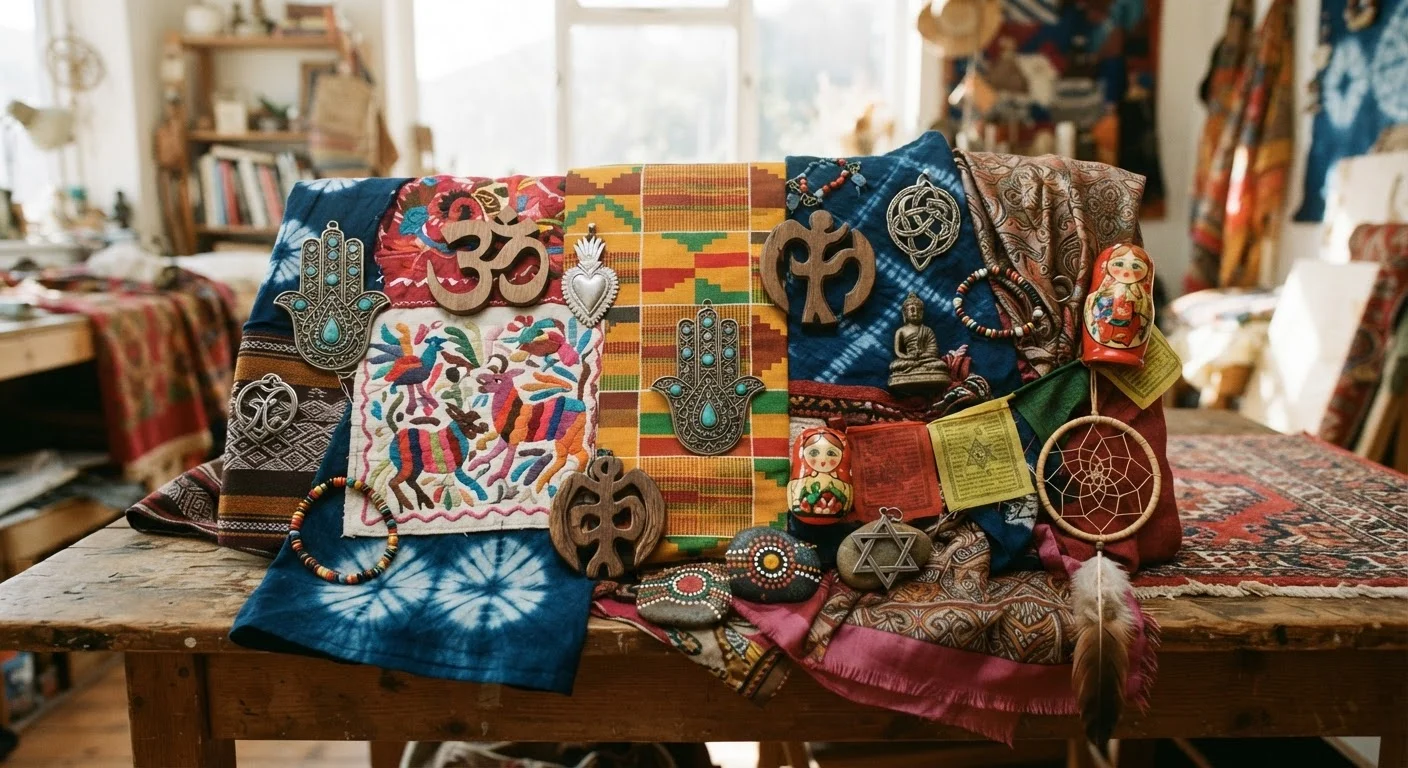
Photo: faqsvault.com editorial
Key Takeaways
- Cultural exchange involves mutual respect and consent; appropriation typically involves an imbalance of power.
- The line moves because culture itself is dynamic, and communities' own views evolve over time.
- Intent matters, but impact on the source community carries significant weight in these conversations.
- Context — historical, economic, and social — shapes whether a cultural borrowing is harmful or enriching.
- Asking, listening, and crediting the source culture are practical steps that shift exchange from extractive to reciprocal.
Why This Conversation Is So Hard to Have
Few cultural debates generate more heat with less resolution than the one over cultural appropriation. People talk past each other constantly — some dismissing the entire concept as overcorrection, others applying it so broadly that virtually any cross-cultural contact feels suspect. Neither posture helps anyone understand what's actually at stake.
The honest starting point is that culture has never been sealed off from outside influence. Humans have always borrowed, adapted, and remixed across group boundaries — from cuisine and music to clothing and language. What makes certain forms of borrowing feel like theft, and others feel like celebration? Scholars in fields ranging from anthropology to critical race theory have spent decades developing frameworks to answer that question, and those frameworks are worth understanding. See how to read a cultural moment without jumping to conclusions for practical tools that apply here too.
The core distinction most scholars draw is this: cultural exchange involves a relatively equal relationship, ideally with knowledge, consent, and credit flowing alongside the cultural element itself. Cultural appropriation describes a dynamic where a more socially or economically powerful group adopts elements from a marginalized group — often without credit, compensation, or understanding — while members of that original group face penalties for the same expression.
Common Myths, Corrected
Much of the public debate is driven by misconceptions on multiple sides. The myth-and-fact pairs below work through the most persistent ones, drawing on documented research and community perspectives rather than talking points.
Myth
Cultural appropriation means no one from outside a culture should ever adopt any of its practices.
Fact
Appropriation describes a specific power-imbalanced dynamic, not all cross-cultural borrowing. Respectful exchange with context and consent is widely celebrated by the very communities in question.
The conflation of all cultural borrowing with appropriation is one of the most common misreadings of the concept. Anthropologists and cultural critics who developed this framework were specifically analyzing situations where dominant groups extract elements from marginalized cultures without credit, compensation, or understanding — while those same communities face social penalties for the same expression. Invitation, collaboration, and mutual respect transform the ethical picture significantly.
Myth
If you appreciate a culture, you can't be appropriating it — intent is what matters.
Fact
Sincere admiration doesn't automatically prevent harm. Impact on the source community matters as much as, and often more than, the borrower's intentions.
Intent is genuinely relevant — it distinguishes deliberate mockery from thoughtless ignorance — but it doesn't fully determine impact. A person can sincerely love another culture's music while unknowingly reproducing dynamics that extract economic and creative value from the originating community. Scholarship on this topic, including work by sociologists like Orlando Patterson, points to structural factors — credit, compensation, access — as the more durable indicators of whether an exchange is equitable.
Myth
Culture is meant to be shared freely, so calling out appropriation is just gatekeeping.
Fact
Cultural sharing is genuinely valued across human societies, but "free sharing" doesn't mean consequence-free extraction, especially when power and history are involved.
The "culture is for everyone" argument is often technically true and practically incomplete. Yes, culture moves and evolves through contact. But when elements tied to survival, identity, or spiritual practice are commodified by outsiders for profit — while the originating group remains economically or socially marginalized — the power differential makes the transaction ethically complicated. Naming that dynamic isn't gatekeeping; it's analysis. As research on cross-cultural social norms shows, concepts like reciprocity vary widely, and what feels like openness in one framework can feel like taking in another.
Myth
The concept of cultural appropriation is a recent invention with no serious intellectual foundation.
Fact
The term has roots in academic discourse going back to at least the 1980s, with sustained development in postcolonial theory, sociology, and cultural studies.
While the term became prominent in mainstream discourse in the 2010s, it was developed in academic contexts decades earlier. Scholars working in postcolonial theory — building on thinkers like Frantz Fanon and Edward Said — examined how dominant cultures absorb and repackage the cultural production of colonized peoples in ways that benefit the colonizer economically and symbolically while erasing origin. The concept has a substantive intellectual history, even if its pop-culture usage is sometimes less precise than the original framework.
Myth
Only visible minorities can experience cultural appropriation.
Fact
The relevant factor is power imbalance and historical exploitation, not racial category alone. However, in the U.S. and similar contexts, historically marginalized groups are most frequently the source communities in documented cases.
While most high-profile appropriation debates in the U.S. involve racial dynamics — because racial hierarchy has structured so much of American cultural and economic life — the underlying framework isn't strictly racial. It's about the relationship between a borrowing group and a source community, including whether that relationship is characterized by historical exploitation, ongoing inequality, or extractive commercialization. Context always shapes the analysis.
Why the Line Keeps Moving
One of the most common frustrations people express is that the rules seem to change. Something celebrated a decade ago is condemned today. This instability isn't a sign that the conversation is arbitrary — it reflects the fact that cultures are not static objects, and neither are communities' relationships to their own practices.
Several forces explain the movement:
- Shifting power dynamics: When a historically marginalized community gains greater social visibility and voice, its members are better positioned to articulate harm they always experienced but couldn't previously amplify. The conversation hasn't become more restrictive so much as more audible.
- Commodification at scale: A neighborhood kid wearing a dashiki at a friend's invitation occupies a very different ethical position than a global fashion brand mass-producing sacred Indigenous designs without permission or royalties. The same element, extracted at scale and sold for profit, changes the moral calculation.
- Reclamation and context: Communities sometimes reclaim symbols or practices that outsiders previously treated as taboo or exotic. When a group signals that broader participation is welcome — through collaboration, licensing, or explicit invitation — the ethics of borrowing shift accordingly.
This context-dependence isn't inconsistency; it's accuracy. Treating every situation with the same blunt standard actually obscures the real differences between cases. For deeper reading on how cultural contact plays out over time, explore what research says about cultural assimilation.
Over 70%
of Indigenous artists report uncredited use of their work
A survey by the First Peoples Worldwide organization found a substantial majority of Indigenous artists had experienced their designs or cultural imagery used commercially without permission or credit.
44
countries with legal protections for traditional cultural expressions
The World Intellectual Property Organization (WIPO) has documented that dozens of nations have adopted some form of legal framework to protect traditional knowledge and cultural expressions from unauthorized commercial use.
Practical Ways to Navigate Cross-Cultural Engagement
Understanding the framework intellectually is one thing; knowing how to act in everyday life is another. A few principles — drawn from community advocates, educators, and cultural practitioners — tend to reappear across conversations about ethical engagement:
- Ask before adopting. When a cultural practice or garment carries ceremonial or spiritual significance, reaching out to members of that community — rather than assuming — is a meaningful show of respect.
- Credit visibly and specifically. Saying "this style is inspired by Yoruba textile traditions" is meaningfully different from presenting something as your own original creation. Visible attribution honors the source and educates your audience.
- Follow money as well as attention. If borrowing a cultural element generates revenue, consider whether any of that value flows back to the origin community — through collaboration, licensing, or direct support of community artisans.
- Listen when community members object. Discomfort about a specific use is data, not just emotion. The community most affected by a practice is usually best positioned to articulate why a particular instance feels extractive rather than celebratory.
None of this requires perfect knowledge before any cross-cultural contact occurs. It does require curiosity, humility, and a willingness to update when you learn more. These same habits make all cultural conversations more productive — a point explored in depth at navigating conversations about culture and trends without talking past each other.
It's also worth noting that the broader discourse around accountability in culture — including who gets called out and for what — has its own complicated dynamics. Understanding what the evidence actually shows about cancel culture helps place these debates in a fuller context.
All published content on this website is for informational and educational purposes only and should not be taken as professional advice. We recommend that readers seek expert opinion before making any decisions. The website is not responsible for any actions taken based on the information provided on this website. We are not liable for any inaccuracies, modifications, or omissions in information. Moreover, external links or third-party content are provided for convenience; we are not liable for their correctness. Users are advised to verify every piece of information before they use it for any purpose.