
Cancel Culture: Separating What People Believe from What the Evidence Shows

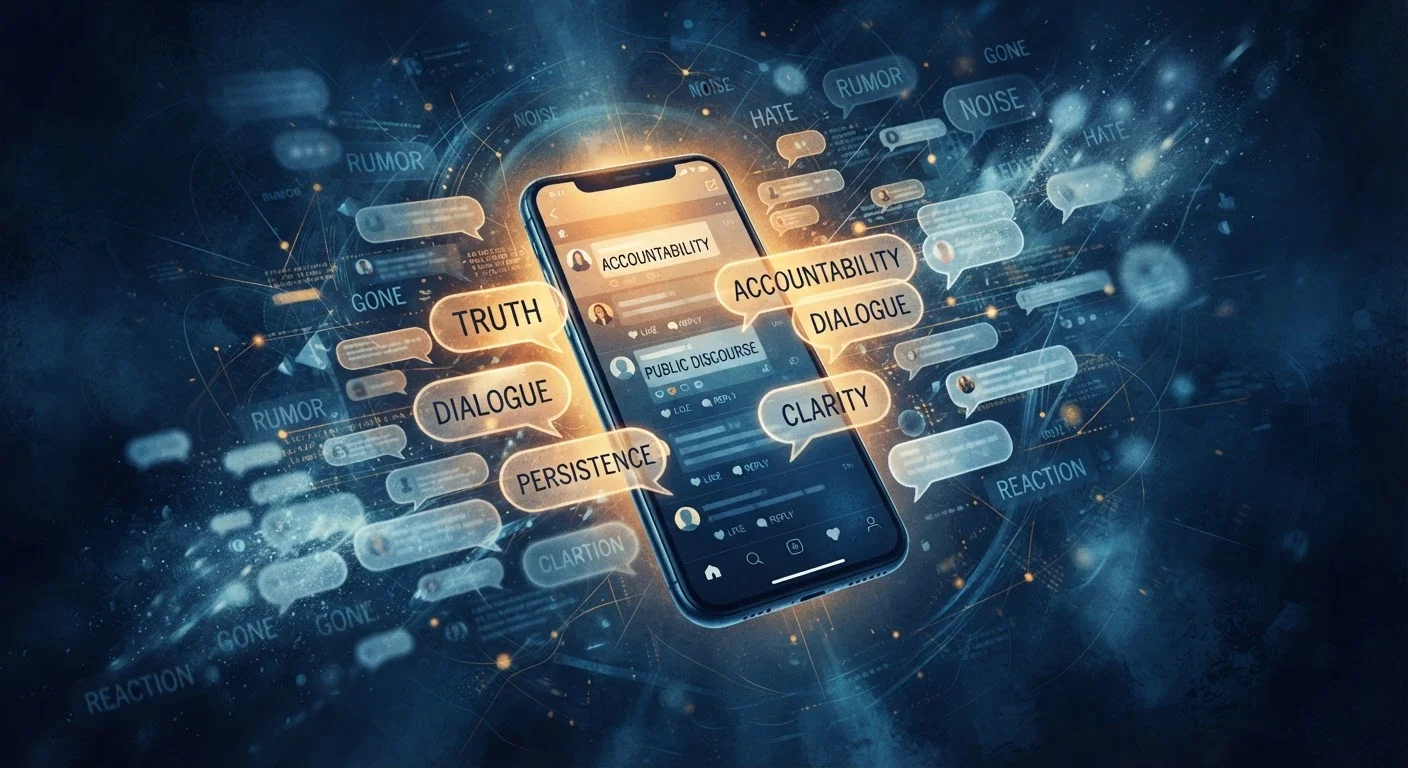
Photo: faqsvault.com editorial
Key Takeaways
- Most people labeled 'canceled' face temporary backlash, not permanent career destruction.
- Research shows online pile-ons are often brief and do not reflect broader public opinion.
- The term 'cancel culture' itself is contested, with critics and defenders talking past each other.
- Accountability movements and mob harassment are distinct phenomena frequently conflated in public debate.
- High-profile figures who claim cancellation often retain large platforms and audiences.
Why Cancel Culture Debates Generate More Heat Than Light
Mention "cancel culture" at any dinner table and you'll get strong opinions fast. Depending on who's talking, it's either a long-overdue mechanism for social accountability or an out-of-control mob threatening free expression. What's striking is how rarely either side reaches for documented evidence — and how much the debate suffers for it.
The term itself is slippery. Scholars who study online behavior note that "cancel culture" lumps together wildly different phenomena: mass criticism of a celebrity, corporate boycotts, institutional firings, and coordinated harassment campaigns. Treating all of these as one thing makes meaningful analysis nearly impossible. As reading a cultural moment clearly requires, context matters enormously before drawing conclusions.
Below, we walk through the most widespread myths — and what documented cases and research actually reveal.
Myth vs. Fact: What the Evidence Actually Shows
These paired myth-and-fact breakdowns draw on academic research, documented career timelines, and media studies to move beyond hot takes.
Myth
Being 'canceled' ends careers permanently. Once the internet turns on you, it's over.
Fact
The data on career outcomes tell a very different story — the vast majority of high-profile figures accused of wrongdoing continue to work, often with minimal long-term impact.
Researchers who have tracked the careers of public figures targeted by online backlash — including journalists, comedians, actors, and executives — consistently find that permanent career destruction is the exception, not the rule. Many return to work within months. Some leverage the controversy into new audiences or projects. A 2020 analysis published in academic media studies journals found that the median duration of significant public attention following a cancellation event was measured in days or weeks, not years.
That said, outcomes do vary meaningfully by the severity of the underlying allegation, the presence of institutional action (termination, legal consequences), and whether the person is a public figure with existing resources. Conflating all cases — from offensive tweets to serious criminal allegations — distorts the picture considerably.
Myth
Cancel culture represents the majority opinion of the public silencing a minority.
Fact
Online outrage events typically involve a small, vocal subset of users and often do not reflect broader public sentiment.
Social media platforms create what researchers call an "illusion of consensus." A trend or hashtag can generate thousands of posts while involving a fraction of a percent of a platform's active users. Studies of Twitter pile-on events, for example, have found that the most active participants in cancellation discussions often number in the hundreds or low thousands — significant in terms of noise, but not a representative democratic verdict.
Polling data from organizations including the Pew Research Center has repeatedly shown that large portions of the U.S. population are either unaware of or indifferent to events that feel all-consuming on social media. This doesn't make online criticism illegitimate, but it does complicate any framing of cancel culture as "society" speaking with one voice.
Myth
Cancel culture is a new phenomenon invented by social media.
Fact
Public shaming, boycotts, and social ostracism have existed across cultures and centuries — social media changed the speed and scale, not the impulse.
Historians of moral panics and public shaming — from Nathaniel Hawthorne's depictions of Puritan communities to the Hollywood blacklists of the 1950s — document how societies have long used collective disapproval as a mechanism of norm enforcement. What social media genuinely changed is the velocity at which reputational damage can spread and the degree to which everyday people can participate alongside journalists and institutions.
This historical context matters because it shifts the question from "why does cancel culture exist?" to "how do we want our society to handle norm violations, and what safeguards make that process fairer?" Those are more productive questions than treating online accountability as an unprecedented threat.
Myth
People who criticize cancel culture are defending harmful behavior.
Fact
Critiques of cancel culture span a wide ideological spectrum and often focus on process — proportionality, due process, and mob dynamics — rather than defending the underlying conduct.
Some of the most substantive critiques of online pile-ons come from civil liberties scholars, progressive journalists, and researchers who simultaneously believe in accountability for genuine wrongdoing. Their concerns typically center on: the absence of any mechanism for proportional response; the way online outrage can be weaponized to silence journalists or activists who challenge power; and the psychological harm inflicted on targets whose offenses are comparatively minor.
Collapsing all criticism of cancel culture into "defending bad people" shuts down a genuinely useful debate about how accountability should work. Questions about authenticity and public personas are deeply intertwined here — what we demand of public figures, and how we respond when they fall short, reflects values worth examining openly.
Myth
Social media companies are powerless to affect how cancellation dynamics unfold.
Fact
Platform design decisions — algorithmic amplification, trending features, and content moderation policies — directly shape how quickly and intensely backlash spreads.
Research in computational social science has demonstrated that recommendation algorithms on major platforms actively amplify outrage content because high-engagement emotions drive time-on-platform metrics. This means a cancellation event doesn't simply happen organically — it is in part a product of platform architecture designed to maximize engagement rather than accuracy or proportionality.
This structural dimension is often absent from cancel culture debates, which tend to frame events as purely organic popular judgments. Understanding the role platforms play is essential to any honest conversation about reform — whether that means algorithmic transparency, different moderation standards, or redesigned engagement incentives.
The Bigger Picture: Accountability, Power, and Platform
One dimension almost always missing from cancel culture debates is power. Critics of online accountability movements often position public figures as vulnerable targets, when in practice most retain substantial resources, legal teams, and media access. Meanwhile, the individuals who initially raise concerns — often from marginalized communities — frequently face far more severe and lasting consequences, including coordinated harassment, doxxing, and professional retaliation.
This is not to say that online pile-ons are always proportionate or just. Researchers studying social media dynamics have documented cases where context collapses — a private remark surfaces without nuance — and where the speed of viral outrage outruns the facts. Those are real problems worth taking seriously. As explored in conversations about culture and social change, the quality of public discourse depends on slowing down enough to distinguish criticism from cruelty.
What the evidence consistently resists is the sweeping narrative that public accountability itself is a crisis. Pop culture moments that shift public conversations have historically required exactly this kind of collective pressure to move institutions that otherwise wouldn't budge. The challenge isn't to eliminate accountability — it's to make it more accurate, more proportionate, and less dependent on whoever has the loudest megaphone at a given moment.
Understanding the difference between a lasting cultural shift and a fleeting outrage cycle is also essential. Not every viral moment becomes a cultural movement — and the same applies to cancellations. Most fade quickly; a few catalyze genuine change.
All published content on this website is for informational and educational purposes only and should not be taken as professional advice. We recommend that readers seek expert opinion before making any decisions. The website is not responsible for any actions taken based on the information provided on this website. We are not liable for any inaccuracies, modifications, or omissions in information. Moreover, external links or third-party content are provided for convenience; we are not liable for their correctness. Users are advised to verify every piece of information before they use it for any purpose.