
Introverts and Extroverts Living Together: Bridging the Social Energy Gap

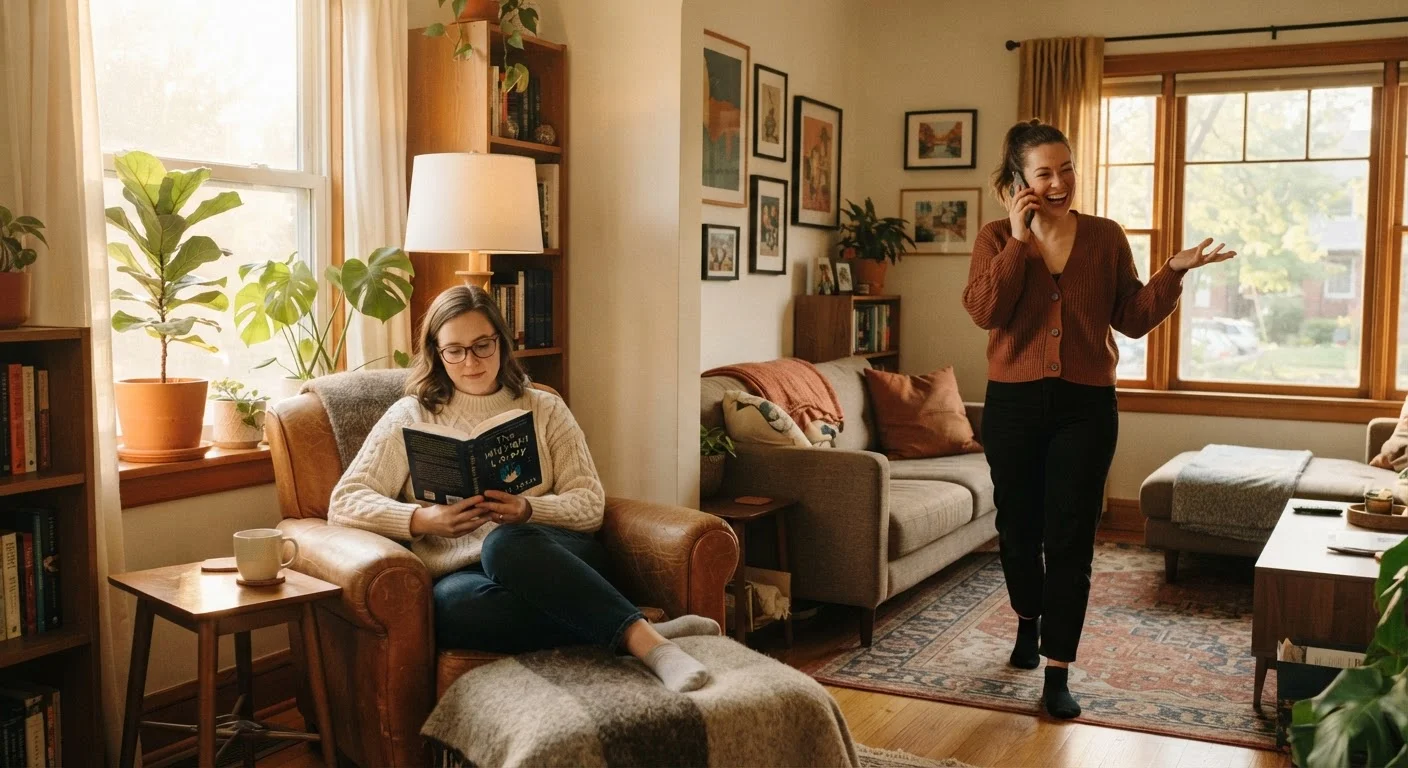
Photo: faqsvault.com editorial
Key Takeaways
- Introverts recharge through solitude; extroverts gain energy from social interaction — neither style is wrong.
- Most household conflicts between these types stem from unspoken assumptions, not incompatibility.
- Establishing clear communication about social needs prevents resentment from building over time.
- Small structural changes — like designating quiet zones — can reduce daily friction significantly.
- Understanding your housemate's energy style can strengthen the relationship rather than strain it.
Two People, Two Batteries
Picture this: one person comes home from a long workday and immediately feels the urge to call a friend, suggest a dinner out, or turn on something loud. Their roommate walks through the same door craving exactly the opposite — silence, stillness, and the mental space to decompress alone. Neither is being difficult. They simply run on different fuel.
The introvert-extrovert spectrum, a concept rooted in personality psychology and widely explored since Carl Jung's early work, describes how people differ in how they gain and spend social energy. Extroverts tend to feel energized by interaction; for introverts, socializing — even enjoyable socializing — is something they typically need to recover from. Research suggests this isn't a character flaw or a choice, but rather a genuine difference in how nervous systems respond to stimulation.
When these two styles share a home — as roommates, romantic partners, or family members — daily life can become a quiet negotiation that neither person has the vocabulary to articulate. That's where the friction starts: not in malice, but in assumptions.
Where the Daily Tensions Actually Come From
The most common flashpoints between introverts and extroverts living together rarely look dramatic. They accumulate in small moments: the extrovert who invites friends over without warning, the introvert who retreats to their room during a gathering and is later called "antisocial." The extrovert who interprets silence as coldness. The introvert who experiences unannounced social plans as an ambush.
| Introverts at Home | Extroverts at Home | |
|---|---|---|
| How they recharge | Solitude, quiet, low stimulation | Social interaction, activity, conversation |
| Relationship to shared space | A retreat from the outside world | An extension of social life |
| Common friction trigger | Unplanned guests or noise | Perceived rejection or coldness |
| Communication tendency | May go quiet rather than voice needs | May assume silence means agreement |
| Biggest strength in shared living | Creating calm, reflective atmosphere | Keeping the home socially alive |
| What they most need from a housemate | Predictability and advance notice | Openness and enthusiastic participation |
What's underneath these conflicts is usually a mismatch in expectations about what shared space means. For many extroverts, an open home is a welcoming one. For many introverts, a controlled home is a safe one. Neither interpretation is unreasonable — but when they collide without dialogue, each person can start to feel like the other just doesn't care.
It's also worth noting that the introvert-extrovert framework isn't binary. Most people sit somewhere on a continuum, and circumstances matter. An introvert in a high-stimulation job may need more solitude at home than usual. An extrovert going through a difficult period may need more connection than their housemate expects. The dynamic shifts, which is exactly why static house rules rarely solve the problem alone.
If you've ever felt like your household energy balance is consistently off, you might also recognize patterns described in one-sided relationship dynamics — where one person's needs quietly override the other's over time.
Practical Strategies That Actually Help
The good news: most introvert-extrovert household tensions respond well to a handful of concrete adjustments. These aren't grand gestures — they're small, intentional habits that signal mutual respect.
- Name the need, not the behavior. Instead of "You're always inviting people over," try "I need at least one quiet evening at home per week." The first is a criticism; the second is information your housemate can actually use.
- Create a shared social calendar. A simple shared calendar — even a whiteboard on the fridge — lets both people anticipate when the home will be social versus quiet. Surprises are often the real stressor, not the event itself.
- Designate space by function. If your home layout allows it, consider what areas can serve as reliably quiet or reliably social. A bedroom that's genuinely off-limits during gatherings, or a living room that's understood as the shared social hub, can reduce conflict without requiring constant negotiation. For ideas on making spaces feel intentional, interior decorating approaches can offer inspiration for carving out distinct zones.
- Agree on "opt-out" language. Establish a shorthand — a simple phrase or signal — that means "I need to recharge, it's not about you." This prevents the introvert from feeling guilty and the extrovert from feeling rejected.
These strategies work best when both people approach them with genuine curiosity rather than the goal of winning. The tension explored in individual versus collective identity is relevant here too: shared living is fundamentally about holding your own needs alongside someone else's, not erasing either.
Finding Genuine Common Ground
Something often overlooked in these conversations: introverts and extroverts can actually balance each other in genuinely useful ways. Extroverts often push shared households toward more connection — with neighbors, friends, and community — which introverts might privately value even while resisting the process. Introverts often create the calm, slower pace that extroverts need more than they realize, especially during stressful periods.
Research in social psychology has consistently found that diverse social pairings — people who differ in temperament — can produce richer, more resilient relationships when both parties feel their differences are acknowledged rather than pathologized. The key phrase is acknowledged rather than pathologized. That means the extrovert stops calling their housemate a hermit; the introvert stops calling their housemate exhausting.
For those interested in how broader social connection shapes wellbeing, building neighbourhood connection offers a thoughtful lens on how people with different social styles can still contribute to shared community — without anyone having to perform a version of themselves they're not.
Ultimately, the goal isn't to turn an introvert into an extrovert or vice versa. It's to build a home where both people feel genuinely at ease — energized by their differences rather than depleted by them.
All published content on this website is for informational and educational purposes only and should not be taken as professional advice. We recommend that readers seek expert opinion before making any decisions. The website is not responsible for any actions taken based on the information provided on this website. We are not liable for any inaccuracies, modifications, or omissions in information. Moreover, external links or third-party content are provided for convenience; we are not liable for their correctness. Users are advised to verify every piece of information before they use it for any purpose.