
Building Your Personal Music Library Without Getting Overwhelmed

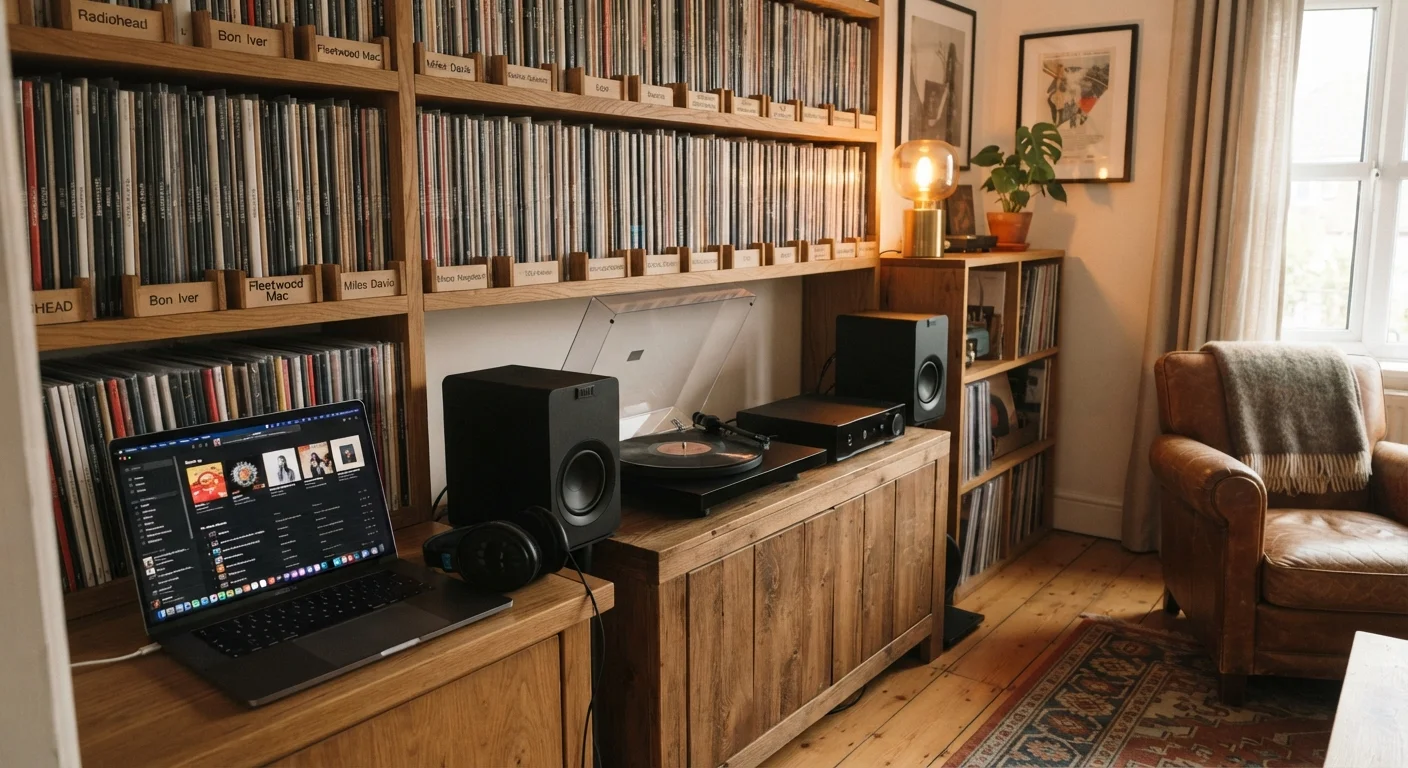
Photo: faqsvault.com editorial
Key Takeaways
- Start with a clear audit of what you already own before adding anything new.
- Consistent file naming and folder structures prevent digital chaos from creeping back in.
- A mix of streaming access and owned files gives you the most resilient library.
- Curating by mood, genre, and era makes rediscovering your collection genuinely enjoyable.
- Regular maintenance sessions keep your library useful rather than overwhelming.
Why Your Music Library Deserves a System
Most music lovers reach a tipping point: playlists are sprawling, downloads are scattered across three devices, and beloved albums are buried under years of impulsive adds. The solution isn't ruthless minimalism — it's a repeatable system that scales with your taste.
Whether you collect vinyl, manage a folder of FLAC files, rely on a streaming service, or juggle all three, the checklist below walks you through auditing, organising, and expanding your collection without losing momentum. For an equally practical approach to taming digital clutter in other areas of your life, see our guide to managing your digital life across devices.
Audit What You Already Have
Organise Your Digital Files
Curate Playlists With Purpose
Expand Intentionally
Maintain and Revisit Regularly
Tools That Make the Job Easier
You don't need to invest in expensive software to build a clean library. The right combination of free and low-cost tools handles the heavy lifting — from tagging metadata to syncing files across devices.
Music Tag Editor (e.g., MusicBrainz Picard)
Automatically identifies and corrects metadata — artist name, album title, track order, and artwork — across large local file collections.
External Hard Drive or NAS Device
Provides a physical backup location for your local digital library, protecting against device failure or accidental deletion.
Cloud Storage Service
Offers an off-site backup layer and enables access to your library from multiple devices without relying solely on streaming.
Spreadsheet or Notes App
Tracks your wish list, discovery goals, and collection gaps so your expansion stays intentional rather than impulsive.
Media Player with Library View (e.g., foobar2000, VLC)
Lets you browse your local collection visually, spot missing artwork or broken files, and test playback quality.
Understanding how music reaches listeners in the first place can also help you make smarter collecting decisions. Our overview of modern music distribution explains every major channel artists use — useful context when you're deciding what to own outright versus what to stream.
Getting the Most Out of What You Build
A well-organised library is only as valuable as the listening habits you bring to it. Once your collection has structure, it becomes a genuine tool for discovery — not just storage. Try working through an artist's catalogue in release order; the creative evolution you'll catch is remarkable. Our piece on following an artist's catalogue chronologically explains exactly why that approach changes how you hear music.
Streaming Libraries Can Disappear Overnight
Beyond chronological deep-dives, consider pairing your organised library with more intentional listening habits. Our practical guide to active listening shows how to transform familiar records into genuinely new experiences — no new purchases required.
All published content on this website is for informational and educational purposes only and should not be taken as professional advice. We recommend that readers seek expert opinion before making any decisions. The website is not responsible for any actions taken based on the information provided on this website. We are not liable for any inaccuracies, modifications, or omissions in information. Moreover, external links or third-party content are provided for convenience; we are not liable for their correctness. Users are advised to verify every piece of information before they use it for any purpose.