
Following an Artist's Catalogue Chronologically: Why It Changes Everything

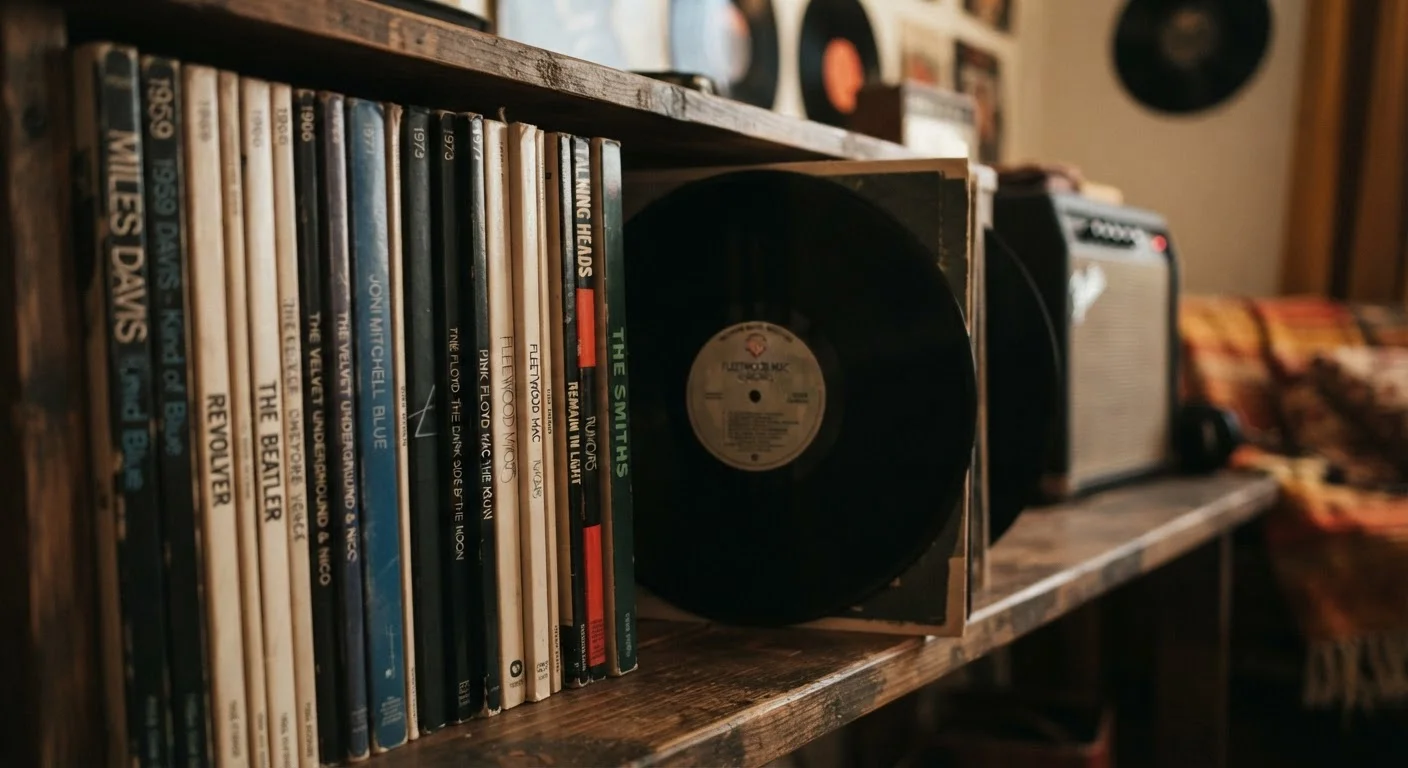
Photo: faqsvault.com editorial
Key Takeaways
- Listening to an artist's discography in release order reveals creative decisions that feel invisible when albums are consumed out of sequence.
- Algorithms prioritize popularity, not context — chronological listening restores the narrative arc an artist intended.
- Understanding an artist's early struggles and influences deepens emotional connection to their later, more polished work.
- A few simple preparation steps make chronological listening more rewarding and easier to sustain.
- Genre shifts and sonic experiments make far more sense when heard in the context that produced them.
Why Order Actually Matters
Streaming platforms are extraordinary discovery machines, but they're built around engagement — not comprehension. When an algorithm surfaces an artist's most-streamed track or a viral deep cut, it's giving you a highlight reel without the film. You're meeting a musician in the middle of their story, then jumping to the end, then skipping back to the beginning. Something essential gets lost.
Listening chronologically restores causality. You hear an artist picking up an instrument or a lyrical style because of something that happened to them. You notice the moment a voice matures, when production values shift, when a collaborator changes everything. These aren't subtle details — they're the whole point. And they're invisible when albums are consumed in the random order that algorithmic discovery encourages.
This isn't about being a purist. It's about getting more from music you already love — or think you might. Whether you're approaching a legendary back catalogue or following a contemporary act from their debut forward, chronological listening transforms scattered songs into something richer: a documented creative life. For more on how cultural context shapes what we hear, see how cultural trends move from subculture to mainstream.
Best Practices for Listening Through a Catalogue
Approaching a discography with intention makes the difference between a rewarding journey and an overwhelming queue. These practices help you get the most out of the experience.
Start with a brief biographical orientation before pressing play on album one.
Listen to each album at least twice before moving to the next one.
Note the release year and any significant events in the artist's life at that time.
Treat non-album releases — EPs, singles, and live recordings — as part of the timeline, not extras.
Resist the urge to skip albums that don't immediately resonate.
What You'll Actually Hear Differently
Genre pivots are the most dramatic payoff of chronological listening. When an artist you know for one sound suddenly experiments — shifting from acoustic to electronic, from introspective to political, from lo-fi to orchestral — it can feel jarring out of context. Heard in sequence, those pivots almost always make sense. The seeds are usually visible several albums back.
You also hear failure differently. Not every record in a great artist's catalogue is a great record. Chronological listening means sitting with the transitional, uneven, or exploratory albums that critics often skip over. Those records tend to be where artists take their most honest risks. Understanding them reframes what comes after. For a look at artists whose entire identity was built on genre-defying risk, explore musicians who invented their own genre.
Lyrically, chronological listening tracks a writer's obsessions over time. You start to notice recurring imagery, evolving themes, callbacks to earlier songs. This kind of pattern recognition is nearly impossible when you're shuffling between eras. It's the difference between watching a series in order versus catching random episodes.
“An album is a document of a moment in time. When you listen to records in order, you're not just hearing music — you're reading a diary.”
— Rob Sheffield, Music critic and author, Rolling Stone
It's also worth considering the format question. How an artist's music reaches you — whether through streaming or physical media — shapes your listening habits in ways that aren't always obvious. Streaming and physical formats affect artists and listeners differently, and understanding that context adds another layer to chronological listening.
Getting Started Without Getting Overwhelmed
The biggest obstacle to chronological listening is intimidation. A catalogue spanning four decades and twenty-plus records can feel like homework. It isn't — as long as you approach it with the right mindset.
If you want to go deeper with your collection overall, building a personal music library without getting overwhelmed offers practical guidance on organizing and expanding what you already have. And if you're curious about how the music you love actually reaches you, the complete picture of modern music distribution breaks down every major channel artists use today.
The goal isn't to consume everything — it's to listen with more intention. Start with one artist whose work you've only skimmed. Go back to the beginning. Give it a few records before you judge. The rewards tend to arrive slowly, then all at once.
All published content on this website is for informational and educational purposes only and should not be taken as professional advice. We recommend that readers seek expert opinion before making any decisions. The website is not responsible for any actions taken based on the information provided on this website. We are not liable for any inaccuracies, modifications, or omissions in information. Moreover, external links or third-party content are provided for convenience; we are not liable for their correctness. Users are advised to verify every piece of information before they use it for any purpose.