
The Complete Language of the Screen: Key Filmmaking Terms Every Viewer Should Know

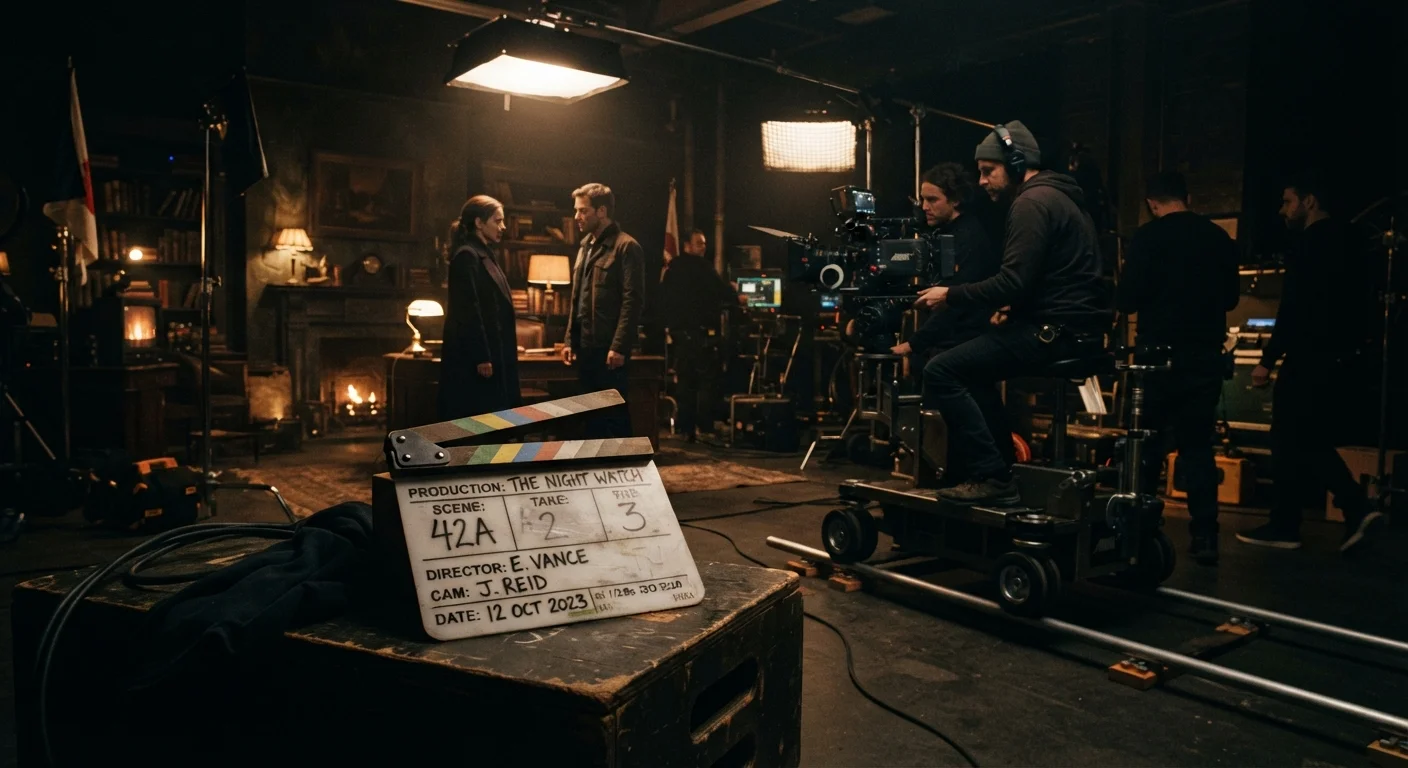
Photo: faqsvault.com editorial
Key Takeaways
- Filmmaking vocabulary gives you a precise shared language for discussing what you see on screen.
- Shot composition, camera movement, and lighting all carry deliberate meaning — none of it is accidental.
- Editing isn't just assembly; it shapes rhythm, emotion, and meaning through techniques like the match cut and jump cut.
- Mise-en-scène covers every visual element within the frame, from costume to set design to actor placement.
- Sound — both score and ambient noise — is a storytelling tool as powerful as any visual choice.
- Knowing these terms makes you a more engaged, critical, and rewarded viewer of both film and TV.
Why Filmmaking Vocabulary Matters
You don't need a film degree to watch movies critically — but a shared vocabulary unlocks a richer conversation. When you can name what a director is doing with a low-angle shot or identify a jump cut, you move from feeling a film's effect to understanding how it achieves it. That's a genuinely satisfying shift.
This glossary covers the core terms that come up again and again in film criticism, on-set conversation, and viewer discussion. Whether you're exploring serious film criticism or simply want to articulate why a particular scene gave you chills, these terms are your toolkit.
Camera Shots and Framing
Every shot is a decision. The most fundamental vocabulary in cinema relates to shot size — how much of a subject fills the frame.
- Extreme wide shot (EWS): The subject is tiny against a vast environment. Used to establish location or convey isolation.
- Wide shot (WS): The full body is visible with context. Often used for action or geography.
- Medium shot (MS): Roughly waist-up. The conversational default in TV and film dialogue.
- Close-up (CU): Face or a specific object fills the frame. Intimate, emotionally charged, and attention-directing.
- Extreme close-up (ECU): A single eye, a trigger finger, a trembling lip. Maximum intensity and focus.
Angle is equally loaded with meaning. A low-angle shot — camera below the subject pointing upward — makes characters appear powerful or threatening. A high-angle shot does the opposite, making subjects look vulnerable or surveilled. A Dutch angle (camera tilted on its axis) creates psychological unease and is a staple of horror and noir.
Depth of field refers to how much of the image is in sharp focus. A shallow depth of field blurs the background, isolating a subject emotionally. A deep focus keeps foreground and background sharp simultaneously — Orson Welles used this extensively in Citizen Kane to allow multiple story elements to coexist in one frame.
Watch a favourite scene twice: once for story, once with the sound off. You'll be surprised how much mise-en-scène and camera work you missed when you were tracking dialogue.
When a scene makes you feel something unexpectedly, pause and ask: was it a cut, a camera move, a sound cue, or all three working together? Tracing the cause sharpens your vocabulary fast.
Director commentaries on streaming platforms and Blu-rays are one of the fastest ways to absorb filmmaking vocabulary in context — you hear practitioners name and explain their own choices in real time.
Camera Movement
How a camera moves through space is as expressive as what it shows. Key movement terms include:
- Pan: The camera rotates horizontally on a fixed axis — left or right. Used to follow action or reveal space.
- Tilt: Vertical rotation on a fixed axis. Can suggest power dynamics or scale.
- Dolly/tracking shot: The camera physically moves through space on a wheeled platform (a dolly) or track. Creates a sense of following or advancing.
- Steadicam: A stabilised harness system that allows smooth, floating handheld movement. Stanley Kubrick's The Shining used Steadicam to create the film's eerily gliding corridors.
- Handheld: Deliberate shakiness that implies immediacy, chaos, or documentary realism.
- Crane/jib shot: Camera lifts dramatically, often used for grand establishing reveals.
- Dolly zoom (Vertigo effect): The camera moves backward while zooming in simultaneously, distorting perspective. Alfred Hitchcock popularised it; it's now used to convey psychological disorientation.
Mise-en-Scène: Everything Within the Frame
Mise-en-scène (French: "placing on stage") is the umbrella term for everything a viewer sees within a single shot — the totality of visual information a director controls. It encompasses:
- Lighting: High-key lighting is bright and even, common in comedies and musicals. Low-key lighting uses heavy shadows and contrast, defining film noir and horror. Chiaroscuro (from the Italian for light-dark) refers to stark contrasts used expressively.
- Set design and props: Every object placed deliberately communicates character, era, or theme.
- Costume and makeup: Visual shorthand for character identity and story period.
- Actor placement (blocking): Where bodies stand in relation to each other and the camera encodes power, tension, and relationship.
- Color palette: Directors like Wes Anderson use color as a near-musical element — palette shifts can signal narrative turning points.
Thinking mise-en-scène is one reason asking structured questions after a film pays dividends — you start noticing choices you'd previously absorbed unconsciously.
Editing and Montage
Editing — the assembly and sequencing of shots — is where a film's rhythm and emotional logic are built. Core terms:
- Cut: The basic transition, a direct join between two shots. Most editing is invisible cutting — cuts that feel seamless.
- Match cut: Two shots are joined so that a compositional or thematic element matches across the edit. The bone-to-spacecraft cut in Stanley Kubrick's 2001: A Space Odyssey is perhaps cinema's most celebrated example.
- Jump cut: An abrupt cut within a continuous scene that creates a jarring discontinuity. Jean-Luc Godard used it deliberately in Breathless (1960) to break realism and energise the edit.
- Cross-cutting (parallel editing): Alternating between two scenes happening simultaneously, building tension through juxtaposition.
- Montage: A sequence of shots assembled to compress time or convey cumulative meaning — think training sequences, or the opening of Up.
- Eyeline match: Character looks off-screen; the next shot reveals what they're looking at. A foundational technique of continuity editing.
- The 180-degree rule: An invisible line between two characters that the camera should stay on one side of, preserving spatial coherence in dialogue.
For a deeper look at how these principles play out differently in streaming versus theatrical contexts, see how each format shapes storytelling.
Sound Design and Score
Sound is the half of filmmaking viewers most underestimate. It operates on two primary tracks: diegetic sound (sound that exists within the story world — dialogue, footsteps, a radio playing) and non-diegetic sound (score, narration — heard by the audience but not the characters).
Key sound terms include:
- Foley: Custom sound effects recorded by Foley artists in post-production — the crunch of gravel, fabric rustling, liquid pouring.
- Leitmotif: A recurring musical theme associated with a character or idea. John Williams is a master of this — think of the two-note shark theme in Jaws.
- Sound bridge: Audio from the next scene begins before the visual cut arrives, creating a smooth transition.
- Room tone / ambient sound: The subtle background noise of a location. Its absence or presence shapes realism.
If you want to go deeper on how composers construct meaning through music, this breakdown of TV scoring covers the craft in detail.
Putting It All Together as a Viewer
These terms aren't academic trivia — they're a lens. Once you know them, you'll instinctively clock the moment a director switches from wide shots to close-ups as emotional stakes rise, or notice how a shift to handheld camera signals that a scene is slipping out of control.
The vocabulary also travels. The same principles that govern a prestige film apply to a prestige TV series — if anything, understanding how a TV pilot is constructed makes these terms even more resonant, because you see how economic and narrative constraints shape every visual choice.
And the conversation extends beyond mainstream English-language cinema. Foreign-language filmmakers — from Park Chan-wook's precise symmetry to Agnès Varda's essayistic wandering — deploy all of these techniques with equal sophistication. Genre vocabulary helps too: understanding genre categories gives you the larger map within which individual films make their choices.
Cinema has always had its own language. Learning it doesn't diminish the magic — it doubles it.
All published content on this website is for informational and educational purposes only and should not be taken as professional advice. We recommend that readers seek expert opinion before making any decisions. The website is not responsible for any actions taken based on the information provided on this website. We are not liable for any inaccuracies, modifications, or omissions in information. Moreover, external links or third-party content are provided for convenience; we are not liable for their correctness. Users are advised to verify every piece of information before they use it for any purpose.