
The Craft Elements That Separate a Great TV Score From Background Noise

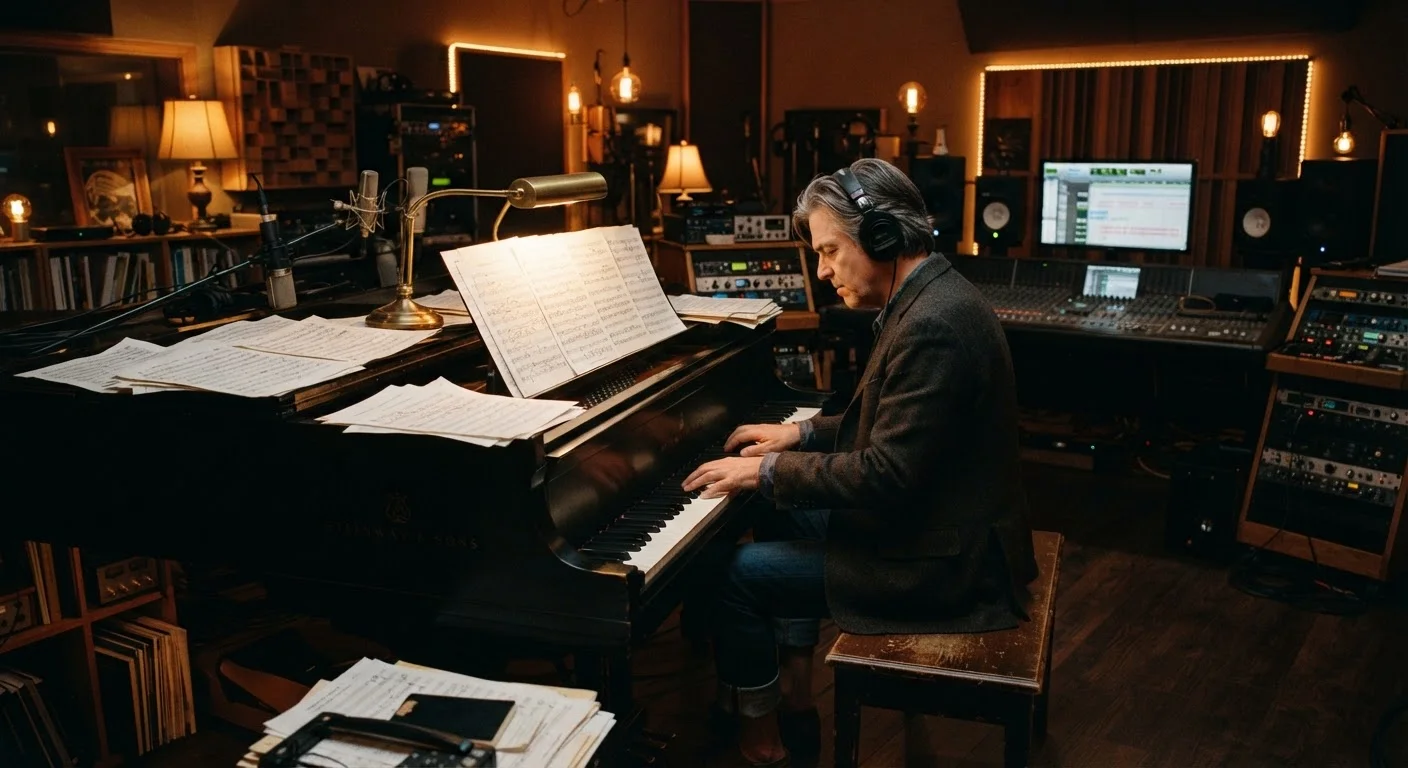
Photo: faqsvault.com editorial
Key Takeaways
- Effective TV scores are built around recurring musical themes that evolve alongside characters.
- The best composers treat silence and restraint as tools just as powerful as orchestral swell.
- Timbre and instrumentation choices communicate character identity before a single word is spoken.
- Rhythmic tension and harmonic ambiguity are key tools for sustaining narrative suspense across episodes.
- A score that works subconsciously is often doing the most sophisticated compositional work.
Why TV Scoring Is a Different Discipline
Scoring for television presents a unique creative challenge that separates it from nearly every other compositional form. Unlike a film score, which accompanies a defined two-hour arc, a TV composer must sustain coherent musical storytelling across dozens of hours, shifting tones between episodes while maintaining a unified sonic identity. The music has to work in scenes as emotionally varied as a quiet breakfast conversation and a high-stakes chase, often written weeks apart.
TV composers also face practical constraints that shape their artistry: tight turnaround schedules, budget variables that affect ensemble size, and the ever-present reality that their work will compete with dialogue mixing and sound design. Understanding these conditions helps explain why the great scores stand out so dramatically — they solve genuinely difficult problems with apparent ease. If you want richer vocabulary for what you're hearing, our music terminology primer covers the foundational concepts composers rely on.
The Practices That Define Exceptional TV Scoring
When you trace what distinguishes a score that stays with you from one you barely register, several craft principles emerge consistently. These aren't rules — they're the instincts that experienced composers apply, often simultaneously, to serve the story above everything else.
Build leitmotifs that evolve alongside the characters they represent
Use instrumentation to encode character identity
Deploy harmonic ambiguity to sustain narrative suspense
Write music that operates in the background consciously, not by default
Treat the title sequence as a complete musical statement
Restraint as a Compositional Strategy
One of the most counterintuitive truths about great TV music is that the most powerful cue is often the one that doesn't play. Composers who understand the medium know that silence — or near-silence — can amplify emotional stakes more effectively than a full orchestral statement. The absence of music signals that a moment is raw enough to stand on its own, and trained viewers respond to that absence viscerally.
This connects to a broader principle: music should earn its presence. When every emotional beat is underlined with swelling strings, nothing feels extraordinary. The composers whose work genuinely resonates tend to be the ones who ask, repeatedly, whether music is actually needed — and resist the temptation to fill every silence. That discipline is what makes the moments when the score does arrive feel significant. Understanding how these decisions interact with visual choices is part of the broader language of screen storytelling.
“The best film music is the music you don't hear — you feel it, but you're not consciously aware of it. The moment you become aware of it, something has gone wrong.”
— Bernard Herrmann, Composer known for his collaborations with Alfred Hitchcock and Orson Welles
Start Listening More Intentionally
The fastest way to sharpen your appreciation for what a score is doing is to watch a scene twice — once normally, and once with your attention deliberately shifted to the music. Notice when it enters, what instruments are present, whether the harmony feels settled or unresolved, and how it shapes your emotional read of the scene. You'll often find the score was doing far more work than you initially registered.
Great TV moments and the music beneath them are inseparable. Some of the episodes that permanently shifted pop culture owe a significant part of their impact to exactly this kind of intentional scoring. Building this kind of active listening habit also pairs naturally with asking better questions after every viewing.
All published content on this website is for informational and educational purposes only and should not be taken as professional advice. We recommend that readers seek expert opinion before making any decisions. The website is not responsible for any actions taken based on the information provided on this website. We are not liable for any inaccuracies, modifications, or omissions in information. Moreover, external links or third-party content are provided for convenience; we are not liable for their correctness. Users are advised to verify every piece of information before they use it for any purpose.