
Renting vs. Buying in Today's Market: Weighing the Real Trade-Offs

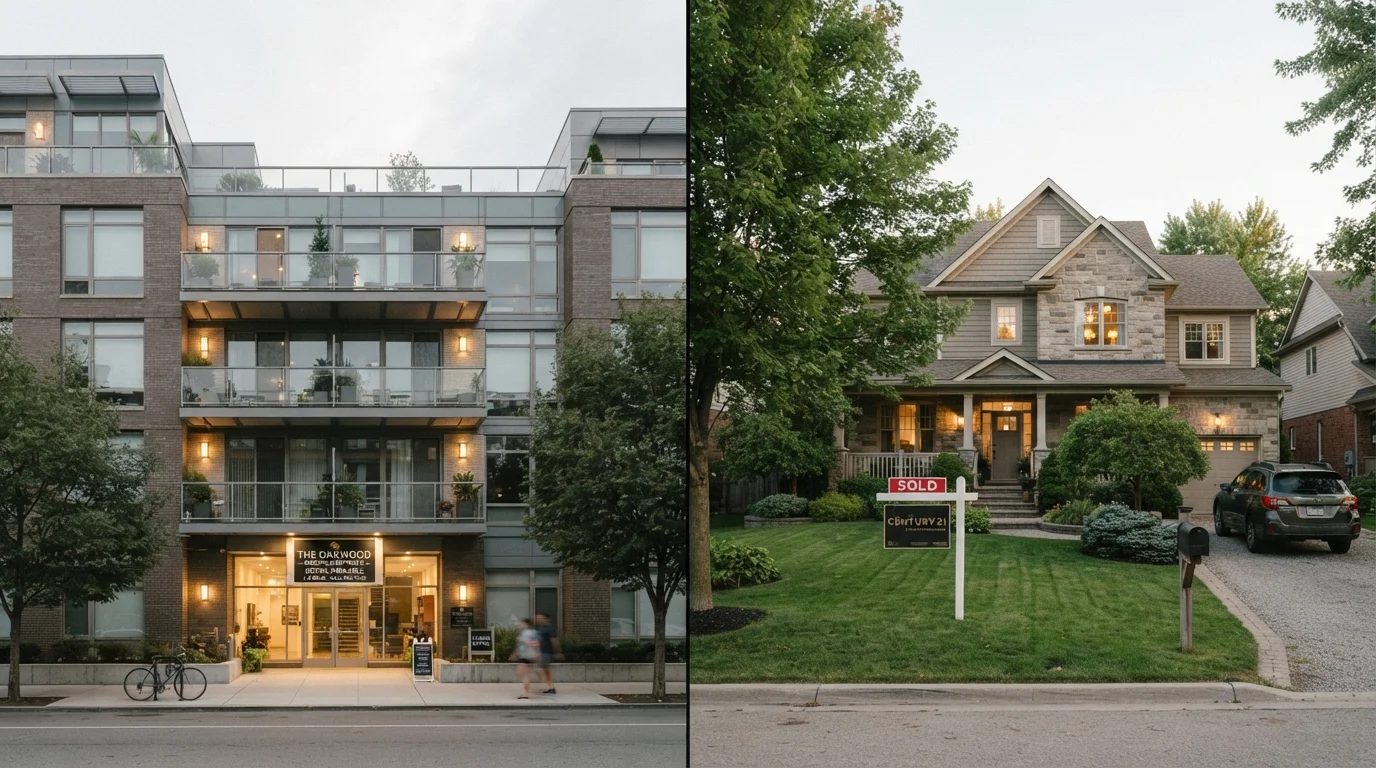
Photo: faqsvault.com editorial
Key Takeaways
- The true cost of buying includes down payments, closing costs, maintenance, and property taxes — not just the mortgage.
- Renting offers liquidity and flexibility that ownership cannot easily replicate, especially in uncertain markets.
- Local market conditions — not national headlines — most directly shape whether buying makes financial sense.
- The break-even horizon (typically five or more years) is a critical factor before committing to purchase.
- Neither path is universally superior; the right choice depends on individual finances, timeline, and life plans.
Why the Simple Comparison Misses the Point
The instinct is understandable: compare what you'd pay in rent to what a mortgage would cost and pick the lower number. But this shortcut routinely leads people to the wrong conclusion. The real calculation is far messier — and far more personal.
Buying a home means absorbing costs that never appear in the listing price: closing costs typically run 2–5% of the purchase price, property taxes vary significantly by location, homeowner's insurance adds hundreds to thousands annually, and maintenance commonly demands 1–2% of a home's value each year. These hidden costs can significantly close the gap between a mortgage payment and a monthly rent check.
Renting, meanwhile, is often framed as throwing money away — a persistent myth. Renters retain liquidity, avoid maintenance risk, and keep their options open. The case for renting is genuinely strong in many situations, and deserves a fair hearing alongside ownership's benefits.
The Financial Picture: What Each Path Actually Costs
Ownership builds equity over time — but only if the home appreciates, only after interest and fees are accounted for, and only if the owner stays long enough to recoup transaction costs. The break-even point — the moment when buying becomes cheaper than renting in total cost terms — typically falls somewhere between five and seven years, depending on the market and the loan terms. Selling before that threshold is reached can mean a net loss even if the home's nominal price has risen.
The full financial comparison also needs to account for opportunity cost. Money tied up in a down payment isn't earning returns elsewhere. In markets where home prices have grown modestly, an equivalent sum invested in a diversified portfolio could have performed comparably — or better. That's not an argument against buying; it's a reason to avoid assuming ownership always wins financially.
Homeownership as a financial asset has real merit, but also carries illiquidity risk. In a downturn, a homeowner cannot easily reduce their exposure the way an investor can adjust a portfolio.
| Renting | Buying | |
|---|---|---|
| Upfront cost | First/last month + deposit | Down payment + closing costs (often 5–25% of price) |
| Monthly cost predictability | Rent can increase at renewal | Fixed-rate mortgage is stable; taxes/insurance vary |
| Equity building | None | Yes, over time and subject to market conditions |
| Maintenance responsibility | Landlord typically covers | Owner absorbs all costs |
| Flexibility to relocate | High — exit at lease end | Low — selling takes time and incurs costs |
| Wealth concentration risk | Low — capital stays liquid | High — wealth tied to single illiquid asset |
| Personalization freedom | Limited by lease terms | Full control over modifications |
| Break-even horizon | N/A | Typically 5–7+ years depending on market |
How Local Markets Change the Calculus
National housing data sets a backdrop, but your decision plays out at the zip code level. A market's price-to-rent ratio — the median home price divided by annual rent for a comparable property — signals whether buying or renting tends to offer better value locally. Ratios above 20 generally suggest renting is more cost-efficient; ratios below 15 often favor buying. Many coastal metros have pushed well beyond 25, while parts of the Midwest and South remain closer to historical norms.
Understanding whether you're operating in a buyer's or seller's market also matters. In a seller's market, competition can push purchase prices above fundamental value, increasing the risk that appreciation won't keep pace with what was paid. In a buyer's market, negotiating room widens and the ownership equation can improve meaningfully.
Local job market conditions, school district quality, and infrastructure investment patterns all influence whether a neighborhood's property values are likely to hold or grow — factors that any prospective buyer should research independently before committing.
Lifestyle, Risk, and the Factors Money Doesn't Capture
Financial models don't fully capture what it feels like to be locked into a 30-year mortgage in a city you might want to leave, or what it means to repaint a wall or renovate a kitchen on your own terms. These qualitative dimensions of the decision are real and worth naming directly.
Owners gain stability — the ability to put down roots, make structural changes, and build a sense of permanence. Renters gain agility: they can relocate for a job, downsize after a life change, or exit a neighborhood that no longer fits without the friction of a real estate sale. For anyone whose career, family structure, or health situation involves meaningful uncertainty, that flexibility has genuine financial value even if it's hard to quantify.
Risk tolerance also plays a role. Ownership concentrates a household's wealth in a single, illiquid, leveraged asset. The risks of property as an investment are real: local economic shocks, interest rate changes, and unexpected maintenance costs can all erode what looked like a solid financial decision. Renters, by contrast, transfer most of those risks to a landlord — in exchange for less control and no equity accumulation.
The decision itself is rarely purely financial. Life stage, career trajectory, family plans, and personal values all belong in the conversation. Renters who want to personalize their space can also do more than many realize — rental-friendly decorating has become a genuine design category in its own right.
This article provides general information for educational purposes only and does not constitute financial, legal, or investment advice. Readers should consult a qualified financial adviser or real estate professional before making property decisions based on their individual circumstances.
All published content on this website is for informational and educational purposes only and should not be taken as professional advice. We recommend that readers seek expert opinion before making any decisions. The website is not responsible for any actions taken based on the information provided on this website. We are not liable for any inaccuracies, modifications, or omissions in information. Moreover, external links or third-party content are provided for convenience; we are not liable for their correctness. Users are advised to verify every piece of information before they use it for any purpose.