
Rental-Friendly Decorating: Personalising a Home You Don't Own

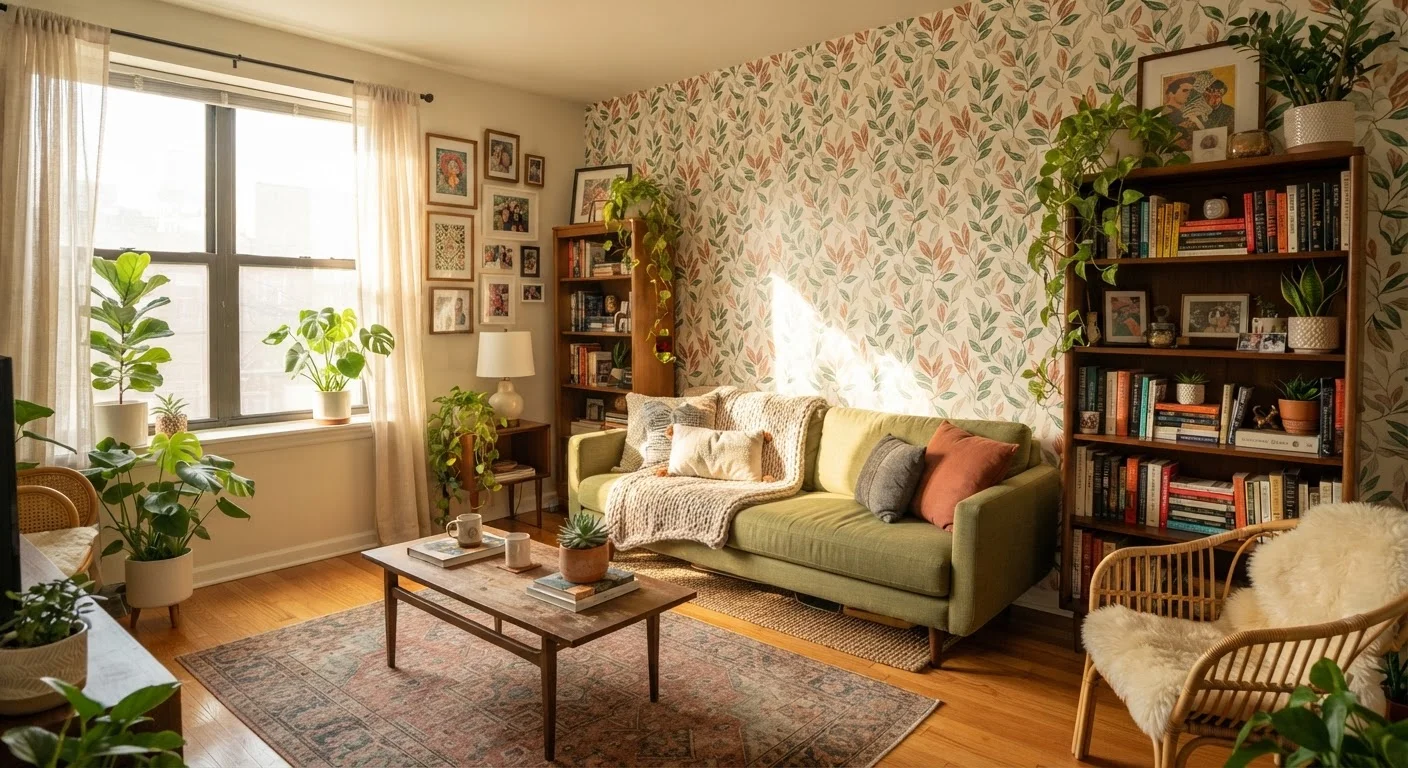
Photo: faqsvault.com editorial
Key Takeaways
- Removable wallpaper and peel-and-stick tiles let you transform walls and floors without permanent changes.
- Freestanding furniture and shelving create storage and style without a single wall anchor or screw.
- Textiles — rugs, curtains, and throw pillows — are among the most affordable and impactful decorating tools available.
- Always review your lease and document the property's condition before making any decorating changes.
- Layering lighting with floor and table lamps sidesteps harsh overhead fixtures without touching wiring.
Know Your Lease Before You Decorate
The first rule of rental decorating isn't about aesthetics — it's about protection. Before buying a single roll of peel-and-stick wallpaper, read your lease from start to finish. Most standard US leases prohibit permanent alterations: drilling into walls, painting over existing colours, replacing fixtures, or removing built-ins. Some leases are more permissive, especially in longer-term or furnished arrangements, so it pays to know exactly where your boundaries sit.
Once you've moved in and before anything touches the walls or floors, do a thorough walkthrough and photograph every existing scuff, crack, and stain. This documentation is your best defense if deposit disputes arise later. For a detailed breakdown of how deposits work and what landlords can and cannot deduct, see how security deposits work for tenants.
If you want to do something your lease doesn't clearly allow — painting an accent wall, for instance — ask your landlord in writing. Many will say yes if you agree to restore the original colour before leaving. Written permission protects both parties and opens up more creative options than most renters realise.
Walls Without Damage: The Removable Revolution
The single biggest complaint renters have is feeling stuck with someone else's paint choices and bare white walls. Removable, peel-and-stick wallpaper has changed this equation dramatically. Applied correctly to clean, flat walls, quality removable wallpaper peels off cleanly without tearing drywall or leaving adhesive residue — though results vary by wall texture, age, and product quality, so always test a small section first.
Beyond full-wall coverage, consider these targeted approaches:
- Removable tile stickers applied over backsplash or bathroom tile can refresh outdated surfaces without grouting or gluing.
- Foam mounting strips and removable adhesive hooks (designed for smooth walls) can hold lightweight art, mirrors, and organizers. Stay within the weight limits specified by the manufacturer.
- Picture ledges — narrow shelves that sit on the floor or hook over door frames — let you lean and layer artwork without a single nail.
- Wall decals offer graphic pattern or botanical prints that remove cleanly from painted drywall in most cases.
For renters working with small or awkward rooms, these surface-level changes are particularly powerful. Our guide on decorating strategies for compact rooms offers layout techniques that pair well with damage-free wall treatments.
Check Removable Product Labels Carefully
Furniture and Shelving: Freestanding Is Your Friend
Built-in storage is a luxury most rentals don't offer. The solution is freestanding furniture that works hard, looks intentional, and moves with you when you leave. Tall bookcases, modular cube shelving, and open wardrobe rails create the visual impression of a designed space without a single wall anchor.
A few strategies that make freestanding furniture feel deliberate rather than improvised:
- Anchor bookcases visually by styling the top shelf with objects at varying heights — trailing plants, baskets, or art prints — so the eye reads the piece as finished rather than floating.
- Use furniture to define zones in open-plan rentals. A sofa or bookcase placed perpendicular to a wall creates a natural room divider between a living and dining area.
- Choose pieces with legs rather than floor-hugging bases. Furniture that reveals floor space reads as lighter and more spacious — a useful trick in low-ceilinged or compact rentals.
If budget is a key consideration, high-impact, low-cost decorating changes can help you prioritise where freestanding pieces deliver the most transformation per dollar spent.
Textiles, Lighting, and the Layers That Make a Space Feel Yours
No permanent change delivers as much warmth and personality as layered textiles. A well-chosen area rug can anchor a seating arrangement, cover tired flooring, and introduce colour — all without touching a single surface. Layering two rugs (a larger neutral base under a smaller patterned one) adds depth that looks considered rather than accidental.
Curtains are another underused tool. Most rental units come with functional but uninspiring window treatments. If your lease allows removal and replacement, hanging your own curtains (and storing the originals carefully) can transform a room's proportions. Mount a curtain rod slightly above and wider than the actual window frame to make windows appear taller and wider — a classic visual trick that costs very little.
Lighting is the third layer, and arguably the most impactful shift renters can make. Overhead fixtures in rental apartments are rarely flattering. Supplementing with floor lamps, table lamps, and plug-in sconces creates warm pools of light that make a space feel lived-in and intentional. No wiring, no electricians, no permit needed.
36%
Share of US households that rent their home
According to the US Census Bureau's American Community Survey, roughly one in three American households rents rather than owns — making rental-friendly design relevant to tens of millions of people.
~$250
Median cost of a security deposit dispute
Tenant advocacy groups note that deposit deductions for wall damage and unauthorised alterations are among the most common sources of conflict between renters and landlords.
Throw pillows, blankets, and artwork propped on ledges round out the picture. These elements are fully portable, deeply personal, and essentially risk-free from a deposit standpoint — making them the backbone of any rental decorating strategy.
For renters who are drawn to the flexibility that renting affords beyond just decorating, the broader case for renting explores why many people find it the right long-term choice.
Leaving Well: Reversibility as a Design Principle
Thinking about your exit from the very start isn't pessimistic — it's practical. Every decorating decision you make in a rental should pass a simple test: Can I undo this in a few hours and leave the space in its original condition? If the answer is yes, you're working within a smart framework.
Keep a folder — physical or digital — with your move-in photos, lease terms, any written landlord permissions, and receipts for removable products. This habit takes minutes to establish and can save significant stress and money at the end of a tenancy.
When you do move out, remove temporary products carefully according to manufacturer instructions (warm the adhesive, pull slowly at a low angle) and touch up any minor marks with the original paint colour if you kept a record of it. Leaving well is part of renting well — and it protects your deposit so you can put it toward making your next rental equally your own.
Local Laws May Affect Your Rights
All published content on this website is for informational and educational purposes only and should not be taken as professional advice. We recommend that readers seek expert opinion before making any decisions. The website is not responsible for any actions taken based on the information provided on this website. We are not liable for any inaccuracies, modifications, or omissions in information. Moreover, external links or third-party content are provided for convenience; we are not liable for their correctness. Users are advised to verify every piece of information before they use it for any purpose.