
Interior Decorating on a Tight Budget: Where Spending Less Has the Most Impact

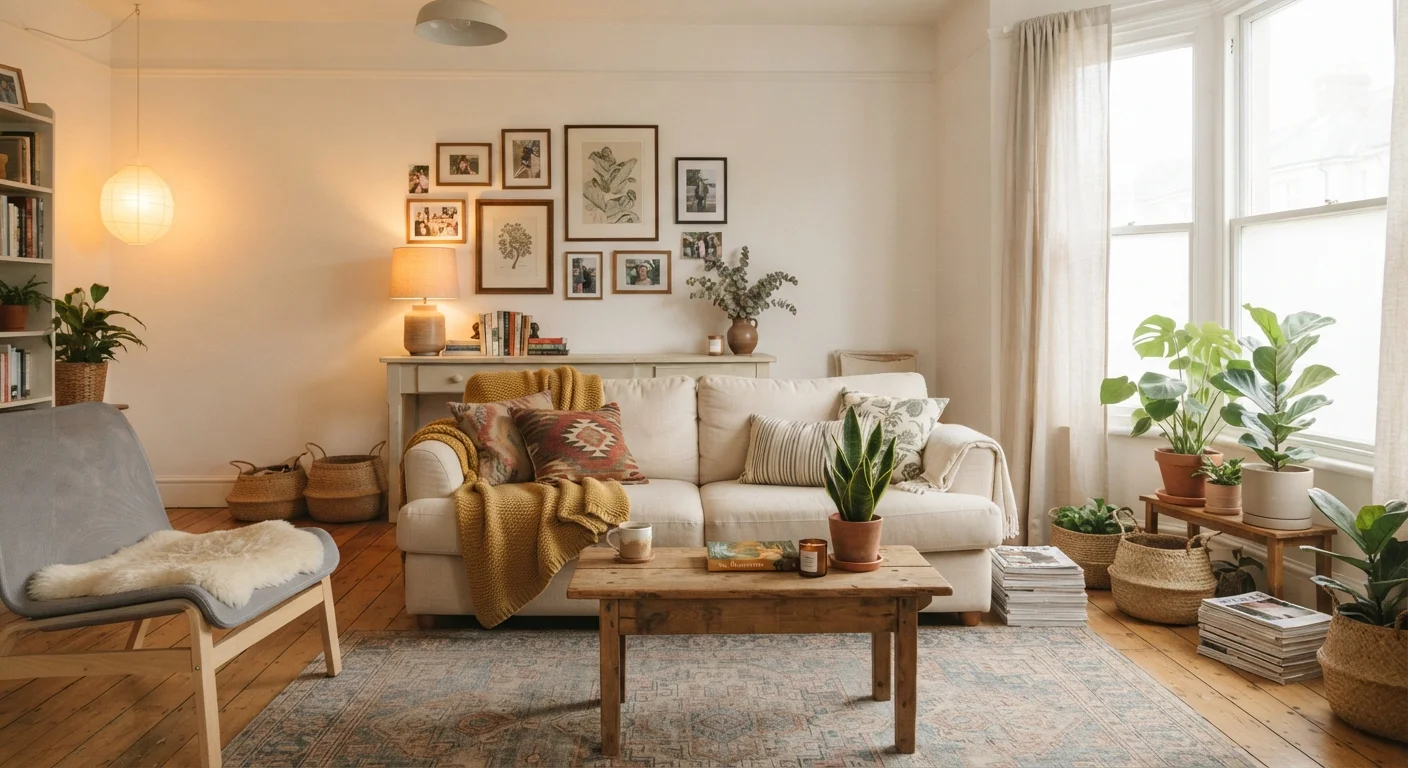
Photo: faqsvault.com editorial
Key Takeaways
- Paint delivers the highest visual return per dollar of almost any decorating investment.
- Swapping out lighting fixtures and bulbs can transform a room's mood without structural changes.
- Layering textiles — rugs, cushions, curtains — adds warmth and personality at relatively low cost.
- Decluttering and rearranging existing furniture often yields more impact than buying new pieces.
- Focusing your budget on one or two high-visibility changes beats spreading money thinly across many.
Why Budget Decorating Is a Skill Worth Learning
The assumption that a beautiful home requires serious financial outlay is one of the most persistent myths in interior decorating. In reality, some of the most impactful changes you can make — painting a wall, swapping a lampshade, repositioning furniture — cost very little compared to the transformation they produce. The skill lies in knowing where your money does the most visible work.
Decorating on a tight budget is less about sacrifice and more about sequencing. Spending $40 on the wrong thing (say, a decorative object that gets lost in a cluttered room) yields far less than spending the same amount on a single can of paint for a tired-looking wall. Developing an eye for high-impact, low-cost changes is something any homeowner or renter can learn — and the list below is designed to help you do exactly that.
Before committing money to anything, it helps to work through your space methodically. Our room planning checklist walks you through measurements, light assessment, and traffic flow before you spend a cent.
Start With One Room, Not the Whole House
High-Impact Changes, Ranked by Value
Paint a single focal wall
Paint remains the decorating world's most reliable overachiever. A single accent wall — behind a sofa, headboard, or fireplace — can redefine the entire character of a room for the cost of one or two cans of paint and an afternoon's work. You don't need to repaint an entire room to feel the difference; a single bold or deeply saturated wall creates visual depth and gives the eye a clear anchor point.
Stick to flat or eggshell finishes for living areas and bedrooms (they're more forgiving on imperfect surfaces), and satin or semi-gloss for kitchens and bathrooms where you need wipeable surfaces. If you're uncertain between two colors, buy the smallest available sample sizes and test patches at least 12 inches square — colors read very differently under artificial light than they do on a paint chip. For a thorough comparison between paint and wallpaper on different wall types, see our guide to choosing the right wall treatment.
A single painted accent wall costs little but reshapes a room's entire visual identity.
Upgrade your lighting before buying new furniture
Most rooms suffer far more from bad lighting than from unfashionable furniture. Overhead fluorescent or harsh white bulbs flatten a space and make even well-designed rooms feel institutional. Replacing bulbs with warm-white LEDs (look for a color temperature around 2700K–3000K) and adding a floor lamp or table lamp to a previously dark corner costs relatively little and immediately makes a room feel more considered and livable.
Lampshades are another underrated swap — an outdated brass fixture with a fresh neutral shade can look contemporary without replacing the fixture itself. If you want to go further, plug-in pendant lights (no electrician required) can add a focal point over a dining table or reading nook. Our dedicated article on lighting as decoration explains the logic of layered ambient, task, and accent lighting in full.
Swapping bulbs and adding a floor lamp costs little but transforms how a room feels after dark.
Layer textiles for warmth and depth
Cushions, throw blankets, curtains, and rugs are the fastest way to add personality and warmth to a room that feels cold or generic. They're also among the easiest to swap seasonally or when your tastes change, which makes them a low-risk investment compared to furniture or flooring.
A flat-woven or jute rug under a seating arrangement defines the zone and grounds the space — even a modest-sized rug makes a room feel more intentional. Curtains hung high (close to the ceiling rather than the window frame) and wide (extending 6–12 inches beyond the window on each side) make windows appear larger and ceilings taller, at no extra cost beyond a longer rod. When choosing cushions, a mix of one pattern, one texture, and one solid in a coordinated palette tends to look more intentional than a random assortment.
Curtains hung high and wide make windows and ceilings appear significantly larger — for free.
Declutter before you decorate
This one costs nothing and is often the highest-impact action available. A room full of competing objects — even beautiful ones — reads as chaotic. Removing half the decorative items from a shelf, a mantle, or a coffee table and grouping the remaining pieces intentionally creates the kind of spare, curated look that many people assume requires expensive new purchases.
The general principle: group objects in odd numbers (threes and fives tend to look more natural than pairs), vary the heights within a grouping, and leave empty space on purpose. Empty space is not wasted space — it gives the eye somewhere to rest and allows individual pieces to register properly. Go through each room with a box and temporarily remove anything that doesn't serve a function or bring you genuine pleasure. Live with the edited version before deciding what, if anything, to replace.
Removing clutter and editing your existing objects costs nothing and often transforms a room instantly.
Rearrange furniture to improve flow and scale
Furniture arrangement has an outsized effect on how a room functions and feels, yet it's a resource that costs absolutely nothing to use. Many rooms default to furniture pushed against every wall — a layout that can make a large room feel cavernous and a small one feel cramped. Floating a sofa away from the wall by even a foot or two, and creating a conversation cluster with chairs angled toward it, tends to feel more intentional and human-scaled.
Before moving anything heavy, sketch the room on paper with rough measurements, or use a free online room planner. Check traffic paths (you generally want at least 30–36 inches of clearance for main walkways) and consider the focal point — a fireplace, window, or television — and arrange seating to acknowledge it. Sometimes a complete furniture rearrangement makes a space feel new without spending anything.
Floating furniture away from walls creates a more intentional, human-scaled arrangement at zero cost.
Add mirrors to amplify light and space
A well-placed mirror does two things efficiently: it reflects natural light deeper into a room and creates the perception of additional space. Both effects are particularly valuable in darker or smaller rooms. A large mirror leaned against a wall (rather than hung) is a renter-safe approach that also looks deliberately styled rather than perfunctory.
Position mirrors to reflect something worth seeing — a window, a plant, a well-lit corner — rather than a blank wall or the back of a door. Thrift stores and secondhand marketplaces frequently carry mirrors with quality frames at a fraction of retail cost; the frame can always be repainted if the existing finish doesn't suit your palette.
A large mirror reflecting a window doubles your natural light without any electrical work.
Bring in plants as living decoration
Houseplants add color, texture, scale, and a sense of life to interior spaces in a way that inanimate objects simply cannot replicate. A large-leafed plant in a corner — a pothos, snake plant, or rubber tree — fills vertical space that would otherwise feel empty and introduces organic form into rooms that tend toward straight lines and hard surfaces.
Start with species known for tolerating variable conditions: snake plants and ZZ plants manage in low light; pothos and heartleaf philodendrons forgive irregular watering. A single healthy, well-sized plant in an attractive pot has more visual impact than several small ones scattered around a room. Repotting a healthy thrift-store or propagated cutting into a pot that suits your color scheme costs very little but looks purposeful and considered.
One large, healthy plant in the right corner has more impact than several small ones scattered around.
If you're working with a particularly compact room, many of these principles double their effectiveness. Lighter paint, strategic lighting, and minimal textiles can make a small room feel significantly more spacious — our guide to decorating compact rooms covers those nuances in detail. Renters will also find that most of the changes above — textiles, lighting, mirrors, plants — are entirely deposit-safe, and our rental decorating guide offers tailored advice for non-permanent spaces.
Making Every Dollar Count
The common thread running through all the most cost-effective decorating moves is that they address how a room feels, not just how it looks in a photograph. Lighting, textiles, color, and greenery all engage the senses and shape the emotional experience of a space in ways that expensive furniture alone rarely achieves.
It's also worth noting that spending less isn't always the right call. There are moments — a quality sofa frame, a well-made rug — where investing appropriately pays off over years of use. Understanding the difference between a wise economy and a false one is part of becoming a confident home decorator. For a broader perspective on where penny-pinching can backfire, our editorial colleagues explore when cutting costs creates bigger problems.
Above all, approach your space with curiosity rather than anxiety. Decorating on a budget is an exercise in creativity — and the constraints are often what produce the most personal, interesting results.
All published content on this website is for informational and educational purposes only and should not be taken as professional advice. We recommend that readers seek expert opinion before making any decisions. The website is not responsible for any actions taken based on the information provided on this website. We are not liable for any inaccuracies, modifications, or omissions in information. Moreover, external links or third-party content are provided for convenience; we are not liable for their correctness. Users are advised to verify every piece of information before they use it for any purpose.