
The Global Rise of the Third Place: Why Cafés, Libraries, and Community Spaces Matter More Than Ever
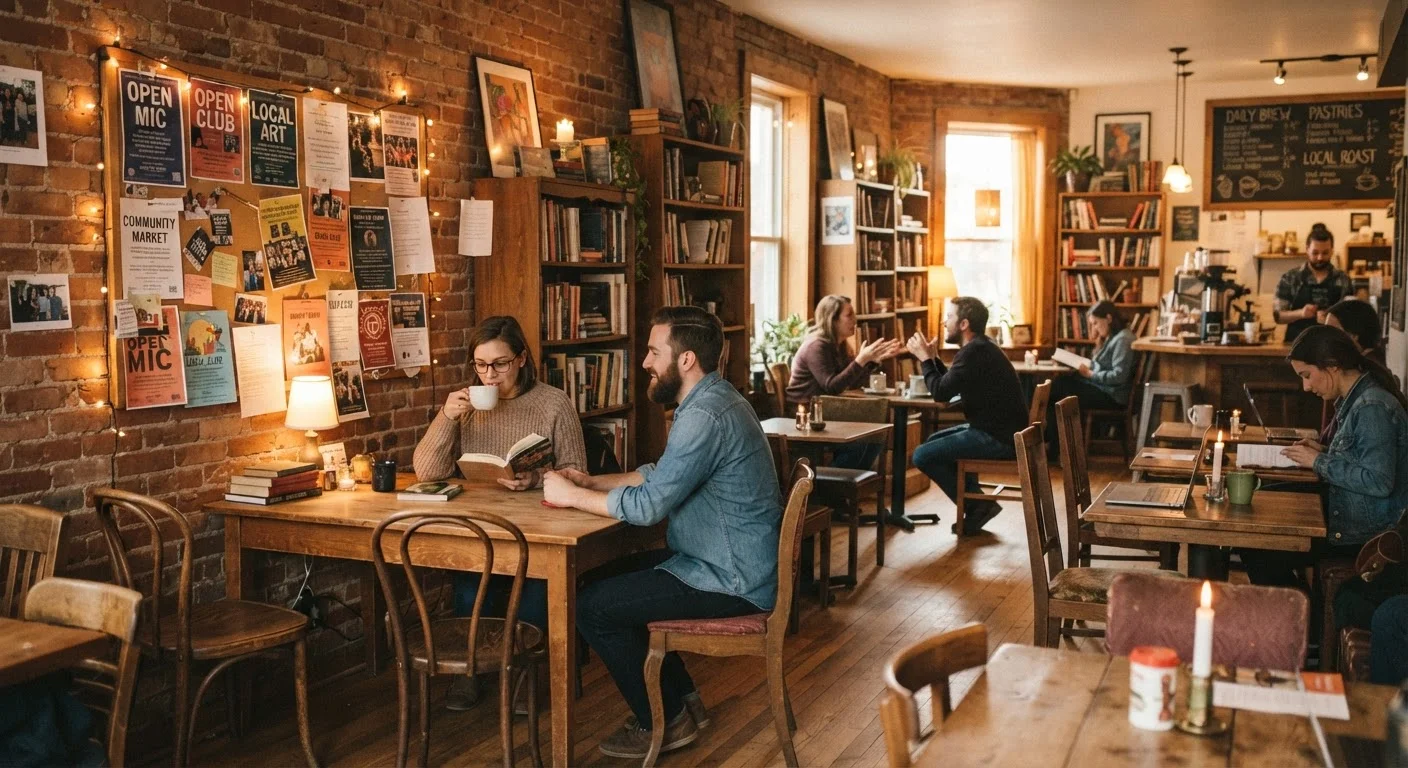
Photo: faqsvault.com editorial
Key Takeaways
- Third places are informal public spaces distinct from home and work where community life naturally unfolds.
- Sociologist Ray Oldenburg identified third places as essential to democratic, healthy societies.
- Post-pandemic loneliness and remote work have fueled renewed interest in physical community spaces.
- Libraries, cafés, parks, and barbershops all serve this social function across different cultures.
- The decline of accessible third places is linked to rising rates of social isolation in many communities.
- Intentional design and public policy can help protect and expand third places for all residents.
The Space Between Home and Work
For most of human history, daily life unfolded in shared public spaces — the village square, the market stall, the communal well. These were places where social life wasn't scheduled but simply happened. Over the last half-century, however, a combination of suburban sprawl, longer working hours, and the rise of private digital entertainment has steadily eroded these informal gathering grounds.
That erosion has a name in academic circles: the loss of the "third place." When sociologist Ray Oldenburg introduced the framework, he wasn't just describing physical locations — he was identifying something people often feel is missing without being able to articulate exactly what it is. A sense of effortless belonging. The pleasure of being a recognizable face somewhere that isn't your living room or your office.
Understanding why these spaces matter — and why they're experiencing a genuine cultural renaissance — requires looking at what they actually do for us, and what happens when they're gone.
What Makes a Space a Third Place?
Oldenburg identified several defining qualities that distinguish a true third place from any ordinary public venue. These spaces are neutral ground — no one is host or guest, and attendance carries no obligation. They are leveling in atmosphere, meaning differences in status, title, or wealth are largely set aside at the door. They have regulars: a cast of familiar faces who give the place its character and make newcomers feel welcomed rather than surveilled.
Perhaps most importantly, third places are accessible and welcoming to a wide range of people. A café where a single espresso buys you two hours of warmth and conversation is doing something quite different from a private club or a ticketed event. The informal economy of belonging — the nod of recognition from the barista, the stranger who volunteers the spare charger — is exactly what makes these places irreplaceable.
For a deeper look at how physical spaces compare with digital ones, see what each uniquely offers when it comes to building belonging.
Why the Moment for Third Places Has Returned
Several converging forces have put third places back in the cultural spotlight. The widespread shift to remote work — accelerated by the COVID-19 pandemic — unmoored millions of people from the incidental social contact that offices once provided. Without a commute, a lunch crowd, or a watercooler, many remote workers found themselves physically isolated even as their calendars stayed full.
58%
US adults reporting loneliness regularly
A 2023 report from the U.S. Surgeon General highlighted loneliness as a public health crisis, with a majority of Americans reporting measurable feelings of isolation.
36%
Remote workers feeling serious loneliness
Research published by Cigna found that remote workers report significantly higher rates of loneliness compared to those who work in shared physical environments.
17,000+
Public libraries operating across the US
According to the American Library Association, the US has more public library locations than McDonald's restaurants, underscoring their potential as accessible community anchors.
At the same time, growing awareness of a loneliness epidemic across Western countries has prompted researchers, policymakers, and ordinary people to ask: where do we actually encounter our neighbors anymore? The answer, increasingly, is that many of us don't — and the disappearance of accessible third places is one structural reason why.
This has sparked genuine grassroots investment in physical community spaces. Independent bookshops with reading nooks, libraries expanding programming for all age groups, and community-designed parks with seating that encourages lingering rather than passing through — all reflect a cultural appetite for spaces that prioritize presence over productivity.
The trend also intersects with fostering local connection in an age when anonymity can feel like the default urban condition.
Third Places Across Cultures
While Oldenburg's framework emerged from observations of American life, the concept resonates globally — and different cultures have developed their own distinctive third-place traditions. Japan's kissaten (traditional coffee houses) have served as quiet refuge and creative incubator for writers and artists for generations. Greece's kafeneion functions as a social institution where local politics, gossip, and philosophy coexist over small cups of strong coffee. Barbershops in many African American communities have long served as spaces for debate, mentorship, and cultural exchange that go far beyond a haircut.
These examples reveal something important: third places are never generic. They carry cultural specificity and memory. They become repositories of shared identity — especially for communities navigating displacement or diaspora. The neighborhood spot where your language is spoken, your food is understood, and your references land is doing profound social work. This dimension is explored further in the context of identity across borders and generations.
The universality of the concept, expressed through radically different forms, suggests that the human need these spaces meet is not a preference — it's something closer to a baseline requirement for a life lived in community with others.
Protecting and Expanding Third Places
Third places don't sustain themselves. They require investment — public, civic, and personal. Public libraries remain among the most democratic third places in existence: free to enter, designed for everyone, and increasingly programming themselves as genuine community hubs rather than just book repositories. Yet libraries across the US face persistent budget pressures that threaten their capacity to serve this broader social function.
Urban planning choices matter enormously. Walkable neighborhoods with mixed-use zoning naturally generate third places — corner stores, community gardens, plazas — while car-dependent suburban design tends to eliminate them. Advocates for "social infrastructure," a term used by sociologist Eric Klinenberg in his research on civic life, argue that investing in shared physical spaces is as important to public health as investing in roads or utilities.
How to Become a Regular Somewhere
For individuals, supporting third places can be as straightforward as choosing to be a regular somewhere local, attending community events, or advocating for well-funded public spaces in local planning decisions. As these underappreciated spaces remind us, the social function they perform is often invisible — until it's gone.
Frequently Asked Questions
All published content on this website is for informational and educational purposes only and should not be taken as professional advice. We recommend that readers seek expert opinion before making any decisions. The website is not responsible for any actions taken based on the information provided on this website. We are not liable for any inaccuracies, modifications, or omissions in information. Moreover, external links or third-party content are provided for convenience; we are not liable for their correctness. Users are advised to verify every piece of information before they use it for any purpose.