
Reading a Nutrition Label Without Getting Lost in the Numbers

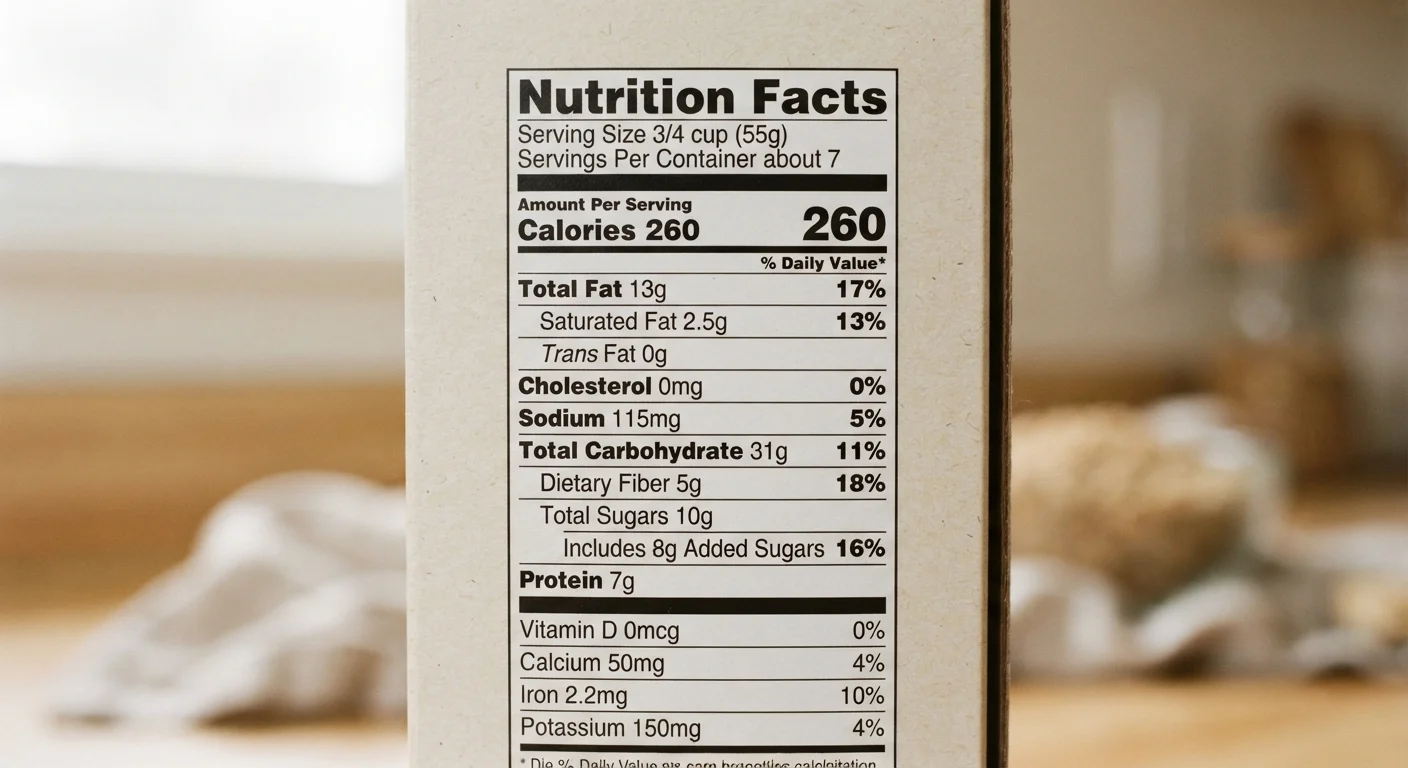
Photo: faqsvault.com editorial
Key Takeaways
- Serving size is the foundation of the label — every other number depends on it.
- Percent Daily Value (%DV) helps you gauge whether a nutrient amount is high or low at a glance.
- Saturated fat, sodium, and added sugars are the figures most nutrition guidance suggests limiting.
- Fibre, vitamin D, calcium, iron, and potassium are nutrients many people benefit from seeking out.
- Ingredients are listed by weight — the first few tell you the most about a food's character.
- No single number defines whether a food is healthy; context and overall diet pattern matter more.
Why the Label Feels Overwhelming (And Why It Doesn't Have to)
Pick up almost any packaged food and flip it over — you're greeted with a dense grid of numbers, percentages, and terms that can feel more like a chemistry exam than a shopping aid. The Nutrition Facts label (mandated and updated by the FDA) was designed to inform, but without a quick orientation, most of us either ignore it or fixate on one number out of context.
The good news is that the label follows a consistent structure, and once you understand that structure, reading it becomes a fast, reliable habit rather than a guessing game. Think of this guide as learning to read a map: the symbols only look confusing until someone explains them once.
It's worth noting upfront that nutrition labels provide general information for a general population. They are not personal prescriptions. If you have specific health conditions, dietary restrictions, or medical concerns, a registered dietitian can help you interpret what the numbers mean for your individual situation.
The Structure of a Nutrition Facts Label
The label is organized from top to bottom in order of importance. Here's what each section is actually telling you:
Serving Size and Servings Per Container
This is the single most critical piece of information on the label, and it's the one most often overlooked. Every number that follows — calories, fat, sodium, everything — applies to one serving as defined by the manufacturer. If a bag lists a serving as 1 oz but you typically eat 3 oz, all those numbers triple accordingly.
The FDA updated serving sizes in 2016 to better reflect how people actually eat, so they're more realistic than they used to be. Still, always check before assuming the whole package is one serving.
Calories
Calories measure the energy a food provides. The large, bold number reflects calories per serving. Rather than treating this as a pass/fail figure, use it as one data point alongside the source of those calories — a 200-calorie serving of almonds and a 200-calorie serving of a sugary snack deliver very different nutritional profiles.
Nutrients: What to Limit and What to Seek Out
The label distinguishes between nutrients most Americans tend to overconsume and those many fall short on.
Generally limit:
- Saturated fat — current dietary guidelines suggest keeping this moderate; it's different from unsaturated fats found in nuts and olive oil
- Sodium — high intakes are associated with elevated blood pressure in research populations
- Added sugars — distinct from naturally occurring sugars in fruit or dairy; added sugars appear separately on updated labels
- Trans fat — largely phased out but still worth checking; aim for 0g
Generally seek out:
- Dietary fibre — most Americans fall short of intake levels associated with digestive and cardiovascular health. Our article on fibre covers this in depth.
- Vitamin D, calcium, iron, and potassium — these are highlighted on the label because many people don't get enough from food alone
- Protein — context-dependent, but useful to track, especially for active individuals
Percent Daily Value (%DV)
The %DV column is one of the most useful — and least used — tools on the label. It shows how much a nutrient in one serving contributes to a general daily intake benchmark, based on a 2,000-calorie reference diet.
A quick rule of thumb: 5% DV or less is considered low for a nutrient; 20% DV or more is considered high. This makes it easier to compare products without doing mental arithmetic. For nutrients you want to limit (like sodium), lower %DV is generally preferable. For nutrients you want more of (like fibre), higher is better. For a broader look at what these micronutrients do in your body, see our micronutrients reference guide.
Reading the Ingredient List
Below the Nutrition Facts panel sits the ingredient list — a different but equally valuable source of information. Ingredients are listed in descending order by weight, meaning whatever appears first makes up the largest proportion of the product.
If whole grains, legumes, or a recognizable protein appear near the top, that tells you something meaningful. If added sugar appears in four different forms across the first six ingredients, that tells you something too. Common names for added sugar include corn syrup, dextrose, maltose, cane juice, and fruit juice concentrate — manufacturers sometimes use multiple forms, which can distribute them lower on the list even when sugar is a major ingredient overall.
The ingredient list also reveals allergens, additives, and preservatives — useful context that the numbers panel alone can't capture. Length of the ingredient list is sometimes used as a rough proxy for processing level, though this isn't a universal rule.
Use Labels to Compare, Not to Judge
Once you're comfortable reading labels, you can start using them to build more balanced meals — pairing packaged items with whole foods to round out the nutritional picture.
This article is for general informational and educational purposes only and does not constitute medical or dietary advice. For guidance specific to your health circumstances, please consult a qualified healthcare or nutrition professional.
All published content on this website is for informational and educational purposes only and should not be taken as professional advice. We recommend that readers seek expert opinion before making any decisions. The website is not responsible for any actions taken based on the information provided on this website. We are not liable for any inaccuracies, modifications, or omissions in information. Moreover, external links or third-party content are provided for convenience; we are not liable for their correctness. Users are advised to verify every piece of information before they use it for any purpose.