
Micronutrients at a Glance: Vitamins, Minerals, and What They Support

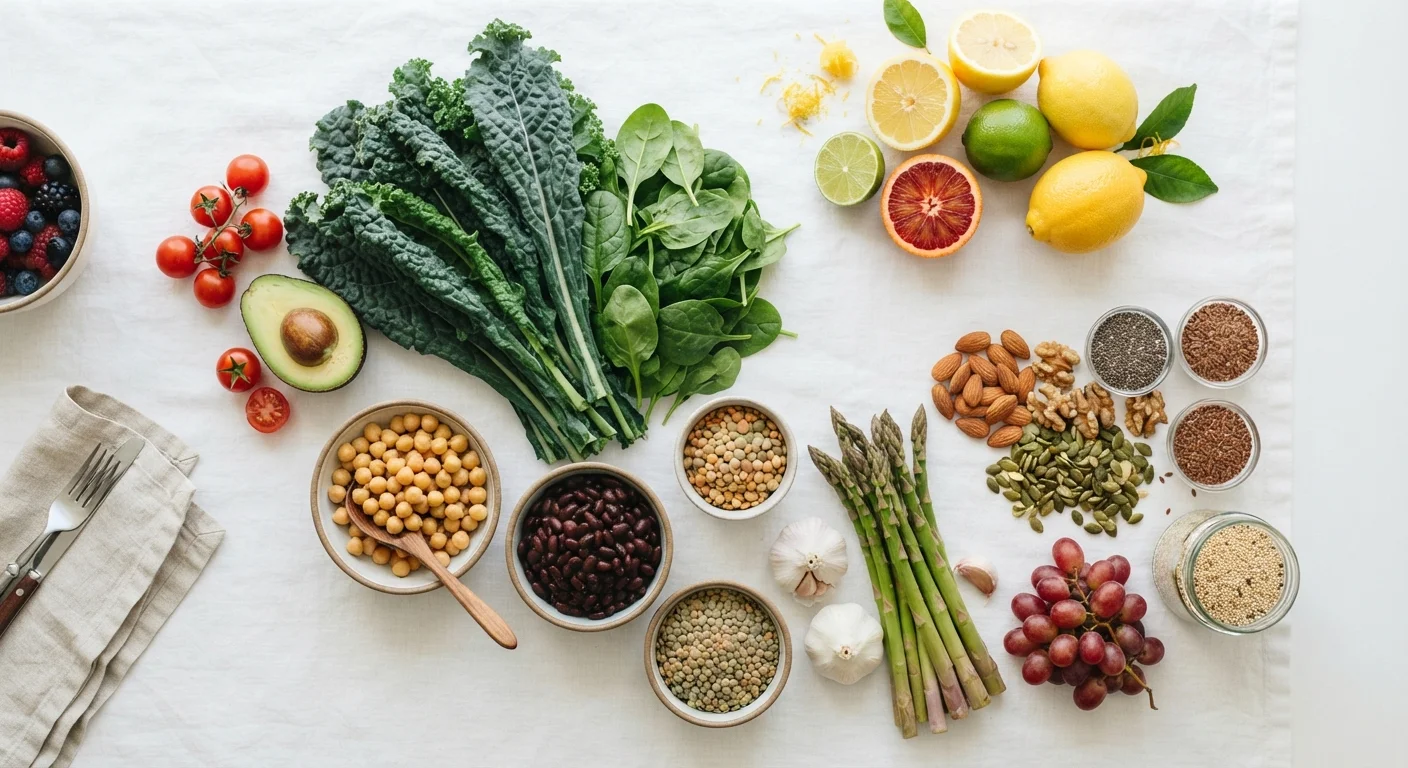
Photo: faqsvault.com editorial
What Are Micronutrients, and Why Do They Matter?
If macronutrients — carbohydrates, proteins, and fats — are the fuel your body runs on, micronutrients are the spark plugs that keep the engine running cleanly. The term covers two broad categories: vitamins and minerals. Unlike macronutrients, your body needs these in relatively small quantities, but that doesn't make them optional. Even modest shortfalls over time can affect energy levels, immune function, bone health, and mood.
Most vitamins and minerals work by enabling chemical reactions — acting as cofactors for enzymes, supporting cell growth, or helping tissues repair themselves. Because they interact with one another in complex ways, getting a wide variety from food tends to work better than chasing single nutrients in isolation. See our overview of macronutrients for a complementary look at the bigger nutritional picture.
Micronutrients
Vitamins and minerals the body requires in relatively small amounts to support essential physiological processes. Unlike macronutrients, they don't provide energy (calories) directly but enable the reactions that use energy.
Fat-soluble vitamins
Vitamins (A, D, E, and K) that dissolve in fat and are stored in the body's fatty tissue and liver. Because they accumulate, very high intakes over time can potentially reach excessive levels.
Water-soluble vitamins
Vitamins (C and the eight B vitamins) that dissolve in water and are not stored in significant quantities. Excess amounts are generally excreted in urine, so regular dietary intake is important.
Trace minerals
Minerals the body needs in very small quantities — typically less than 100 mg per day — including iron, zinc, selenium, and iodine. Despite their small required amounts, shortfalls can have meaningful health effects.
Bioavailability
The proportion of a nutrient that is actually absorbed and used by the body after consumption. Bioavailability varies by food form, cooking method, and what other foods are eaten at the same time.
Antioxidant
A compound that helps neutralize unstable molecules called free radicals, which can otherwise damage cells. Several vitamins (C, E) and minerals (selenium) function as antioxidants in the body.
Key Vitamins: Roles and Where to Find Them
Vitamins fall into two families: fat-soluble (A, D, E, K) and water-soluble (the B vitamins and C). Fat-soluble vitamins are stored in body fat and the liver, so they can accumulate over time. Water-soluble vitamins are not stored in meaningful amounts and need regular replenishment through food.
Fat-Soluble Vitamins
- Vitamin A — Supports vision (especially in low light), immune defense, and skin cell turnover. Found in liver, dairy, eggs, and as beta-carotene in orange and leafy green vegetables.
- Vitamin D — Critical for calcium absorption and bone mineralization; also plays a role in immune regulation. Synthesized in skin on sun exposure; dietary sources include fatty fish, egg yolks, and fortified foods.
- Vitamin E — Functions primarily as an antioxidant protecting cell membranes. Richest sources include sunflower seeds, almonds, wheat germ oil, and spinach.
- Vitamin K — Essential for blood clotting (K1) and bone metabolism (K2). Leafy greens are the main dietary source of K1; fermented foods and some animal products provide K2.
Water-Soluble Vitamins
- Vitamin C — Supports collagen synthesis, wound healing, and antioxidant defense; enhances iron absorption from plant foods. Plentiful in bell peppers, citrus, kiwi, and broccoli.
- B vitamins (B1, B2, B3, B5, B6, B7, B9, B12) — This family spans energy metabolism, red blood cell production, nervous system function, and DNA synthesis. Collectively found across whole grains, legumes, leafy greens, dairy, eggs, and meat. Vitamin B12 is found almost exclusively in animal-sourced foods, making it an important consideration for those following plant-based diets — see our article on plant-based nutritional considerations for more detail.
Key Minerals: Roles and Where to Find Them
Minerals are inorganic elements absorbed from food and water. They're divided into macrominerals (needed in larger amounts, such as calcium, magnesium, and potassium) and trace minerals (needed in smaller amounts, such as iron, zinc, and selenium).
| Total essential vitamins | 13 (4 fat-soluble, 9 water-soluble) (National Institutes of Health, Office of Dietary Supplements) |
| Essential dietary minerals | At least 16 recognized (Dietary Reference Intakes, National Academies of Sciences) |
| Most common micronutrient shortfall (US adults) | Vitamin D, followed by calcium and potassium (2020–2025 Dietary Guidelines for Americans) |
| Vitamin B12 — primary concern for | People following vegan or strict vegetarian diets (NIH Office of Dietary Supplements) |
| Iron absorption boost | Up to 3× higher when paired with vitamin C (General nutritional biochemistry consensus) |
| Vitamin D synthesis | Triggered by UVB sunlight exposure on skin (NIH Office of Dietary Supplements) |
Macrominerals
- Calcium — The most abundant mineral in the body; forms the structural basis of bones and teeth and supports muscle contraction and nerve signaling. Found in dairy products, fortified plant milks, tofu made with calcium sulfate, and leafy greens like kale and bok choy.
- Magnesium — Involved in over 300 enzymatic reactions, including energy production, protein synthesis, and muscle relaxation. Nuts, seeds, legumes, whole grains, and dark leafy greens are good sources.
- Potassium — Helps regulate fluid balance, nerve impulses, and muscle contractions, including the heartbeat. Bananas are a well-known source, but potatoes, beans, and leafy greens often contain more per serving.
Trace Minerals
- Iron — Core component of hemoglobin, the protein that carries oxygen in red blood cells. Heme iron (from meat and seafood) is more readily absorbed than non-heme iron (from legumes, tofu, and fortified grains), though pairing plant sources with vitamin C can improve uptake.
- Zinc — Supports immune function, wound healing, and DNA synthesis. Found in oysters, red meat, poultry, beans, nuts, and whole grains.
- Selenium — An antioxidant mineral that supports thyroid hormone metabolism. Brazil nuts, seafood, and whole grains are notable sources.
- Iodine — Required for thyroid hormone production, which regulates metabolism and development. Iodized salt and seafood are the most common dietary sources in the US.
Getting Enough Without Overcomplicating It
For most healthy adults, a varied diet built around whole foods — vegetables, fruits, legumes, whole grains, nuts, seeds, and modest amounts of animal products if desired — covers the majority of micronutrient needs without the need to track every number. Diversity is the operative word: different colored produce, for instance, tends to signal different nutrient profiles.
Understanding what's listed on a nutrition label can also help you spot where certain nutrients appear in everyday foods. Our guide on reading a nutrition label breaks down which figures are worth paying attention to. And if you're curious about how population-level eating patterns hold up nutritionally, research on global eating patterns offers a broader perspective.
Supplements can play a role in specific situations — certain life stages, health conditions, dietary restrictions, or confirmed deficiencies — but whether they're appropriate for you is a conversation worth having with a registered dietitian or your healthcare provider. This article provides general nutrition information and is not a substitute for personalized medical or dietary advice. Always consult a qualified healthcare professional for guidance specific to your health needs.
All published content on this website is for informational and educational purposes only and should not be taken as professional advice. We recommend that readers seek expert opinion before making any decisions. The website is not responsible for any actions taken based on the information provided on this website. We are not liable for any inaccuracies, modifications, or omissions in information. Moreover, external links or third-party content are provided for convenience; we are not liable for their correctness. Users are advised to verify every piece of information before they use it for any purpose.