
What Companion Planting Actually Does — and Doesn't Do

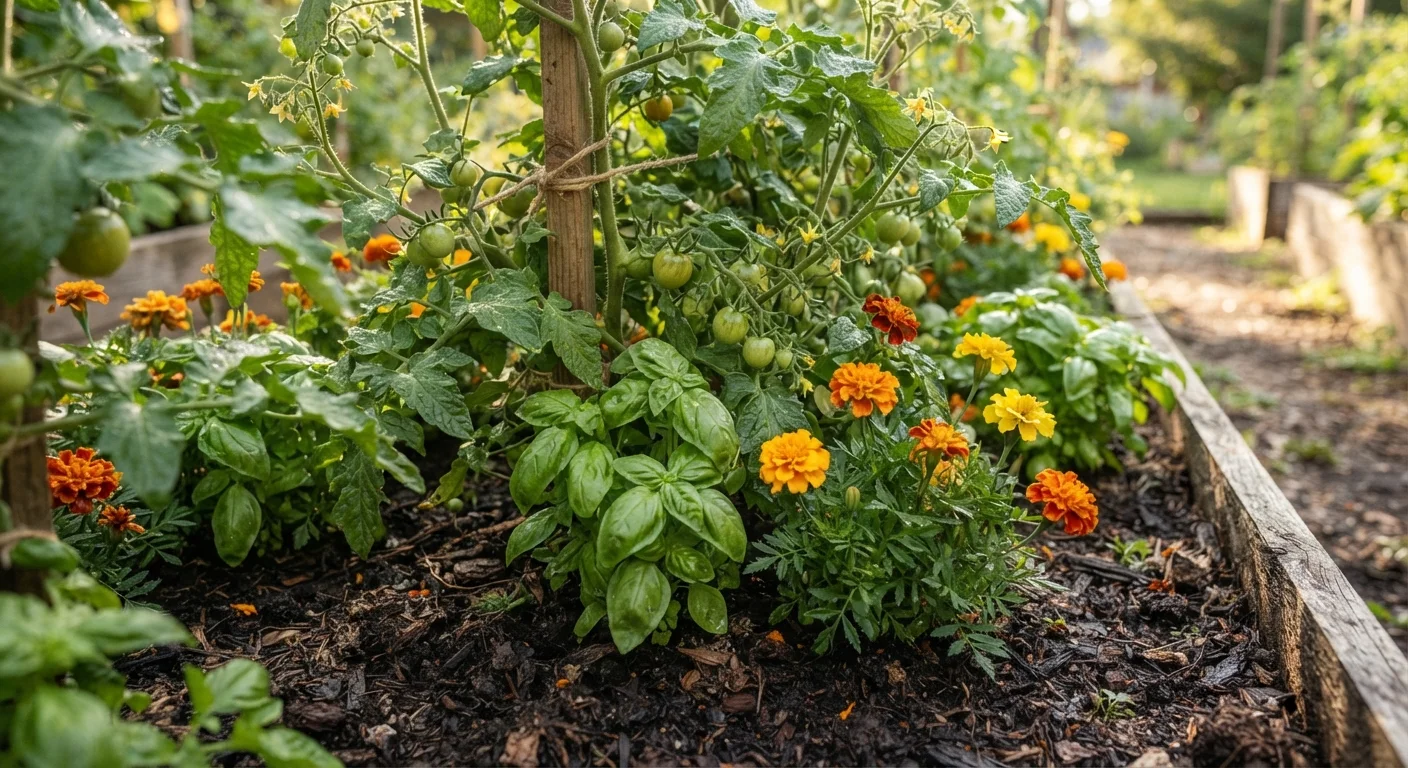
Photo: faqsvault.com editorial
Key Takeaways
- Some companion planting pairs have real research support; many others rely primarily on folklore and anecdote.
- Marigolds do have documented pest-deterrent properties, but proximity alone doesn't guarantee protection.
- The 'Three Sisters' planting method has genuine functional logic rooted in Indigenous agricultural tradition.
- Companion planting works best as one part of a broader, integrated garden management approach.
Why Companion Planting Gets Complicated
Walk into any garden center and you'll find seed packets, books, and charts promising that certain plants help each other thrive — repelling pests, boosting flavor, or improving yields just by growing side by side. Companion planting is one of gardening's most beloved concepts, passed down through generations and across cultures. The problem is that garden lore and verified evidence don't always line up.
That doesn't mean companion planting is useless. It means separating the practices that hold up under scrutiny from those that probably don't matter much — so you can focus your effort where it counts. Whether you're working with a large plot or a small one (see our guide on growing food in small spaces), knowing what companion planting actually does gives you a real advantage.
Myth
Planting basil next to tomatoes will improve tomato flavor.
Fact
There is no reliable scientific evidence that basil alters the flavor of neighboring tomatoes.
This is one of the most repeated claims in companion planting, and it makes intuitive sense — both plants thrive in similar conditions, and basil smells strongly aromatic. However, the mechanism by which basil could change tomato chemistry through proximity hasn't been demonstrated in controlled studies. What is true is that they grow well together due to similar water and sun needs, making them convenient companions for space management. Grow them side by side for practical reasons, just not with flavor expectations driving the decision.
Myth
Marigolds will protect your entire vegetable garden from pests.
Fact
Marigolds have documented pest-suppressing properties, but their effect is localized and depends on the specific pest and marigold variety.
Marigolds — particularly French marigolds (Tagetes patula) — do produce compounds that suppress certain nematodes in the soil, and this has been supported in university extension research. They may also deter some above-ground insects through scent. But "planting marigolds around the border" won't create a pest-free zone. The nematode effect requires dense planting over a full season, ideally followed by tilling the plants into the soil. Think of marigolds as a useful tool in a larger integrated pest management strategy, not a magic barrier.
Myth
Certain plant combinations will significantly boost each other's yields.
Fact
Yield improvements from companion planting are inconsistent in research, and depend heavily on soil, climate, and plant spacing.
Some studies show modest yield benefits from specific pairings under particular conditions. Others show neutral or even slightly negative results when competition for water, light, or nutrients outweighs any cooperative benefit. Yield is influenced by so many variables — soil fertility, watering consistency, pest pressure, weather — that attributing gains specifically to a plant pairing is methodologically difficult. Companion planting can contribute to a productive garden system, but it isn't a reliable yield multiplier on its own.
Myth
The Three Sisters (corn, beans, squash) is just a myth.
Fact
The Three Sisters is one of the better-supported companion planting systems, with functional logic behind each role.
Developed and refined by various Indigenous nations of North America over centuries, the Three Sisters planting system assigns each plant a functional role. Corn provides a trellis for climbing beans. Beans fix nitrogen. Squash's broad leaves shade the ground, suppressing weeds and retaining moisture. These interactions are real and each is grounded in agronomic principle. It's not a perfect system for every garden — corn needs adequate space and pollination density — but the Three Sisters is one of the few companion planting approaches where the claimed mechanisms clearly map to observable plant biology.
Myth
Companion planting can replace other pest management strategies.
Fact
Companion planting is a complement to pest management, not a substitute for monitoring, physical controls, or other interventions.
Even the most effective companion planting arrangements — aromatic herbs attracting beneficial insects, dense plantings reducing weed pressure — work best as part of a broader approach. Regular scouting for pests, maintaining healthy soil, removing diseased plant material promptly, and using row covers or other physical barriers when needed remain essential. Relying solely on plant companions to handle pest pressure often leads to disappointment when an infestation takes hold anyway. Companion planting shifts the odds modestly in your favor; it doesn't eliminate risk.
What the Evidence Actually Supports
Research on companion planting tends to confirm a handful of mechanisms: physical barriers, chemical signaling, habitat creation for beneficial insects, and soil chemistry interaction. These are the areas where paying attention to plant neighbors genuinely pays off.
~30%
Nematode reduction from French marigolds
University extension research has documented meaningful reductions in root-knot nematode populations with a full season of dense French marigold planting.
200+ years
Age of Three Sisters agricultural tradition
The Three Sisters companion system has been practiced and refined by Indigenous North American communities for well over two centuries, with documented agronomic benefits.
Aromatic plants like basil, dill, and fennel can attract parasitic wasps and hoverflies that prey on common garden pests — though the effect is most reliable when those plants are allowed to flower. Ground covers and dense plantings can physically block weeds, reducing the need for mulching labor, though a well-applied mulch layer still does important work. Our article on why garden mulching pays off over time explains how that works across seasons.
Legumes — beans, peas, clover — fix atmospheric nitrogen into soil through root-associated bacteria, genuinely benefiting neighboring heavy-feeders like corn or brassicas over time. This isn't folklore; it's well-documented soil science. The key word is "over time": nitrogen benefits are most pronounced after legume roots decompose, not simply while the plants are growing side by side.
For gardeners planning their layout, these insights also apply whether you're gardening in raised beds or in-ground plots. Raised beds vs. in-ground planting each create slightly different micro-environments that can affect how companion effects play out.
Watch for Competition, Not Just Cooperation
All published content on this website is for informational and educational purposes only and should not be taken as professional advice. We recommend that readers seek expert opinion before making any decisions. The website is not responsible for any actions taken based on the information provided on this website. We are not liable for any inaccuracies, modifications, or omissions in information. Moreover, external links or third-party content are provided for convenience; we are not liable for their correctness. Users are advised to verify every piece of information before they use it for any purpose.