
The Case For and Against a Garden Pond

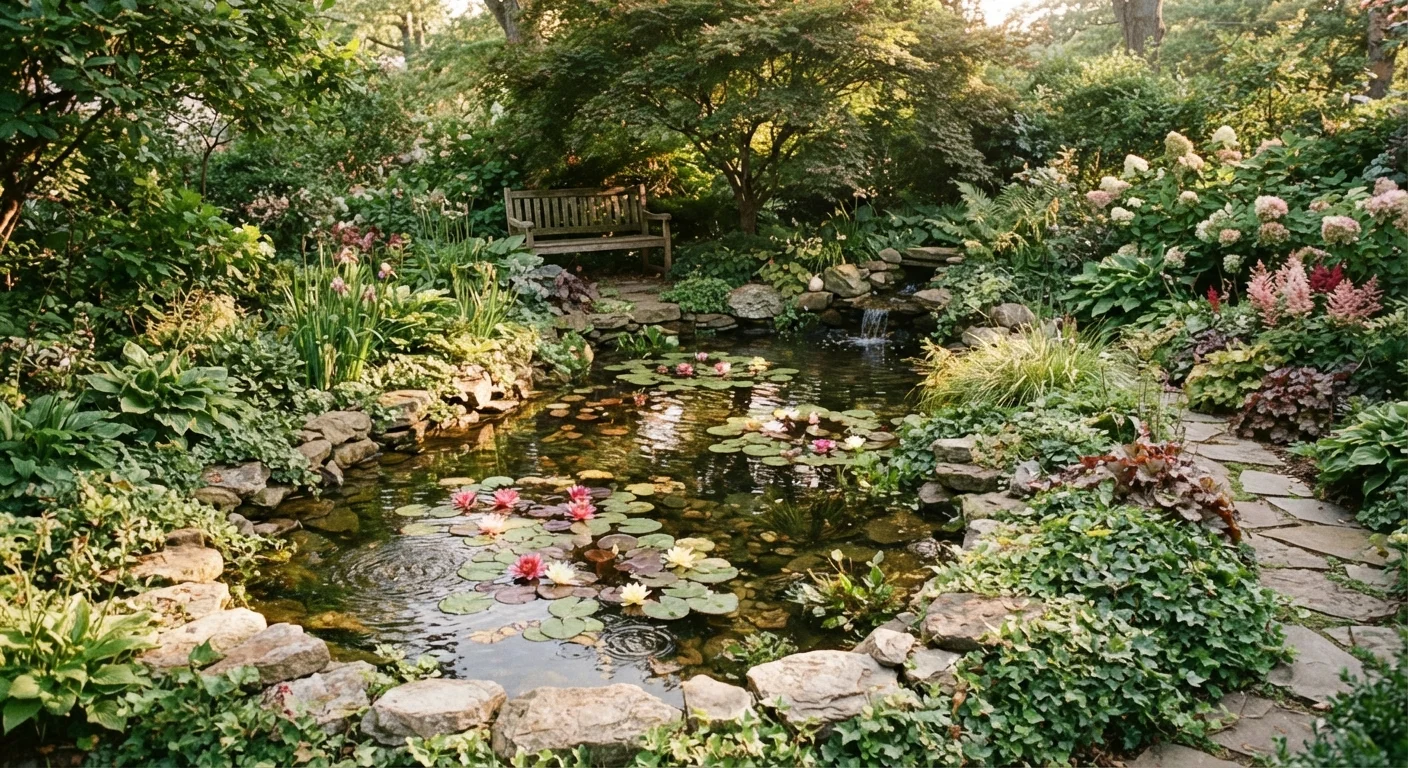
Photo: faqsvault.com editorial
Key Takeaways
- A garden pond supports local wildlife and can significantly boost backyard biodiversity.
- Installation costs and ongoing maintenance are real considerations before committing.
- Safety risks — especially for young children — must be planned for from the start.
- Even a small pond adds visual interest and a focal point to outdoor spaces.
- Location, soil type, and local climate all affect how well a pond performs long-term.
Dramatically boosts local garden biodiversity
Ponds attract frogs, toads, dragonflies, water beetles, and birds within a single season. Wildlife conservation groups consistently cite garden ponds as one of the highest-impact features a homeowner can add.
Creates a dynamic, year-round visual focal point
Reflections, moving water, and seasonal plant changes give a pond visual interest that evolves continuously — something static beds and lawns cannot replicate.
Supports aquatic and marginal planting
Water lilies, rushes, irises, and other marginal plants thrive around pond edges, adding texture, color, and structure to areas of the garden that can be difficult to plant otherwise.
Can improve garden microclimate
A water body moderates local air temperature slightly, increases humidity near the water surface, and can benefit surrounding plants during dry spells — particularly relevant in warmer US regions.
Provides a sense of calm and wellbeing
The sight and sound of water in a garden are widely associated with relaxation. A pond adds a sensory dimension — gentle movement, ambient sound — that genuinely changes how an outdoor space feels to spend time in.
Upfront installation cost can be significant
Even a modest lined pond with basic planting and edging can run several hundred dollars in materials. Larger or more complex designs with pumps and filtration systems can reach several thousand dollars.
Ongoing maintenance is unavoidable
Algae management, debris removal, water top-ups in summer, and equipment checks are recurring tasks. Neglecting maintenance quickly leads to a murky, smelly pond that harms rather than helps the garden.
Poses a real safety risk for young children
Even shallow standing water presents a drowning hazard for toddlers and small pets. Protective grids or fencing are necessary in family gardens, adding cost and planning complexity.
Can attract unwanted wildlife or pests
Alongside beneficial wildlife, ponds can draw mosquitoes if water is stagnant, and herons — which prey on fish — are a persistent problem in many US regions, particularly where ornamental fish are kept.
Takes up permanent garden space
A pond is not easily moved or removed once established. The liner, excavation, and surrounding planting represent a long-term commitment to that area of the garden.
Liner failure can cause persistent problems
Punctured or degraded liners allow water to seep into the surrounding soil, potentially waterlogging nearby planting areas. Repairs can be disruptive and require partially or fully draining the pond.
What Exactly Is a Garden Pond?
A garden pond is a contained body of water installed within an outdoor space — ranging from a small, pre-formed liner sunk into a modest backyard to a larger, custom-built feature with pumps, filtration, and aquatic planting zones. Ponds can be formal (geometric edges, clean lines) or informal (naturalistic shapes that blend into the landscape).
Unlike a decorative fountain or birdbath, a pond creates a self-sustaining mini-ecosystem over time. Plants, insects, amphibians, and birds all interact within and around it. That ecological dimension is central to understanding both the appeal and the demands of a garden pond — it's not simply a static water feature, but a living system that evolves with the seasons.
If you're already thinking about how your outdoor space is structured, it's worth reading about designing outdoor living spaces to understand how a pond might integrate with the broader layout of your garden.
The Case For: Why a Garden Pond Is Worth Considering
Garden ponds offer a compelling mix of environmental and aesthetic benefits that few other garden features can match.
Dramatically boosts local garden biodiversity
Ponds attract frogs, toads, dragonflies, water beetles, and birds within a single season. Wildlife conservation groups consistently cite garden ponds as one of the highest-impact features a homeowner can add.
Creates a dynamic, year-round visual focal point
Reflections, moving water, and seasonal plant changes give a pond visual interest that evolves continuously — something static beds and lawns cannot replicate.
Supports aquatic and marginal planting
Water lilies, rushes, irises, and other marginal plants thrive around pond edges, adding texture, color, and structure to areas of the garden that can be difficult to plant otherwise.
Can improve garden microclimate
A water body moderates local air temperature slightly, increases humidity near the water surface, and can benefit surrounding plants during dry spells — particularly relevant in warmer US regions.
Provides a sense of calm and wellbeing
The sight and sound of water in a garden are widely associated with relaxation. A pond adds a sensory dimension — gentle movement, ambient sound — that genuinely changes how an outdoor space feels to spend time in.
From a wildlife perspective, even a small pond can make a measurable difference. Amphibians like frogs and toads use ponds for breeding, while dragonflies, water beetles, and pond skaters colonize naturally within a single season. Birds are attracted to the water source for drinking and bathing. The biodiversity gain is one of the most well-documented benefits of garden ponds, supported consistently by wildlife conservation organizations across the US and UK.
Aesthetically, a pond gives a garden a dynamic focal point that changes with the light, the seasons, and the plant growth around it. Reflections, movement, and sound all contribute to a calming, layered outdoor environment — something that static beds and borders simply cannot replicate.
The Case Against: The Real Costs and Challenges
Before committing, it's important to look honestly at what a pond demands. The challenges aren't insurmountable, but they are real.
Upfront installation cost can be significant
Even a modest lined pond with basic planting and edging can run several hundred dollars in materials. Larger or more complex designs with pumps and filtration systems can reach several thousand dollars.
Ongoing maintenance is unavoidable
Algae management, debris removal, water top-ups in summer, and equipment checks are recurring tasks. Neglecting maintenance quickly leads to a murky, smelly pond that harms rather than helps the garden.
Poses a real safety risk for young children
Even shallow standing water presents a drowning hazard for toddlers and small pets. Protective grids or fencing are necessary in family gardens, adding cost and planning complexity.
Can attract unwanted wildlife or pests
Alongside beneficial wildlife, ponds can draw mosquitoes if water is stagnant, and herons — which prey on fish — are a persistent problem in many US regions, particularly where ornamental fish are kept.
Takes up permanent garden space
A pond is not easily moved or removed once established. The liner, excavation, and surrounding planting represent a long-term commitment to that area of the garden.
Liner failure can cause persistent problems
Punctured or degraded liners allow water to seep into the surrounding soil, potentially waterlogging nearby planting areas. Repairs can be disruptive and require partially or fully draining the pond.
Maintenance Is the Most Common Underestimate
Algae control, water top-ups during dry summers, and leaf removal each autumn are recurring tasks that many new pond owners underestimate in the planning stage. Researching water management in the garden beforehand can help you think more systematically about how water features interact with your overall outdoor maintenance routine.
Practical Factors to Weigh Before Deciding
Beyond the pros and cons list, a few practical variables should shape your decision.
Location and Sunlight
A pond needs partial sun — around four to six hours daily works well for most aquatic plants. Full shade discourages plant growth; full sun accelerates algae. Avoid placing a pond directly beneath deciduous trees, as falling leaves decompose in water and quickly degrade water quality.
Soil and Drainage
Waterlogged or compacted soil can affect how a pond liner sits and how the surrounding planting performs. If your garden already deals with drainage challenges, a pond might compound them — or, with careful design, could actually help manage runoff in a low-lying spot.
Garden Size and Shape
A pond doesn't have to be large to be effective. Container ponds — essentially a waterproof barrel or deep planter — can support aquatic plants and attract insects in even the smallest spaces. Sizing expectations matter: a pond that feels proportionate in a quarter-acre garden could feel overwhelming in a compact urban backyard.
70%+
Of UK ponds lost in the 20th century
The Royal Horticultural Society and wildlife groups note that the majority of natural ponds in many regions have disappeared, making garden ponds a meaningful conservation contribution.
1 season
Time for wildlife to colonize a new pond
Wildlife organizations report that amphibians, insects, and birds typically discover and begin using a new garden pond within the first growing season after installation.
If you're weighing different types of garden investment, it's useful to consider how different features compare in effort and return. For example, raised beds versus in-ground planting is another decision that rewards careful comparison before any digging begins.
Safety Considerations You Shouldn't Skip
Safety deserves its own section, not a footnote. Standing water — even shallow water — poses a drowning risk to young children and small pets. If your household includes children under five, or if neighborhood children have regular access to your garden, a pond requires a protective barrier such as a rigid metal grid fitted just below the water surface, or a sturdy fence around the pond perimeter.
This isn't a reason to rule out a pond entirely, but it is a reason to plan for safety infrastructure from day one rather than retrofitting it later. Local authorities may also have guidelines on garden pond safety; checking with your municipality before installation is a sensible step.
All published content on this website is for informational and educational purposes only and should not be taken as professional advice. We recommend that readers seek expert opinion before making any decisions. The website is not responsible for any actions taken based on the information provided on this website. We are not liable for any inaccuracies, modifications, or omissions in information. Moreover, external links or third-party content are provided for convenience; we are not liable for their correctness. Users are advised to verify every piece of information before they use it for any purpose.