
The Long Road from Subculture to Mainstream

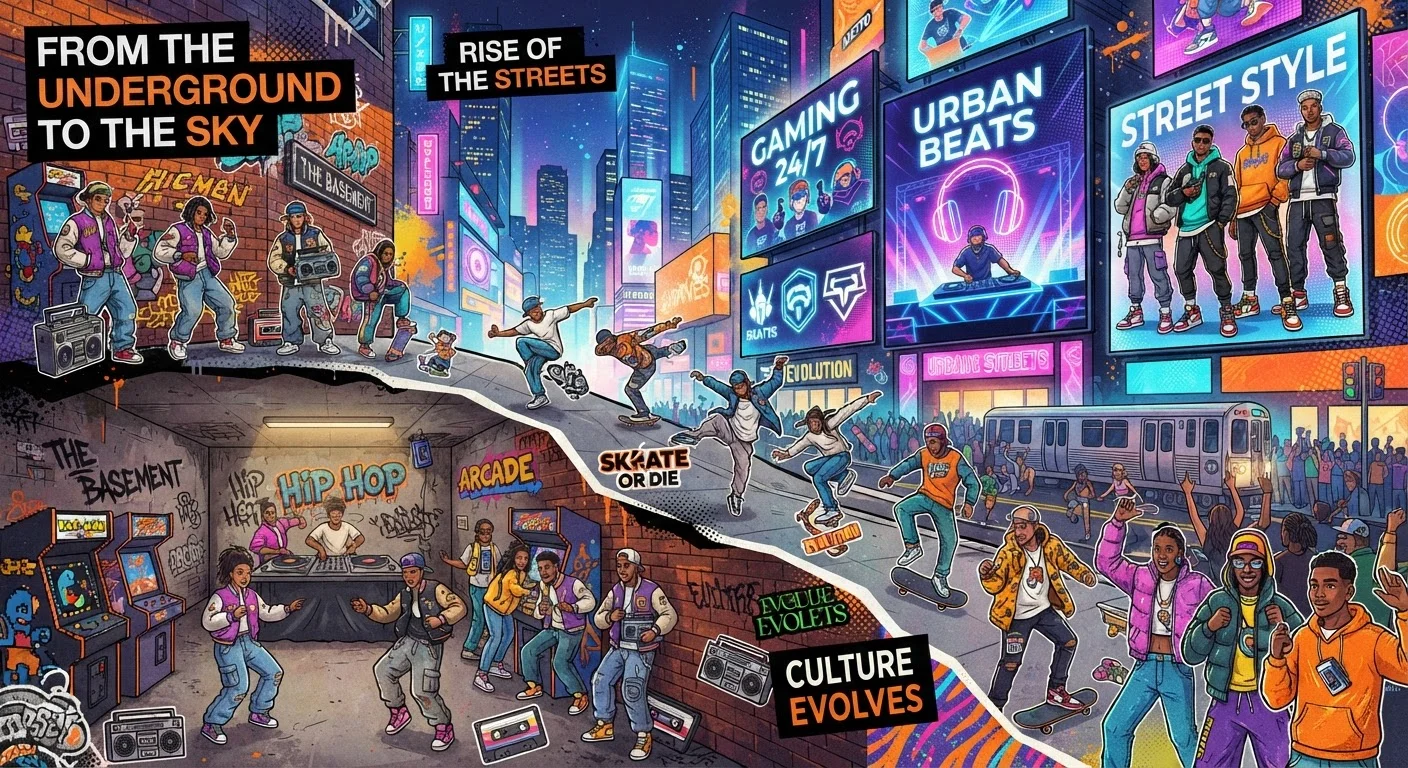
Photo: faqsvault.com editorial
Key Takeaways
- Every major mainstream trend — streetwear, K-pop, gaming — began as a tight-knit subculture with its own codes.
- The journey from niche to mainstream follows recognizable stages: origin, community, discovery, commercialization, and saturation.
- Social media dramatically compressed the timeline for cultural crossover, sometimes collapsing years into months.
- Authenticity is both the engine of a subculture's appeal and the first casualty of its mainstream arrival.
- Understanding this pattern helps readers spot the next cultural wave before it breaks wide open.
Why Every Trend Starts in the Margins
Long before streetwear filled luxury storefronts or K-pop acts sold out stadiums across North America, these phenomena lived in tightly bounded communities — skate parks in Los Angeles, fan cafes in Seoul, LAN parties in suburban basements. That's not a coincidence. Subcultures thrive precisely because they offer something the mainstream doesn't: a clear sense of belonging, a shared language, and the particular thrill of knowing something others haven't discovered yet.
The formation and staying power of subcultures follow patterns that cultural researchers have mapped for decades. A group coalesces around a shared interest or identity that mainstream culture ignores or misunderstands. Rituals, aesthetics, and in-group vocabulary develop organically. And crucially, the community polices its own borders — rewarding genuine insiders and marking outsiders who haven't put in the time.
That gatekeeping, often criticized as snobbery, actually performs an important structural role: it keeps the culture coherent and gives it the depth that eventually makes it attractive to the wider world.
The Five Stages of Cultural Crossover
Tracking dozens of cultural movements — from hip-hop to anime to indie gaming — reveals a remarkably consistent trajectory. Here's how to read the map.
Origin: The Underground Spark
Every movement starts with a specific community solving a specific problem — or filling a specific gap. Wu-Tang Clan built a mythology in Staten Island. Early streetwear brands screen-printed runs of fifty tees for skaters who couldn't find clothes that fit their lifestyle. The origin is always local, specific, and deeply felt.
Community Building: Codes and Gatekeeping
The community develops its own aesthetic language, rituals, and hierarchy. Knowing the right references, brands, or artists signals membership. This stage can last years or decades — and it's where the culture acquires the depth and authenticity that will later attract outside attention.
Discovery: Tastemakers and Early Bridges
A journalist, a celebrity, a viral moment — something breaches the wall between subculture and wider awareness. This isn't yet mainstream adoption; it's the moment a broader audience gets its first meaningful glimpse. Think of a major fashion editor spotting an underground designer, or a mainstream artist sampling a niche sound.
Commercialization: Scale Changes Everything
Commercial interests move in. Major labels, retail chains, and media platforms begin packaging the aesthetic for mass consumption. Price points shift, availability expands, and the cultural product becomes legible — and purchasable — to audiences far outside the origin community. This is both the peak of visibility and the beginning of tension.
Saturation and the Backlash-and-Evolution Phase
Ubiquity triggers a backlash from the originating community and eventually from mass audiences themselves. At this point the culture either calcifies into nostalgia, fragments into new subcultures, or evolves into something durable enough to become a permanent part of the cultural landscape. Hip-hop chose the latter. Many micro-trends do not.
Once you understand this arc, you start seeing it everywhere. Gaming went from basement hobby to esports arenas. Anime moved from specialty import shops to Netflix's global homepage. Each followed the same basic choreography, just at different tempos.
How the Internet Collapsed the Timeline
Before social media, the journey from subculture to mainstream could take a generation. Hip-hop's roots in 1970s South Bronx block parties didn't translate into full commercial dominance until the 1990s — a roughly two-decade arc. Skateboarding cultivated its counterculture identity for decades before going fully Olympic in 2021.
Today, that timeline is radically compressed. A sound born in a niche SoundCloud community or a fashion aesthetic coined in a Reddit thread can reach global saturation within eighteen months. TikTok in particular operates as a cultural accelerant: algorithms surface niche content to mass audiences before communities even have time to develop their full internal vocabulary.
This acceleration has a cost. When trends move from subculture to mainstream and back again plays out faster, the backlash also arrives faster. Communities that once had years to develop shared history and depth now find themselves overexposed before they've fully formed. The result is a cultural landscape where "cores" and aesthetics flicker in and out with dizzying speed — which is precisely why every aesthetic now ends in '-core' has become shorthand for the internet's relentless categorization of micro-trends.
How to Spot the Next Wave Early
What Gets Lost — and What Survives
Mainstream arrival almost always triggers a purity debate inside the originating community. K-pop stans who followed groups years before Western chart success often feel genuine ambivalence about stadium tours and Grammy nominations. Early streetwear collectors bristle when the same silhouettes that once signaled subcultural fluency appear in airport fast-fashion outlets.
These reactions are legitimate cultural responses, not just nostalgia. The geographic and cultural roots of global pop movements matter enormously — and commercial crossover frequently strips away regional specificity in favor of universally palatable packaging. What gets lost is often the very texture that made the culture meaningful.
Yet something almost always survives. Hip-hop's global mainstream dominance didn't erase its role as a vehicle for community storytelling — if anything, it amplified reach. Gaming's mainstream acceptance opened resources and audiences for indie developers making work that speaks directly to specific communities. The mainstream is a megaphone, not just a blender.
Understanding this pattern — in all its creative tension — is part of what it means to engage thoughtfully with the movements and moments shaping contemporary society. The next subculture poised to cross over is already out there, right now, developing its codes in a corner of the internet you might not have visited yet.
All published content on this website is for informational and educational purposes only and should not be taken as professional advice. We recommend that readers seek expert opinion before making any decisions. The website is not responsible for any actions taken based on the information provided on this website. We are not liable for any inaccuracies, modifications, or omissions in information. Moreover, external links or third-party content are provided for convenience; we are not liable for their correctness. Users are advised to verify every piece of information before they use it for any purpose.