
Making Sense of 'Core' Culture: Why Every Aesthetic Now Ends in '-core'

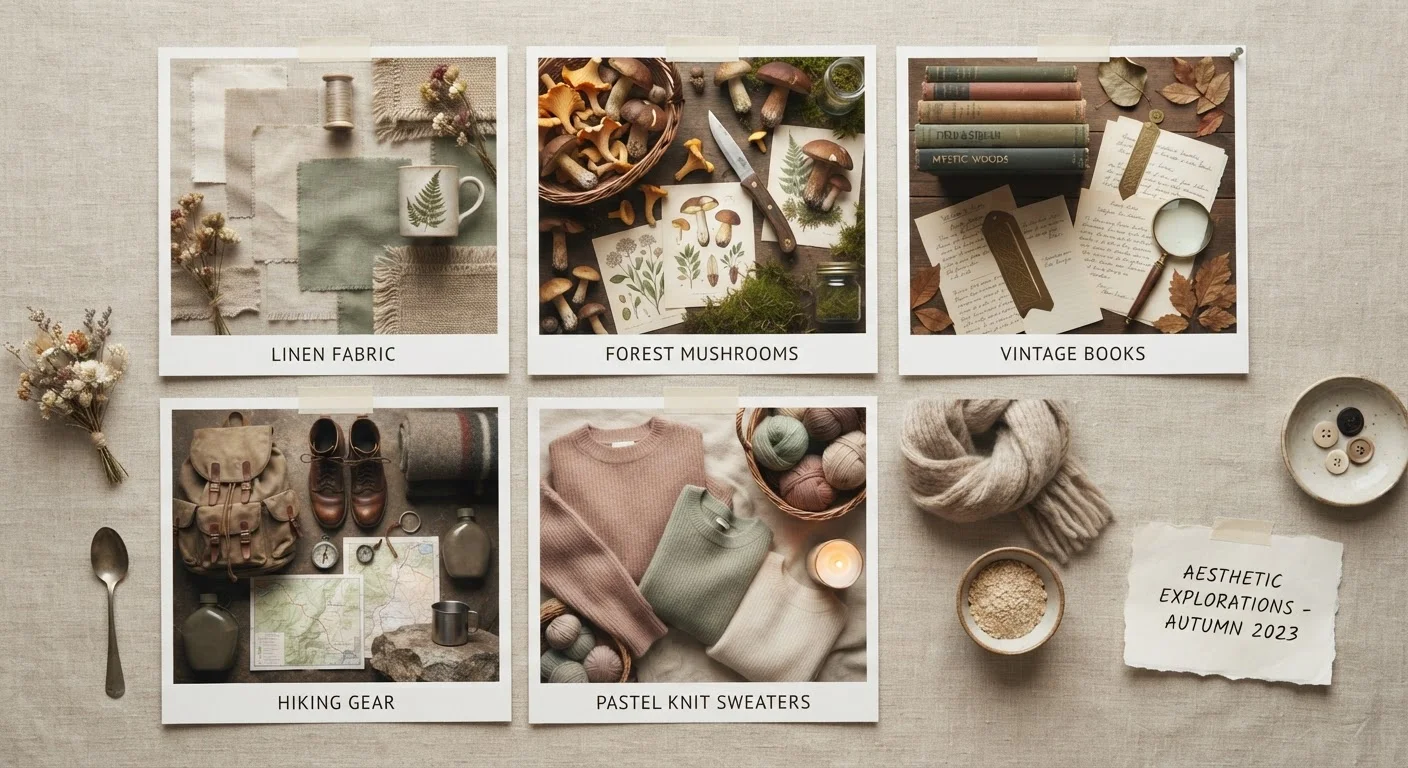
Photo: faqsvault.com editorial
Key Takeaways
- The '-core' suffix transforms a mood or aesthetic into a named, shareable identity category.
- These labels emerged from internet subcultures and accelerated dramatically with platforms like Tumblr, TikTok, and Pinterest.
- Each '-core' aesthetic bundles visual cues, values, and lifestyle aspirations into a single shorthand.
- The proliferation of '-core' names reflects a desire for belonging in a fragmented, algorithm-driven media environment.
- Not all '-core' aesthetics have equal staying power — some are fleeting micro-trends while others evolve into durable subcultures.
What the Suffix Actually Does
Language is one of the fastest mirrors of cultural change, and few linguistic moves tell us more about where we are right now than the explosion of the '-core' suffix. Tack '-core' onto almost any noun or adjective — cottage, goblin, norm, gorp, dark academia — and you've named not just a look but an entire way of being in the world.
What makes '-core' so generative as a suffix is precisely its vagueness. It gestures at intensity and authenticity without defining either. In music, 'hardcore' meant an uncompromising commitment to a genre's values. When the internet co-opted the suffix, it kept that connotation of seriousness while applying it to visual and lifestyle territories. To say you're into 'cottagecore' is to signal that you don't just like pastoral imagery — you're committed to a softly lit, linen-draped, bread-baking worldview.
Each label bundles together visual cues, emotional tones, and implicit values. That bundling is the real innovation. Rather than saying 'I like vintage clothes, nature walks, and slower living,' a single word does the work. This makes '-core' labels enormously useful for the fast-moving, image-saturated environments of platforms like TikTok, Pinterest, and Instagram, where identity has to be communicated in seconds.
A Brief History: From Hardcore to Normcore
The modern '-core' aesthetic trend has identifiable roots. 'Hardcore' as a music descriptor dates to the late 1970s and early 1980s — a word that meant stripped-down, confrontational, unpolished. By the 1990s and 2000s, it had spawned dozens of music micro-genres: metalcore, screamo, emocore. The suffix was already doing heavy cultural lifting before the internet took it mainstream.
The pivot to lifestyle aesthetics arguably began on Tumblr in the early 2010s, where visual mood boards flourished and users needed shorthand to describe what they were curating. 'Softcore' and 'darkcore' appeared as general vibes. Then, in 2014, the fashion world introduced 'normcore' — a term coined in a trend report by the K-HOLE collective — to describe the deliberate embrace of ordinary, unremarkable clothing as a form of ironic anti-fashion. The concept got widely covered in mainstream media, and suddenly '-core' was available to anyone building a new aesthetic category.
TikTok turbocharged the process. The platform's algorithm rewards niche content with surprisingly broad reach, creating an incentive to name and popularize micro-aesthetics. 'Gorpcore' (outdoor and hiking gear as everyday fashion), 'dark academia' (moody libraries, plaid, and literary obsession), and 'cottagecore' each found enormous audiences. For a deeper look at how these specific movements developed their visual philosophies, see this exploration of aesthetic movements defining a generation.
1B+
TikTok views for #cottagecore
The hashtag #cottagecore has accumulated over a billion views on TikTok, illustrating the platform's role in scaling niche aesthetics to mass awareness.
2014
Year 'normcore' entered mainstream media
The term 'normcore' was introduced by trend forecasters K-HOLE in 2013–2014 and quickly became a widely used shorthand for anti-fashion fashion, marking a turning point in '-core' language adoption.
~40+
Named '-core' aesthetics tracked by researchers
Cultural researchers and internet archivists have catalogued dozens of distinct '-core' aesthetics, with new variants continuing to emerge as platforms evolve and communities differentiate.
Identity, Belonging, and the Algorithm
Understanding '-core' aesthetics as mere fashion trends undersells what's actually happening. These labels are doing identity work — and that matters because identity formation has become significantly harder in an era of fragmented media and weakened traditional community structures.
When someone says they're 'cottagecore,' they're not just describing their Pinterest board. They're signaling values (simplicity, domesticity, craft), a relationship to modernity (skeptical, retreat-oriented), and often an implicit community of people who feel similarly. The aesthetic becomes a shorthand for a whole worldview. This is consistent with how cultural identity takes shape more broadly — through shared symbols, values, and a sense of belonging to something larger than oneself.
Platforms amplify this dynamic. When you search a '-core' hashtag, you're not just finding images — you're locating a community. The algorithm then serves you more of that community's content, deepening the sense of membership. In this way, aesthetic identities online can function like the niche communities and subcultures that have always organized human social life, just accelerated and distributed across digital networks.
The tension worth noting is between genuine identification and performance. Adopting a '-core' aesthetic label is easy; living its implied values is harder and more personal. This question of what makes style choices feel real or constructed sits at the heart of debates about authenticity in a curated-persona era.
What Happens When an Aesthetic Goes Mainstream
One of the defining tensions in '-core' culture is what happens when a niche aesthetic gets absorbed by mass culture. When major retailers started selling cottage-style linen sets and mushroom-print merchandise, the cottagecore community didn't simply celebrate wider acceptance — many members felt the aesthetic had been diluted or co-opted.
This is a recognizable pattern in how trends move. The lifecycle of a cultural trend typically follows a path from small in-group formation, to wider discovery, to mainstream adoption, to eventual backlash or mutation. '-core' aesthetics move through this cycle rapidly, sometimes within months on fast-moving platforms.
The result is an ever-accelerating proliferation of new labels. As 'cottagecore' became commercially visible, 'goblincore' emerged to reclaim the grungy, unglamorous side of nature. As 'dark academia' spread, 'light academia' and 'chaotic academia' splintered off to refine the distinction. Each new suffix-variant represents a community trying to stay one step ahead of mainstream absorption.
This process isn't cynical — it's a natural response to how aesthetic communities sustain meaning. The label exists to communicate something specific; once it no longer does, people reach for new language. The '-core' suffix is endlessly available for the next iteration, which is precisely why it shows no signs of slowing down.
Frequently Asked Questions
All published content on this website is for informational and educational purposes only and should not be taken as professional advice. We recommend that readers seek expert opinion before making any decisions. The website is not responsible for any actions taken based on the information provided on this website. We are not liable for any inaccuracies, modifications, or omissions in information. Moreover, external links or third-party content are provided for convenience; we are not liable for their correctness. Users are advised to verify every piece of information before they use it for any purpose.