
Subcultures: A Field Guide to How Niche Communities Form and Thrive

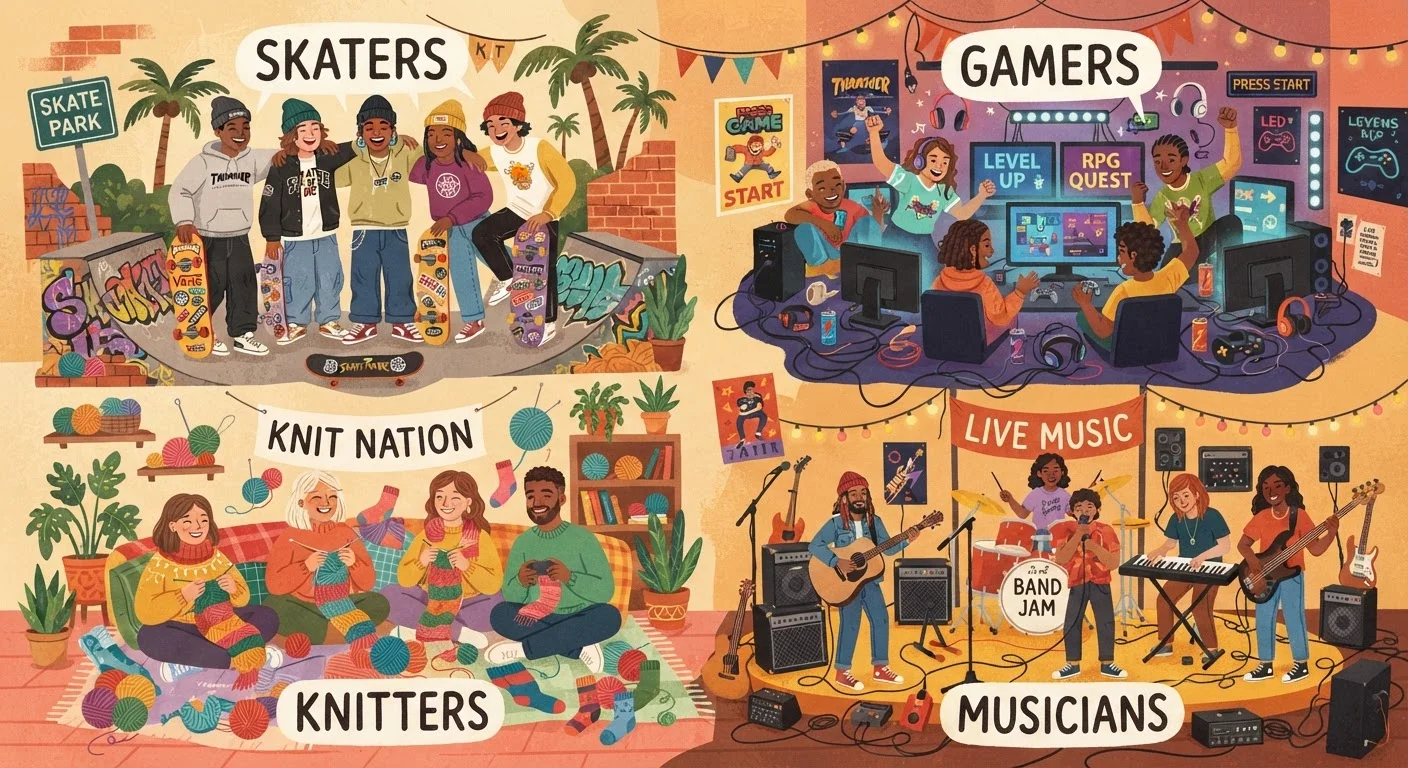
Photo: faqsvault.com editorial
Key Takeaways
- Subcultures form around shared values, aesthetics, or practices that feel distinct from the cultural mainstream.
- A sense of belonging — not just shared interest — is the real glue holding niche communities together.
- Symbols, rituals, and insider language help members signal identity and maintain group boundaries.
- Subcultures follow recognizable life cycles, from underground origins to possible mainstream absorption.
- Participating in a subculture is a meaningful way people construct and express personal identity.
What Is a Subculture, Exactly?
The word subculture gets thrown around loosely — sometimes to describe any group of enthusiasts, sometimes to evoke images of punk rock or skate parks. But sociologists have been studying the concept since at least the mid-twentieth century, and the definition has real shape to it.
A subculture is a group of people within a broader society who share a distinct set of values, norms, practices, or aesthetics that set them meaningfully apart from the cultural mainstream. The key word is meaningfully. Liking the same TV show doesn't make you a subculture. Organizing your life — your wardrobe, your friendships, your weekends, your sense of self — around a shared passion or worldview? That's where subcultures live.
Subcultures can coalesce around almost anything: music genres, hobbies, spiritual practices, political philosophies, aesthetics, even specific fandoms. What they share is an internal culture — a way of doing and seeing things that members recognize instantly and outsiders often miss entirely. For more on the broader cultural forces at play, explore Culture & Trends.
The Spark: How Subcultures Begin
Subcultures rarely spring fully formed from nowhere. They tend to emerge at the intersection of a few common conditions: a shared feeling of being underserved or misunderstood by the mainstream, access to a physical or digital space where like-minded people can gather, and at least one compelling activity or set of ideas to organize around.
Consider the early surf culture of mid-century California. Young people drawn to the ocean developed a lifestyle — and eventually a philosophy — built around wave-riding, freedom, and communal time spent outdoors. The activity came first; the identity followed. Similarly, the 1970s punk scene arose partly as a reaction against what many young people saw as the bloated excesses of mainstream rock. The against-ness was itself generative — it gave the subculture a clear identity to build toward.
Online platforms have dramatically lowered the barrier to subculture formation. A teenager in a rural town who collects vintage synthesizers can now find hundreds of others who share that passion within minutes. Geography, once a hard constraint, is now just one of many factors. Digital-native subcultures — from hyperpop communities to niche plant-hobbyist forums — often begin as hashtags or Discord servers before they ever become in-person gatherings.
When trying to understand an unfamiliar subculture, start with its publications, playlists, or forums rather than its public-facing image. The internal conversation reveals far more than what outsiders see.
If you're building a niche community from scratch, name the shared value — not just the shared activity. 'We're people who believe slow travel changes how you see the world' will outlast 'we're a travel club.'
Identity, Symbols, and the Language of Belonging
Walk into any subculture and you'll notice its visual and linguistic vocabulary almost immediately — even if you can't decode it yet. Subcultures communicate belonging through symbols: clothing, hairstyles, tattoos, handshakes, slang, playlists, and even the specific brands or tools they avoid as much as the ones they embrace.
These signals serve two functions simultaneously. Outwardly, they tell strangers something about who you are. Inwardly, they confirm to fellow members that you're genuine — that you've put in the time and share the values. The academic term for this is subcultural capital, a concept developed by sociologist Sarah Thornton building on Pierre Bourdieu's work. Essentially, knowing the right things and displaying the right markers earns you credibility within the group.
Ritual matters too. Whether it's the particular way knitters cast on at a yarn-bombing event, the call-and-response between a hip-hop MC and their crowd, or the unwritten rules of etiquette at a cosplay convention, shared rituals create a felt sense of collective life. They turn a collection of individuals with similar interests into something that feels more like a community. Compare this with how mainstream pop culture tends to smooth over these distinctions in favor of wider appeal.
What Keeps a Subculture Alive
Many subcultures bloom and fade — a natural part of their life cycle. But some persist for decades, even generations. What separates the lasting ones from the ephemeral?
- Genuine community infrastructure: Regular meetups, shared publications (print or digital), forums, or events give members a reason to keep showing up. Structure matters.
- A sense of purpose beyond the activity itself: Subcultures that articulate why they do what they do — not just what — tend to sustain members through periods when the hobby or style loses its novelty.
- Mentorship and onboarding: Communities that actively welcome newcomers and pass down knowledge create continuity across generations of members.
- Adaptability: The subcultures that endure aren't frozen in amber. They absorb new influences, technologies, and members while retaining their core identity.
If you're interested in the practical side of building lasting community groups, what actually works when starting a community group offers grounded, applicable guidance.
When Subcultures Meet the Mainstream
Every thriving subculture eventually catches mainstream attention — and that moment is almost always complicated. When skateboarding appeared in the 1996 and then 2020 Olympics, longtime skaters had passionate feelings about what that meant for their community's identity. When K-pop crossed over into global pop charts, longtime fans navigated a strange new territory where something deeply personal had become a global commodity.
Mainstream absorption can bring resources and visibility, but it often dilutes the specific qualities that made the subculture meaningful to its original members. Scholars sometimes call this process co-optation — when the style or surface markers of a subculture are adopted by mass culture while the underlying values and community context are stripped away.
Interestingly, this pressure often spurs subcultures to evolve rather than dissolve. Members double down on depth, find new markers of authenticity, or splinter into more specialized micro-communities. The full arc of this journey — from niche origins to mainstream recognition and what happens next — is explored in the long road from subculture to mainstream and in our look at how trends move from subculture to mainstream and back again.
Finding Your Place: Why Subcultures Matter for Personal Identity
For many people, discovering a subculture is the first time they've felt genuinely seen. The goth teenager who finds their people at a weekend market, the middle-aged amateur birder who finally has a language to describe what they love about early mornings — subcultures offer something that mainstream culture, by definition, can't: specificity.
Psychologists who study belonging note that humans have a deep need for both connection and distinctiveness. We want to feel part of something, and we want that something to reflect who we really are. Subcultures satisfy both drives at once. They say: here is a group of people, and being in this group also says something true about you as an individual.
That's why participation in subcultures is so intertwined with personal identity — especially in adolescence and early adulthood, when people are actively constructing a sense of self. But it doesn't stop there. Adults who join pottery collectives, folk music circles, urban gardening communities, or amateur astronomy clubs describe similar experiences of coming home to a version of themselves they didn't know how to articulate alone.
Understanding how subcultures work can also help you understand yourself — why certain communities feel right and others don't, what values you're actually expressing through your affiliations. For a broader reflection on how identity takes shape through community, the many ways people define their cultural identity is a thoughtful companion read.
All published content on this website is for informational and educational purposes only and should not be taken as professional advice. We recommend that readers seek expert opinion before making any decisions. The website is not responsible for any actions taken based on the information provided on this website. We are not liable for any inaccuracies, modifications, or omissions in information. Moreover, external links or third-party content are provided for convenience; we are not liable for their correctness. Users are advised to verify every piece of information before they use it for any purpose.