
Stan Culture: Passionate Fandom or Something More Complicated?

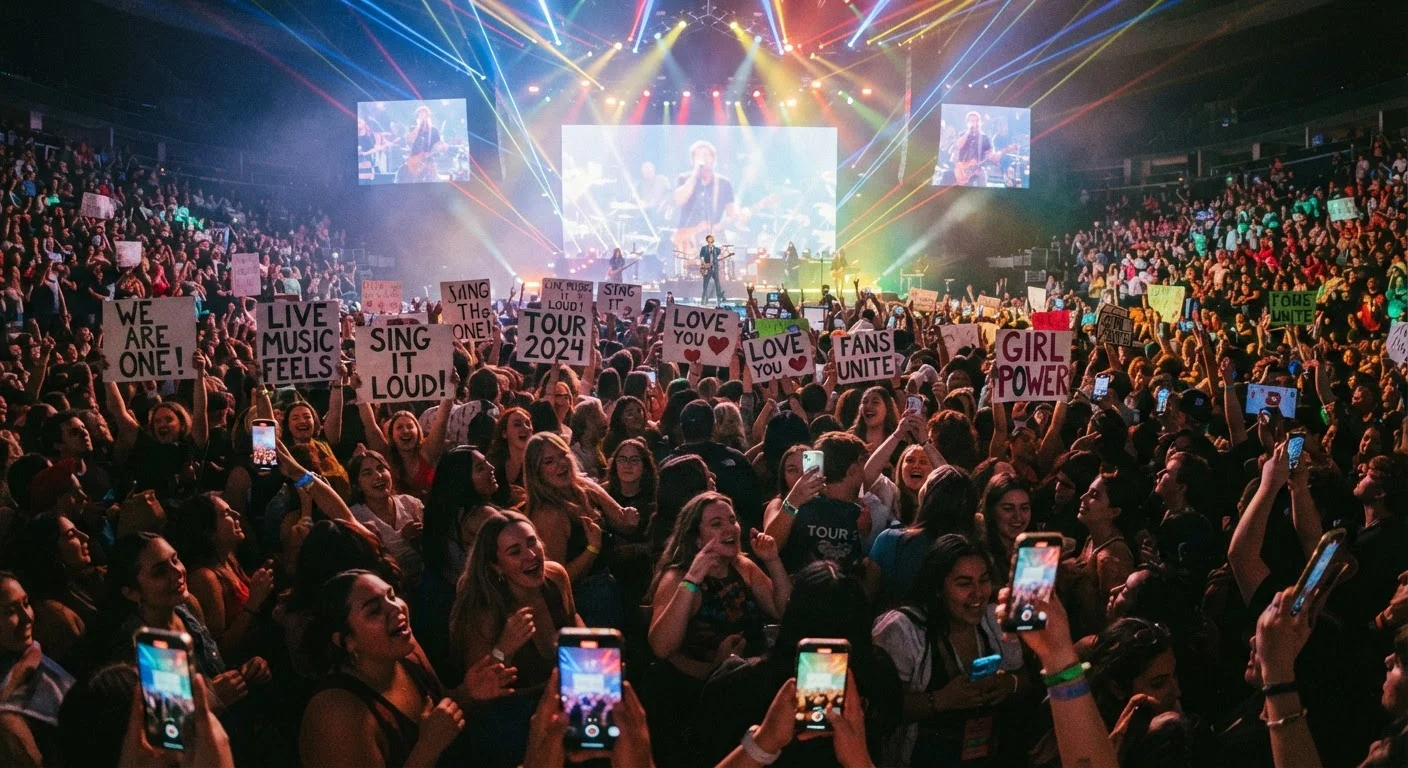
Photo: faqsvault.com editorial
Key Takeaways
- Stan culture creates tight-knit communities that provide real social support and belonging.
- Organized fan groups have genuine cultural and even political power in the modern media landscape.
- The same intensity that builds community can tip into harassment or parasocial obsession.
- The word 'stan' itself — coined by Eminem's 2000 song — now describes a global behavioral phenomenon.
- Understanding the pros and cons helps fans and observers engage with fandom more thoughtfully.
Builds genuine community and social belonging
Fan communities often provide a sense of acceptance and shared purpose that members struggle to find elsewhere, particularly for younger or socially isolated individuals.
Fuels creative output and skill development
Fandoms generate fan art, fiction, video essays, and music edits — creative work that has helped launch professional careers and develop real artistic skills.
Mobilizes collective action for social good
Organized fan bases have coordinated charity fundraising, awareness campaigns, and political activism with speed and reach that rivals professional advocacy organizations.
Deepens engagement with art and culture
Being part of a fandom encourages closer listening, re-watching, and analysis — forms of cultural engagement that enrich appreciation rather than diminishing it.
Offers identity and structure during formative years
For many teenagers, being a fan is an early experience of group membership, shared values, and collective purpose — building social competencies that carry forward.
Harassment campaigns target perceived critics
When fandoms mobilize defensively, the result can be coordinated online abuse directed at journalists, critics, or even other fans — causing real psychological harm to targets.
Parasocial bonds can distort self-image
Deep emotional investment in a celebrity who doesn't know you exist can blur the line between appreciation and dependency, affecting mental well-being over time.
Group conformity suppresses critical thinking
Stan communities often reward loyalty and punish dissent, meaning fans who raise legitimate concerns about an artist's conduct risk being expelled or silenced.
Celebrity treated as property rather than person
Extreme fan devotion can tip into a sense of ownership over an artist's choices, relationships, and image — a dynamic that can harm both the celebrity and the fan.
Fandom identity can crowd out individual sense of self
When group membership becomes the primary identity marker, individuals may struggle to maintain independent values, relationships, or interests outside the fandom.
What 'Stan' Actually Means — and Where It Came From
The word stan has a precise origin: Eminem's 2000 track of the same name tells the story of an obsessive fan whose devotion spirals into something dangerous. Over the following two decades, the term migrated from cautionary metaphor to everyday internet vocabulary — now used both as a noun ("I'm a stan") and a verb ("I stan this artist"), sometimes affectionately, sometimes critically.
Today, stan culture refers broadly to the organized, highly invested communities that form around musicians, actors, athletes, and even fictional characters. These communities coordinate on social media platforms, stream music to boost chart positions, mobilize rapidly to defend their favorite celebrities, and produce an enormous volume of fan art, fan fiction, and commentary. As explored in the journey from subculture to mainstream, this kind of fandom has followed a well-worn path from fringe internet spaces to a defining feature of contemporary pop culture.
Understanding stan culture means holding two truths at once: it is a source of genuine human connection, and it can also slide into territory that concerns psychologists, journalists, and even the celebrities at its center.
The Case for Stan Communities: Real Benefits, Real Bonds
Builds genuine community and social belonging
Fan communities often provide a sense of acceptance and shared purpose that members struggle to find elsewhere, particularly for younger or socially isolated individuals.
Fuels creative output and skill development
Fandoms generate fan art, fiction, video essays, and music edits — creative work that has helped launch professional careers and develop real artistic skills.
Mobilizes collective action for social good
Organized fan bases have coordinated charity fundraising, awareness campaigns, and political activism with speed and reach that rivals professional advocacy organizations.
Deepens engagement with art and culture
Being part of a fandom encourages closer listening, re-watching, and analysis — forms of cultural engagement that enrich appreciation rather than diminishing it.
Offers identity and structure during formative years
For many teenagers, being a fan is an early experience of group membership, shared values, and collective purpose — building social competencies that carry forward.
The positive dimensions of stan culture are easy to dismiss as superficial enthusiasm, but that reading undersells the sociology at work. Fan communities frequently function as genuine support networks — spaces where people who feel isolated in their offline lives find unconditional acceptance through a shared passion. For younger fans especially, belonging to a fandom can be a first experience of organized collective identity.
There's also a documented creative dimension. Fandoms generate massive volumes of original art, video edits, written fiction, and music — creative output that has launched professional careers and sharpened skills. Fan engagement in all its forms represents a participatory relationship with culture that passive consumption never offers.
And the political dimension is real. Organized stan communities have coordinated charity fundraising drives, amplified social justice campaigns, and — in notable cases — disrupted political events by flooding ticket registration systems. How fandoms became political forces is no longer a fringe observation; it's a documented cultural shift.
The Complications: When Devotion Gets Difficult
Harassment campaigns target perceived critics
When fandoms mobilize defensively, the result can be coordinated online abuse directed at journalists, critics, or even other fans — causing real psychological harm to targets.
Parasocial bonds can distort self-image
Deep emotional investment in a celebrity who doesn't know you exist can blur the line between appreciation and dependency, affecting mental well-being over time.
Group conformity suppresses critical thinking
Stan communities often reward loyalty and punish dissent, meaning fans who raise legitimate concerns about an artist's conduct risk being expelled or silenced.
Celebrity treated as property rather than person
Extreme fan devotion can tip into a sense of ownership over an artist's choices, relationships, and image — a dynamic that can harm both the celebrity and the fan.
Fandom identity can crowd out individual sense of self
When group membership becomes the primary identity marker, individuals may struggle to maintain independent values, relationships, or interests outside the fandom.
The same intensity that makes stan communities effective can make them harmful. Online harassment campaigns — where fans target critics, journalists, or other fans deemed insufficiently loyal — are a persistent feature of toxic fandom. The targets are often women, people of color, and members of other marginalized groups, and the pile-on dynamic can be genuinely threatening. When fan communities cross into harmful territory is a pattern that repeats across genres and platforms.
There's also the psychological dimension of parasocial relationships — the one-sided emotional bonds fans form with celebrities they've never met. These bonds aren't automatically unhealthy, but they can become distorted when a fan's sense of self becomes inseparable from a celebrity's perceived well-being, public image, or romantic life. The celebrity, meanwhile, remains entirely unaware of the individual fan's emotional investment.
Finally, collective identity within a fandom can suppress individual critical thinking. Group dynamics reward conformity and punish dissent, which means fans who raise legitimate concerns about an artist's behavior may be silenced or expelled by the community. This tension between collective belonging and independent judgment is worth examining closely — it applies well beyond celebrity fandom.
Parasocial Relationships: A Quick Explainer
Finding the Balance: Engaged Fandom Without Losing Yourself
2000
Year the word 'stan' entered pop culture
Eminem's song 'Stan,' released in 2000, introduced the term as a cultural reference point that has since been added to major dictionaries.
~70%
Teens who identify with at least one fandom
Research from the Pew Research Center and similar organizations has consistently found high rates of fandom identification among adolescents in the US.
The healthiest fandoms tend to share a few characteristics: they celebrate the work rather than policing other fans, they hold space for criticism and nuance, and they recognize the celebrity as a person rather than a symbol to be protected. That last point matters enormously — when fans treat an artist's reputation as something they own and must defend at all costs, the relationship stops being about appreciation and starts being about control.
For individual fans, self-awareness is the most practical tool available. Tracking how much time, money, and emotional energy fandom consumes — and whether it enhances or crowds out offline relationships — offers useful signal. Enjoying an artist's work deeply and even obsessively is not the problem; problems tend to emerge when the fandom identity starts overriding everything else.
Stan culture, at its most vital, is a genuinely exciting feature of modern entertainment — a sign that art still moves people deeply enough to organize around it. Keeping that energy constructive rather than corrosive is a challenge every fandom faces, and the ones that manage it produce something worth celebrating.
All published content on this website is for informational and educational purposes only and should not be taken as professional advice. We recommend that readers seek expert opinion before making any decisions. The website is not responsible for any actions taken based on the information provided on this website. We are not liable for any inaccuracies, modifications, or omissions in information. Moreover, external links or third-party content are provided for convenience; we are not liable for their correctness. Users are advised to verify every piece of information before they use it for any purpose.