
The Long Road from Demo to Album Release

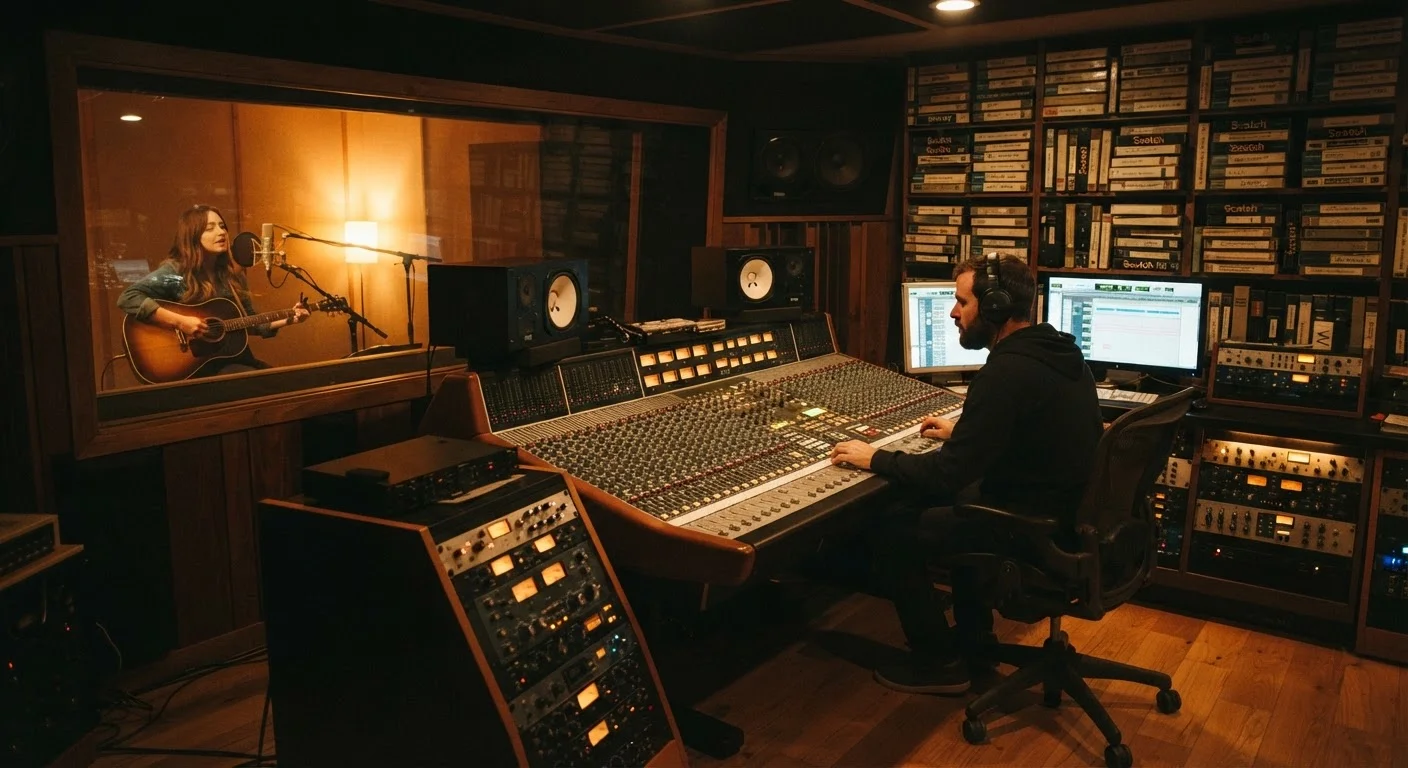
Photo: faqsvault.com editorial
Key Takeaways
- A demo is just the starting line — professional recording, mixing, and mastering each add distinct layers of polish.
- Artists must complete legal and administrative steps before any music can be commercially distributed.
- Distribution strategy — indie aggregator or major label — shapes how widely and quickly an album reaches listeners.
- Pre-release planning, including metadata and marketing, is as important as the recording itself.
- The timeline from demo to release commonly spans six months to two or more years.
Why the Gap Between Demo and Release Exists
When a song idea sparks — maybe a voice memo hummed into a phone at 2 a.m., or a rough guitar sketch recorded on a laptop — it enters a long, layered process before it ever reaches your ears on a streaming platform. That gap isn't delay for delay's sake. Every stage between a raw demo and a finished album serves a purpose: refining sound, securing rights, and positioning the music to actually be heard.
Understanding this process changes how you listen. Knowing that an album took three years, three producers, and two label negotiations to reach you adds context to every artistic choice embedded in it. For fans curious about the craft behind their favorite records, or for aspiring musicians mapping the road ahead, this step-by-step breakdown covers the full journey — from demo tape to streaming release.
The path also looks different depending on who's funding and releasing the music. Indie vs. major label trade-offs shape every decision, including how long each stage takes and who controls the outcome.
The Stage-by-Stage Process
Below is a realistic walk-through of how most albums move from concept to commercial release. Timelines overlap, steps occasionally loop back, and no two artists follow the identical path — but these are the stages virtually every release passes through.
Develop the Demo into a Pre-Production Blueprint
A demo exists to capture an idea, not to sound perfect. Before entering a professional studio, most artists and producers spend time in pre-production — refining song structures, locking in tempos, and deciding on instrumentation. This phase prevents expensive studio time from being spent figuring out arrangements on the fly.
Pre-production may involve rough home recordings, rehearsal sessions with a band, or conversations with a producer about sonic direction. The goal is to walk into the recording session with a clear map.
Record Tracking Sessions
Tracking is the process of recording individual elements of each song: drums, bass, guitars, keys, lead vocals, and backing vocals are typically captured separately. This separation allows for precision editing and mixing later. Studios with live rooms allow natural acoustics; home studios offer flexibility and lower costs.
Some artists record everything themselves using digital audio workstations (DAWs) — software platforms like Pro Tools, Logic Pro, or Ableton Live. Others hire session musicians to perform specific parts. Either approach is valid; the choice depends on budget, genre, and artistic vision.
Edit and Comp the Best Performances
After tracking, engineers and producers listen back through all recorded material to select the strongest takes — a process called comping (short for compiling). A final vocal performance might combine the opening line from take four, the chorus from take seven, and the bridge from take twelve.
Editing also involves timing adjustments, pitch correction where appropriate, and cleaning up noise between musical phrases. This stage can be painstaking but dramatically shapes the final feel of a song.
Mix the Album
Mixing is the art of balancing all recorded tracks into a cohesive stereo (or spatial audio) output. A mixing engineer adjusts levels, applies equalization and compression, adds reverb and delay, and shapes the emotional texture of each song. A well-mixed track sounds full and clear on every listening device — from earbuds to car speakers to home systems.
Artists typically receive multiple rounds of mix revisions before approving a final version. The mixing stage is where much of the personality of an album is sculpted.
Master for Commercial Release
Mastering is the final audio step before distribution. A mastering engineer processes the mixed stereo files to ensure consistency across the album's tracks, optimize loudness for streaming platforms, and prepare the audio for every format — vinyl, CD, digital download, or streaming.
Each streaming platform applies its own loudness normalization, so mastering engineers account for these targets rather than simply making music as loud as possible. A well-mastered album sounds intentional and cohesive from first track to last.
Register Copyrights and Secure Licensing
Before any music can be commercially released, the underlying intellectual property must be protected and documented. This means registering song copyrights (covering lyrics and melody, owned by songwriters) and sound recording copyrights (covering the specific recorded performance, typically owned by the label or artist).
Songwriters should also register with a Performing Rights Organization (PRO) — such as ASCAP, BMI, or SESAC in the United States — to collect public performance royalties whenever the music is played on radio, streamed, or performed live. If the album includes any samples, those must be cleared with the original rights holders before release, which can be a lengthy negotiation process.
Deliver to a Distributor and Plan the Release
With finished masters and cleared rights in hand, the album is delivered to a distribution partner. Independent artists commonly use digital aggregators to place their music on all major streaming platforms and digital storefronts. Artists signed to labels typically have distribution handled as part of their deal.
Release planning — setting the date, scheduling singles, pitching to editorial playlists, coordinating press and music video rollouts — happens in parallel. A well-paced rollout can mean the difference between an album that lands with impact and one that slips past unnoticed.
What Happens After the Music Is Ready
Once mastering is approved and all legal paperwork is signed, the music still isn't live — it enters a pre-release window that's just as strategic as any recording session. Distributors typically require music to be submitted two to four weeks before the intended release date, though pitching playlists and press often begins months earlier.
Metadata — the artist name, track titles, ISRC codes, songwriter credits, and genre tags — must be entered accurately at this stage. Errors here can mean royalties getting lost or music being misfiled in streaming databases. It's unglamorous work, but it's essential.
Get Your Metadata Right the First Time
Once the album is live, the journey continues in how fans engage with it. Some listeners prefer following an artist's catalogue chronologically to trace creative evolution from debut through the latest release. Others build personal collections and archives. If you're the type who loves organizing what you discover, our guide to building your personal music library is a natural next step.
For a deeper look at every channel used to get music in front of listeners — from digital aggregators to sync licensing — the complete picture of modern music distribution covers the full landscape.
All published content on this website is for informational and educational purposes only and should not be taken as professional advice. We recommend that readers seek expert opinion before making any decisions. The website is not responsible for any actions taken based on the information provided on this website. We are not liable for any inaccuracies, modifications, or omissions in information. Moreover, external links or third-party content are provided for convenience; we are not liable for their correctness. Users are advised to verify every piece of information before they use it for any purpose.