
Jazz, Blues, Rock: How Three Genres Shaped Nearly Every Sound That Followed

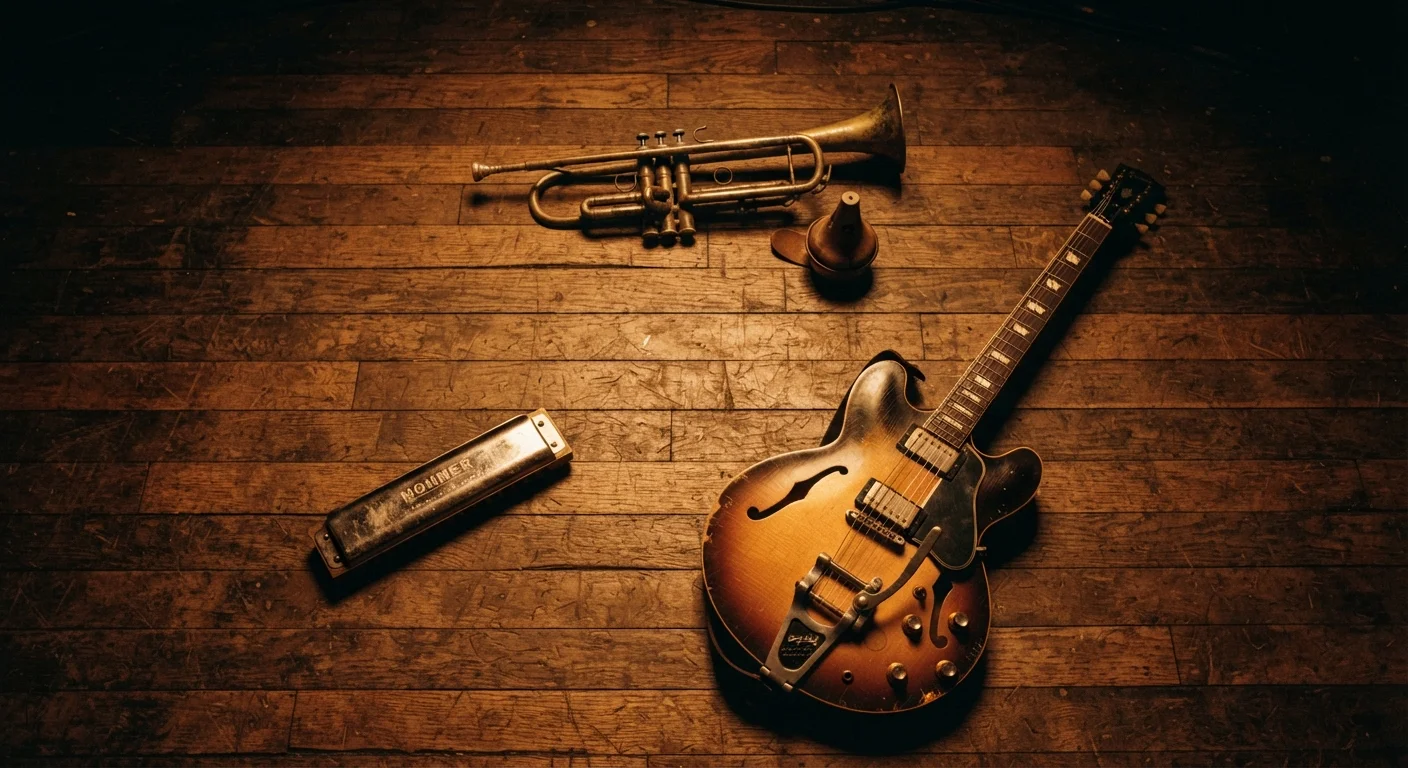
Photo: faqsvault.com editorial
Key Takeaways
- Blues, born in the American South, gave nearly every popular genre its core emotional vocabulary and harmonic framework.
- Jazz expanded on blues by introducing improvisation, complex harmonies, and syncopated swing rhythms that reshaped global music.
- Rock and roll fused blues and jazz energy with electrification, creating the template for decades of popular music.
- Genres like hip-hop, R&B, soul, funk, and even EDM carry direct structural and expressive debts to this three-genre lineage.
- Understanding where genres come from deepens the listening experience and reveals surprising connections between artists.
The Blues: Where the Story Begins
If you want to understand modern music, you start in the American South at the turn of the 20th century. The blues emerged from a confluence of African musical traditions, field hollers, gospel, and the raw lived experience of Black Americans navigating a deeply unjust society. What resulted was something structurally simple but emotionally inexhaustible: typically a 12-bar chord progression built on three chords, anchored by expressive "blue notes" — those slightly bent, flattened pitches that give the genre its distinctive ache.
The blues didn't just create a genre. It created a grammar. The call-and-response structure — a phrase played or sung, then answered by an instrument or a harmony — became one of popular music's most enduring patterns. Artists like Bessie Smith, Robert Johnson, and Muddy Waters weren't simply performing songs; they were establishing a melodic and emotional vocabulary that would be borrowed, stretched, and transformed for the next hundred years.
To understand why genre labels even exist and how they evolve, it helps to start with the basics — what a music genre actually is and how those categories form in the first place.
Jazz: Improvisation Enters the Equation
New Orleans in the early 1900s was a cultural pressure cooker — a port city where African, Caribbean, European, and American influences collided. Jazz emerged from that collision, taking the blues' emotional foundation and adding polyrhythmic complexity, brass instrumentation, and most crucially, improvisation as a first-class artistic practice.
Jazz musicians didn't just play written melodies — they conversed in real time, riffing off one another's phrases, building solos spontaneously over chord changes. That improvisational freedom became one of music's most powerful ideas. It influenced not just later jazz subgenres (bebop, cool jazz, fusion) but also the extended guitar solos of rock, the freestyle tradition in hip-hop, and the live-performance ethos of funk and soul.
“Jazz is not just music; it's a way of life, a way of thinking, a way of living. And it represents America at its best.”
— Herbie Hancock, Jazz pianist, composer, and NEA Jazz Master
Harmonically, jazz pushed boundaries that blues hadn't needed to explore. Extended chords — sevenths, ninths, elevenths — gave jazz its sophisticated, layered texture. Those harmonic concepts eventually filtered into R&B, neo-soul, and contemporary pop production. When you hear a lush, complex chord voicing in a Frank Ocean or Erykah Badu track, you're hearing jazz theory at work — whether or not anyone in the session calls it that.
Rock and Roll: The Electric Bridge
By the late 1940s and early 1950s, electrification changed everything. The electric guitar — louder, more expressive, capable of feedback and distortion — gave blues musicians a new instrument altogether. When that amplified blues energy met the rhythmic bounce of boogie-woogie piano and the sass of swing, rock and roll was born.
Chuck Berry's guitar riffs, Little Richard's explosive vocal delivery, and Fats Domino's piano grooves weren't departures from blues and jazz — they were those traditions running at higher voltage. Rock codified the band lineup (guitar, bass, drums, vocals) that became the default format for popular music for decades. It also democratized music-making: the self-contained rock band didn't need a large orchestra or formal training to perform.
The British Invasion of the 1960s is a fascinating chapter in this story. Artists like the Rolling Stones and Eric Clapton were explicitly studying and paying homage to American blues artists — absorbing Robert Johnson and Muddy Waters, then broadcasting that influence back to American audiences who hadn't always had equal access to the original recordings. Rock, in that sense, was also a conduit that renewed interest in blues' founding artists. Some musicians took these cross-genre influences so far that they effectively invented entirely new genres in the process.
The Descendants: How Every Genre Traces Back
Follow any major popular genre far enough and you'll hit jazz, blues, or rock — often all three. Soul music blended gospel's fervor with blues' emotional directness and jazz's harmonic richness. Funk stripped soul down to rhythm and groove, emphasizing the "one" — the first beat of each measure — in a way that made the body move involuntarily. Hip-hop sampled jazz and funk records, and its lyrical tradition of storytelling through struggle is a direct descendant of blues.
Even electronic dance music has roots here. Early house music in Chicago drew consciously from soul and disco — which themselves descended from blues and jazz. Drum machines replicated the rhythmic conversations that jazz percussionists had been having for decades. The genre lineage isn't metaphorical; it's traceable note by note, sample by sample.
12 bars
Length of the blues' most influential chord progression
The 12-bar blues structure — built on three chords — underpins countless rock, R&B, jazz, and country songs recorded across more than a century of popular music.
1920s–30s
Era when jazz became America's dominant popular music
Jazz dominated American popular culture during the Swing Era, influencing radio, dance culture, and songwriting conventions that persisted well into the rock era.
Billions
Annual streams of blues-derived music globally
While blues itself is a niche genre by streaming metrics, genres built on its foundation — rock, R&B, hip-hop, soul — collectively account for the majority of global music consumption.
Country music, often discussed separately, shares deep blues roots — blue notes, call-and-response, and narrative storytelling about hardship are hallmarks of both traditions. And pop music? Its verse-chorus structure, its emotional directness, its guitar-driven production — all of it runs through the same family tree. Geography has played its own role too: regional musical traditions around the world have absorbed this lineage and transformed it, as explored in the cultural geography of pop.
For listeners who want to trace these connections actively, one rewarding approach is following an artist's catalogue chronologically — watching the evolution unfold in real time, hearing how influences accumulate and transform across a career.
Frequently Asked Questions
All published content on this website is for informational and educational purposes only and should not be taken as professional advice. We recommend that readers seek expert opinion before making any decisions. The website is not responsible for any actions taken based on the information provided on this website. We are not liable for any inaccuracies, modifications, or omissions in information. Moreover, external links or third-party content are provided for convenience; we are not liable for their correctness. Users are advised to verify every piece of information before they use it for any purpose.