
What Is a Music Genre, Really?

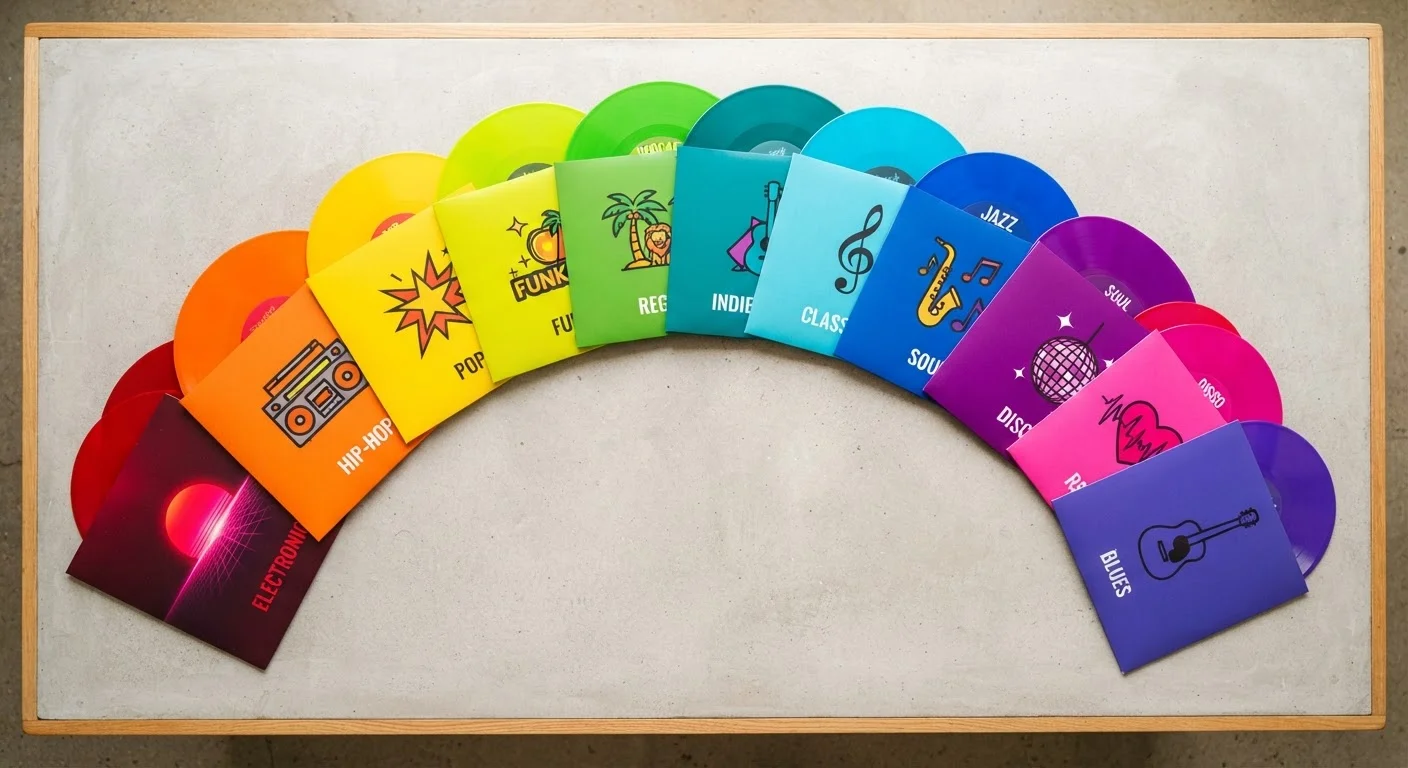
Photo: faqsvault.com editorial
Key Takeaways
- Music genres are cultural categories, not fixed scientific rules — they shift constantly.
- Genres emerge from a mix of sonic traits, geography, community, and industry labeling.
- Streaming algorithms have accelerated genre fragmentation and the rise of microgenres.
- Many influential artists actively resist or transcend genre boundaries.
- Understanding genres helps listeners discover new music and appreciate cultural context.
More Than a Label on a Playlist
Ask ten music fans what genre a given song belongs to, and you might get ten different answers. That's not a flaw in the system — it's kind of the whole point. A music genre is less like a scientific taxonomy and more like a living conversation: constantly updated, occasionally argued about, and always shaped by the culture around it.
At their most practical, genres are navigational tools. They help a listener looking for energetic music to work out find a drum-and-bass playlist, or help a new fan of Afrobeats explore where that sound came from. Genres carry context — about geography, era, community, and intention — that raw audio alone can't always convey. For a deeper dive into how place shapes sound, check out how geography continues to define popular music.
But genres are also contested. The same song might be filed under R&B, neo-soul, or indie pop depending on who's doing the filing. That ambiguity isn't a bug — it reflects the genuine complexity of creative work.
How Genres Are Born (and Who Names Them)
Genres rarely emerge from a boardroom decision. More often, a sound develops organically within a community — a city's club scene, a regional radio circuit, a group of producers sharing techniques — and only gets named after the fact. Blues, jazz, and rock and roll were all labeled by outsiders before their originators widely adopted those terms.
Today, the naming process is more diffuse. Critics and music journalists coined many 20th-century subgenres. Now, streaming platforms, fan communities, and even Reddit threads can anoint a new genre before any major publication weighs in. Spotify's internal genre taxonomy reportedly contains thousands of micro-categories — from 'escape room' to 'deep liquid bass' — most of which listeners never see but which power recommendation algorithms behind the scenes.
5,000+
Music microgenres tracked by Spotify
According to data journalism site The Echo Nest (now part of Spotify), Spotify's internal genre system has catalogued thousands of highly specific microgenres to power its recommendation engine.
100M+
Tracks available on major streaming platforms
As of recent industry reporting, platforms like Spotify and Apple Music each host over 100 million individual tracks, making genre categorization essential for discovery.
~30 years
Average lifespan before a genre fragments
Music historians have observed that most major genres typically spawn significant subgenres or undergo substantial stylistic revision within about three decades of their emergence.
The key ingredients in a genre's DNA usually include: characteristic instrumentation, a typical tempo range, production techniques (reverb-heavy or dry and punchy?), lyrical themes, and cultural origin. Change enough of those variables and you've likely crossed into a different genre — or invented a new one. See our article on artists whose sound carved out an entirely new category for some of music history's most striking examples.
The Genre Paradox: Useful and Limiting at the Same Time
Genres do real work. They power recommendation engines, shape marketing campaigns, determine which radio stations play your music, and influence which award categories you're eligible for. Without genre labels, the sheer volume of recorded music — tens of millions of tracks on major streaming platforms — would be nearly impossible to navigate.
But they also constrain. Artists who blend styles can find themselves pigeonholed in ways that limit their audience or misrepresent their work. A Black artist making rock music may be categorized as R&B regardless of sonic evidence, reflecting the industry's longstanding racial assumptions about who makes what kind of music. Genre labels, in other words, aren't neutral — they carry cultural baggage.
This tension is why so many ambitious artists lean into genre ambiguity. When a record is genuinely difficult to categorize, that difficulty itself becomes part of the conversation — and sometimes part of the appeal. If you're curious about the broader creative forces at play, our piece on whether music theory helps or hinders creativity explores how artistic constraints and freedom interact.
Microgenres and the Streaming Era
One of the most striking developments in recent music history is the explosion of microgenres — hyper-specific categories that might describe a few dozen artists at most. 'Chillwave,' 'vaporwave,' 'bedroom pop,' 'lo-fi hip-hop' — these labels emerged online, spread through social media, and eventually made their way into streaming platform playlists and press coverage.
Microgenres serve a different purpose than broad categories. They signal community belonging: if you know what 'dungeon synth' means, you're probably already part of a specific listener tribe. They also give algorithms more precise hooks to match listeners with music they'll love, fueling the recommendation loops that define how many people discover artists today. For context on how that discovery pipeline works end to end, see the complete picture of modern music distribution.
The proliferation of microgenres also reflects something genuine about how music is made now. Home recording software, sample libraries, and global internet access have made it possible for artists anywhere to develop highly specific sounds and find audiences without ever entering a traditional recording studio or touring circuit. The result is a genre landscape that's richer — and messier — than at any previous point in popular music history.
Understanding what a genre actually is — a cultural shorthand, a community signal, an industry tool — makes you a sharper, more curious listener. And that's ultimately what the best music vocabulary does: it opens doors rather than closes them. For more foundational music vocabulary, our guide to music terminology every curious listener should know is a great companion read.
Frequently Asked Questions
All published content on this website is for informational and educational purposes only and should not be taken as professional advice. We recommend that readers seek expert opinion before making any decisions. The website is not responsible for any actions taken based on the information provided on this website. We are not liable for any inaccuracies, modifications, or omissions in information. Moreover, external links or third-party content are provided for convenience; we are not liable for their correctness. Users are advised to verify every piece of information before they use it for any purpose.