
Sun Belt vs. Rust Belt: Two Very Different Housing Stories

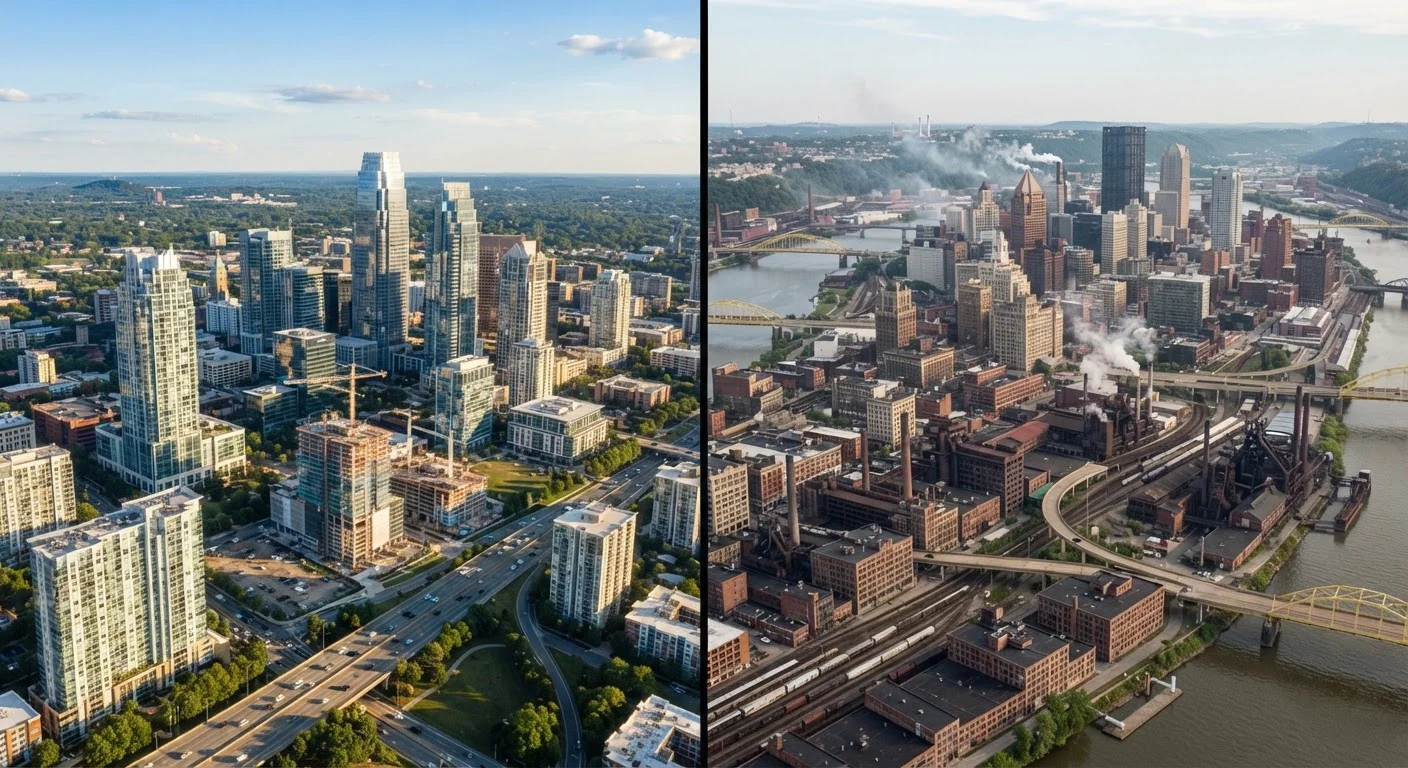
Photo: faqsvault.com editorial
Key Takeaways
- Sun Belt housing markets have seen rapid price appreciation driven by population inflows and job migration.
- Rust Belt cities generally offer some of the most affordable home prices in the country, though inventory quality varies widely.
- Remote work trends accelerated Sun Belt demand but also increased affordability pressure for existing local residents.
- Rust Belt markets are not monolithic — some cities show genuine signs of revitalization while others continue to face population loss.
- Understanding regional dynamics is essential before making any housing or relocation decision.
What We Mean by Sun Belt and Rust Belt
The terms "Sun Belt" and "Rust Belt" are geographic shorthand — each describing a broad swath of the US with a shared economic identity rather than a fixed boundary. The Sun Belt generally refers to the southeastern and southwestern states stretching from the Carolinas through Georgia, Florida, Texas, Arizona, and into Southern California. The Rust Belt traditionally covers the industrial heartland of the Midwest and Northeast — think Ohio, Pennsylvania, Michigan, Indiana, and upstate New York — where manufacturing once dominated and has since contracted.
These labels carry real housing implications. To understand why these regions have diverged so dramatically, it helps to understand how housing markets work at a fundamental level. Our plain-language breakdown of US housing market mechanics covers the supply, demand, and mortgage-rate forces that shape home prices nationally — and regionally.
Sun Belt: Growth, Demand, and Rising Prices
Over the past two decades, Sun Belt metros have attracted enormous waves of domestic migration. Warm weather, lower state income taxes in places like Texas and Florida, and an expanding base of employers in technology, healthcare, and logistics have all pulled residents southward and westward. When the pandemic normalized remote work beginning in 2020, migration accelerated further — workers who no longer needed to commute daily relocated from high-cost coastal cities to comparatively affordable Sun Belt alternatives.
The result was a sharp spike in housing demand that supply could not immediately meet. Home prices in cities like Austin, Phoenix, Nashville, and Charlotte surged dramatically in a short window. While some of those markets have seen modest corrections since peak pricing, values in most Sun Belt metros remain significantly elevated compared to pre-2020 baselines.
| Criterion | Sun Belt | Rust Belt |
|---|---|---|
| Population trend | Strong in-migration growth | Flat or declining in many cities |
| Median home prices | Above or near national average | Often well below national average |
| Housing stock age | Significant newer construction | Predominantly older, pre-1980 stock |
| Job market | Expanding across multiple sectors | Varied; selective revival in some cities |
| Price volatility | High in recent years | Generally lower historically |
| Affordability for buyers | Declining; competitive market | Higher in many markets |
| Rental market pressure | Strong demand, rising rents | Less pressure; more vacancy in some areas |
One effect often overlooked: rapid in-migration raised costs for existing lower-income residents who were already priced out of homeownership and found their rents climbing sharply. Employment access and infrastructure investment are two of the key forces amplifying these Sun Belt price shifts at the neighborhood level.
Rust Belt: Affordability, Vacancy, and Selective Revival
The Rust Belt narrative is more layered. Decades of manufacturing decline led to population loss in many cities, which left housing supply exceeding demand — a dynamic that kept prices low. For buyers, that affordability is genuinely attractive: median home prices in cities like Cleveland, Detroit, Pittsburgh, and Buffalo have historically sat well below the national median.
But low prices alone do not always signal opportunity. In some Rust Belt neighborhoods, low values reflect persistent vacancy, aging infrastructure, limited job access, and deferred maintenance in the housing stock itself. Buyers must distinguish between markets showing authentic revitalization — driven by university anchors, healthcare employment, or arts and tech clusters — and those where low prices primarily reflect ongoing disinvestment.
Pittsburgh and Columbus are frequently cited as Rust Belt cities that have made meaningful economic transitions. Detroit has seen targeted neighborhood revivals alongside continued challenges in other areas. This internal variation matters enormously for anyone evaluating a Rust Belt market. Common myths about US home prices are particularly persistent in Rust Belt conversations — the idea that low prices always mean good value is one worth scrutinizing carefully.
Top 10
Sun Belt cities in US population growth rankings
US Census Bureau data has consistently placed Sun Belt metros like Phoenix, Dallas, and Orlando among the fastest-growing large cities in the country.
~$90K–$130K
Typical median home price range in select Rust Belt cities
Cities such as Cleveland and Detroit have historically posted median home values far below the US national median, according to Federal Reserve and real estate data sources.
40%+
Home price increase in some Sun Belt metros, 2020–2022
Multiple Sun Belt housing markets saw cumulative price gains exceeding 40% in the two-year period following the onset of pandemic-driven migration, per Federal Housing Finance Agency data.
Making Sense of the Divergence
The Sun Belt–Rust Belt divide is ultimately a story about demographic momentum. Where people move, jobs follow — or vice versa — and housing markets respond. Sun Belt markets have been in a self-reinforcing growth cycle: population growth attracts employers, employers attract more residents, and housing demand outpaces construction capacity even when builders are active.
Rust Belt markets sit in a more complex position: affordability creates potential, but population stabilization or decline limits the demand-side pressure that drives appreciation. That said, national housing dynamics — mortgage rates, lending standards, inflation — affect both regions. Understanding whether you're entering a buyer's or seller's market locally is just as important as understanding the regional trend. How buyer's and seller's markets shape negotiating power will vary city by city within each belt, not just between them.
Whether you're drawn to Sun Belt opportunity or Rust Belt value, the fundamentals of local job growth, housing supply pipeline, and neighborhood-level investment trajectory should guide any serious housing decision. Neither region offers guaranteed outcomes — each carries its own set of risks and rewards that deserve careful, individualized assessment.
This article is for general informational purposes only and does not constitute financial, investment, or real estate advice. Readers should consult qualified professionals before making housing or investment decisions.
All published content on this website is for informational and educational purposes only and should not be taken as professional advice. We recommend that readers seek expert opinion before making any decisions. The website is not responsible for any actions taken based on the information provided on this website. We are not liable for any inaccuracies, modifications, or omissions in information. Moreover, external links or third-party content are provided for convenience; we are not liable for their correctness. Users are advised to verify every piece of information before they use it for any purpose.