
The Memeification of Social Movements: When Activism Meets Internet Culture

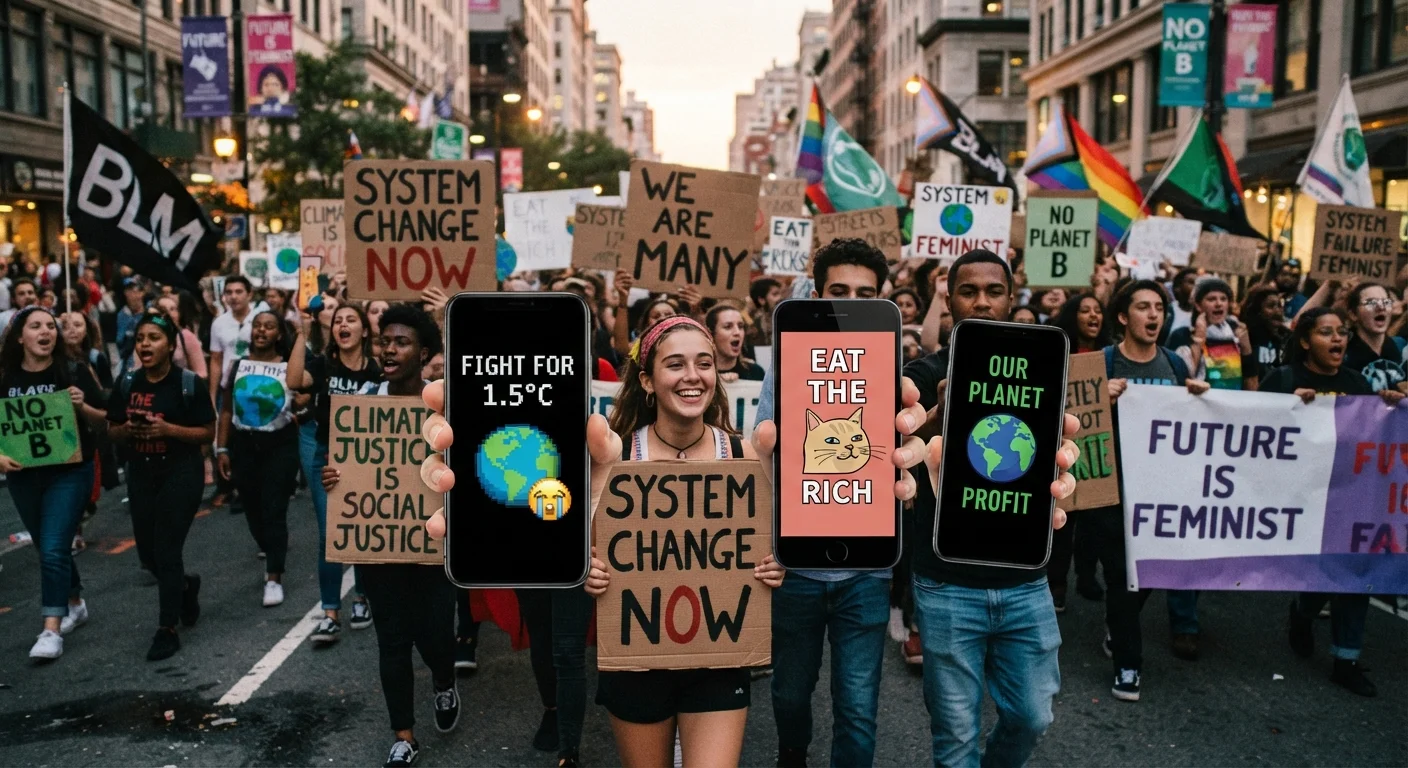
Photo: faqsvault.com editorial
Key Takeaways
- Memes can dramatically lower the barrier to entry for awareness about social causes.
- Viral formats risk stripping complex movements of their nuance and urgency.
- Humor and irony have a long history as tools of dissent, predating the internet.
- The line between genuine solidarity and performative engagement is difficult to measure.
- Some meme-driven campaigns have translated into tangible real-world outcomes.
- Communities must weigh reach against depth when deciding how to use viral formats.
Dramatically lowers the barrier to awareness
Memes meet people where they already spend time, making it possible to reach audiences who would not otherwise encounter a cause through traditional channels.
Democratizes participation in cultural messaging
Anyone can remix and share movement imagery, distributing the work of communication beyond a small core of organizers to a broad, decentralized network.
Humor can disarm defensiveness in new audiences
Irony and levity lower emotional guard, making it easier for people to engage with difficult topics they might otherwise find overwhelming or politically charged.
Can generate measurable real-world outcomes
Documented cases show viral campaigns driving donations, petition signatures, and legislative attention — proving that online momentum can translate into offline impact.
Speeds up cultural normalization of new ideas
Repeated exposure to cause-related imagery, even in casual meme form, gradually shifts what feels familiar and acceptable in broader public conversation.
Flattens complex issues into oversimplified slogans
A format built for quick consumption struggles to carry historical context, structural analysis, or moral nuance — the very substance that sustains a movement over time.
Encourages performative rather than substantive engagement
The ease of sharing can create an illusion of participation that satisfies the individual without producing the collective action movements actually need.
Movement symbols are vulnerable to co-optation
Once imagery enters the open viral economy, brands, opponents, and trolls can repurpose it in ways that dilute meaning or actively undermine the original cause.
Attention cycles are short; causes are not
Internet culture moves fast, and a movement that spikes virally can be crowded out within days by the next trending topic, leaving structural change unfinished.
Humor risks trivializing genuine suffering
For communities living inside a crisis, watching their pain become meme fodder — even well-intentioned fodder — can feel deeply alienating and disrespectful.
A New Language for Old Struggles
Social movements have always borrowed the cultural grammar of their time. Protest songs, political cartoons, and street theater all served to translate serious causes into emotionally resonant, shareable formats. Today, memes occupy that same space — except their reach, speed, and volume are unprecedented.
The "memeification" of activism refers to the process by which the visual and linguistic conventions of internet meme culture — remixable images, ironic captions, bite-sized slogans — become vehicles for political messaging. Think of the raised-fist emoji spreading across social media feeds, or the way movements like #BlackLivesMatter and climate activism have spawned countless graphic templates that users adapt and recirculate.
What makes this moment distinct is not that humor entered politics, but that the feedback loop between culture and cause has accelerated to near-real-time. A single image can travel from activist Twitter to mainstream media to corporate PR within 48 hours. That speed creates both extraordinary opportunity and genuine risk — a tension worth examining with clear eyes. See how specific cultural flashpoints have shifted public discourse for a longer historical view.
The Case For: Why Memes Can Matter
Dismissing meme-driven activism as shallow misses something important: accessibility. When a cause is packaged in a format that feels familiar and low-stakes, it can reach people who would never attend a rally or read a policy brief. That initial contact point is genuinely valuable.
Dramatically lowers the barrier to awareness
Memes meet people where they already spend time, making it possible to reach audiences who would not otherwise encounter a cause through traditional channels.
Democratizes participation in cultural messaging
Anyone can remix and share movement imagery, distributing the work of communication beyond a small core of organizers to a broad, decentralized network.
Humor can disarm defensiveness in new audiences
Irony and levity lower emotional guard, making it easier for people to engage with difficult topics they might otherwise find overwhelming or politically charged.
Can generate measurable real-world outcomes
Documented cases show viral campaigns driving donations, petition signatures, and legislative attention — proving that online momentum can translate into offline impact.
Speeds up cultural normalization of new ideas
Repeated exposure to cause-related imagery, even in casual meme form, gradually shifts what feels familiar and acceptable in broader public conversation.
Humor and irony have historically been powerful tools for speaking truth to power, especially in contexts where direct confrontation is dangerous or censored. Political cartoonists and satirists have long used ridicule to make entrenched authority look absurd. Internet memes extend that tradition into a democratized, decentralized form. Anyone with a smartphone can participate in shaping a movement's image.
53%
US adults who get news from social media
According to Pew Research Center surveys, more than half of American adults report getting news at least sometimes from social media platforms, underscoring why movements invest in shareable formats.
$115M+
Raised by ALS Ice Bucket Challenge
The ALS Association reported that the 2014 Ice Bucket Challenge raised over $115 million in eight weeks, funding research that contributed to FDA drug approvals — a benchmark for viral campaign impact.
There are documented cases where viral formats contributed to real-world outcomes. The ALS Ice Bucket Challenge, while not a social justice campaign, demonstrated that a playful viral mechanism could generate significant donations and research funding — outcomes that outlasted the trend itself. Understanding what separates a fleeting moment from a durable shift is explored in depth in this look at viral vs. cultural staying power.
The Case Against: Where the Format Falls Short
For every meme that broadens awareness, there is a genuine risk that the format consumes the message. Complex, historically rooted issues get reduced to a slogan or a reaction image that satisfies an audience's desire to feel engaged without requiring much of them.
Flattens complex issues into oversimplified slogans
A format built for quick consumption struggles to carry historical context, structural analysis, or moral nuance — the very substance that sustains a movement over time.
Encourages performative rather than substantive engagement
The ease of sharing can create an illusion of participation that satisfies the individual without producing the collective action movements actually need.
Movement symbols are vulnerable to co-optation
Once imagery enters the open viral economy, brands, opponents, and trolls can repurpose it in ways that dilute meaning or actively undermine the original cause.
Attention cycles are short; causes are not
Internet culture moves fast, and a movement that spikes virally can be crowded out within days by the next trending topic, leaving structural change unfinished.
Humor risks trivializing genuine suffering
For communities living inside a crisis, watching their pain become meme fodder — even well-intentioned fodder — can feel deeply alienating and disrespectful.
Researchers and organizers have described a phenomenon sometimes called "slacktivism" — where sharing, liking, or remixing a meme substitutes for more demanding forms of participation like voting, donating, or showing up physically. The person who posts a black square feels they have done something; the movement may see little material benefit.
There is also the problem of co-optation. Once a movement's symbols enter the viral economy, they become available to anyone — including brands, political opponents, and bad-faith actors who can redeploy them in ways that undermine the original intent. The mechanics of how a single message goes viral illustrate just how quickly a message escapes its original context.
The Deeper Question: Engagement or Performance?
Perhaps the most honest question any movement must ask about viral content is whether it deepens engagement or merely performs it. The distinction matters enormously at the organizational level, even if it is hard to measure from the outside.
Measuring Engagement vs. Impact
Some communities have navigated this tension deliberately. Organizers in several recent movements have actively distinguished between "awareness content" — memes and short videos designed to introduce new audiences — and "action content" that guides those audiences toward concrete next steps like contacting representatives, supporting mutual aid funds, or joining local chapters.
The role of organized communities in amplifying (and sometimes redirecting) these messages is worth noting. How fan communities became politically organized offers a useful parallel: collective identity, even when built around pop culture, can be channeled toward sustained civic action.
Ultimately, a meme is a door — not a destination. Whether someone walks through it toward deeper understanding or stops at the threshold depends on what infrastructure a movement has built to welcome them in.
All published content on this website is for informational and educational purposes only and should not be taken as professional advice. We recommend that readers seek expert opinion before making any decisions. The website is not responsible for any actions taken based on the information provided on this website. We are not liable for any inaccuracies, modifications, or omissions in information. Moreover, external links or third-party content are provided for convenience; we are not liable for their correctness. Users are advised to verify every piece of information before they use it for any purpose.