
Nostalgia Culture Unpacked: Understanding the Y2K Revival and the Pull of the Recent Past

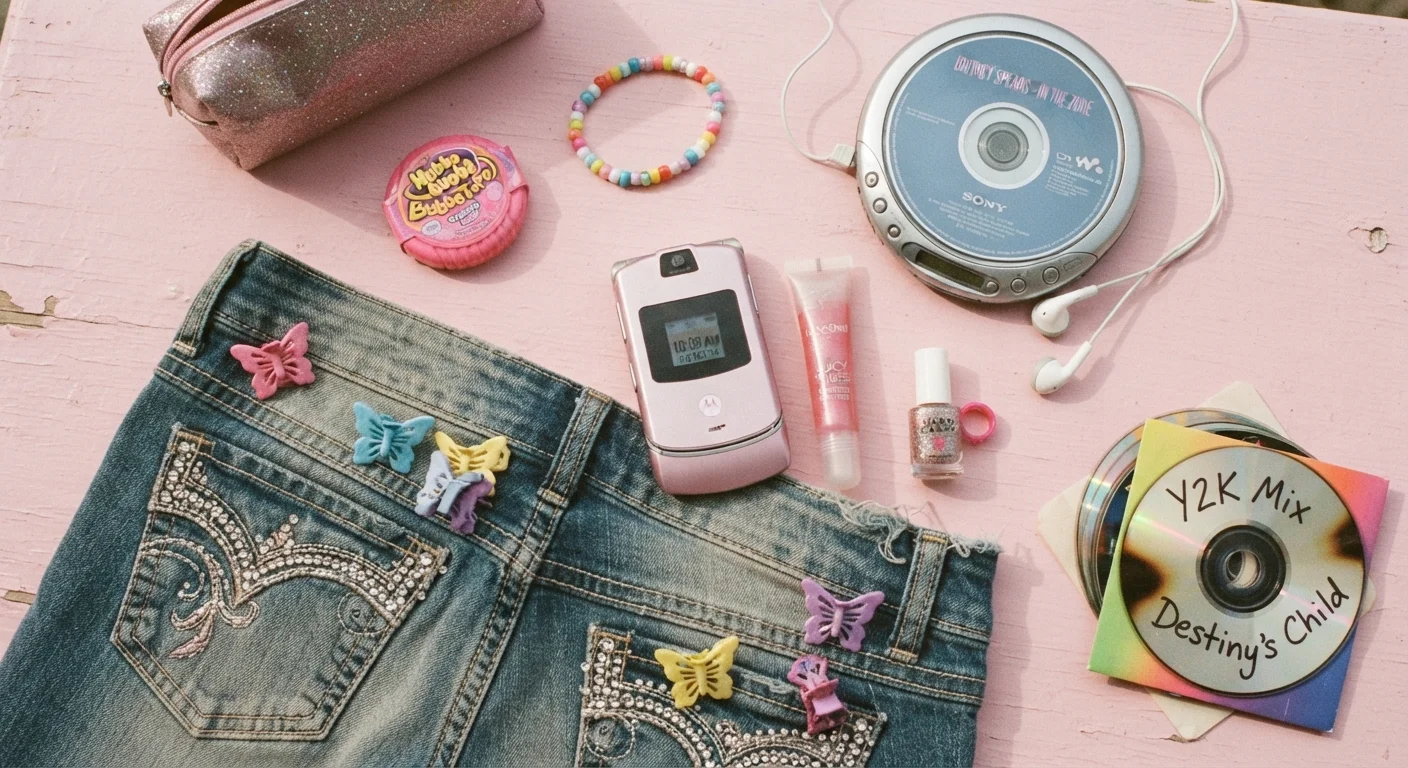
Photo: faqsvault.com editorial
Key Takeaways
- Nostalgia tends to follow a roughly 20-to-30-year cycle, pulling each generation back to its formative years.
- The Y2K revival is driven largely by Gen Z, who are romanticizing an era they experienced only as young children.
- Social media compresses and amplifies nostalgic cycles, making revivals faster and more visible than ever before.
- Nostalgia serves a psychological function — it provides comfort, identity, and a sense of continuity during uncertain times.
- Not all nostalgic revivals are equal; some reshape culture while others remain surface-level aesthetic trends.
The 20-Year Rule: Why We Always Look Back
There's a reliable rhythm to cultural memory. Ask someone in their mid-30s what music feels most emotionally loaded, and they'll often point to what was playing when they were 12 to 18. That's not coincidence — it reflects how human memory and identity formation work in tandem.
Psychologists identify adolescence and early adulthood as a 'reminiscence bump' — the period when experiences are encoded most vividly, partly because so many things are happening for the first time. First relationships, formative friendships, the music that defined a summer: these experiences carry unusual emotional weight. When people revisit the cultural artifacts of that era later in life, they're not just remembering things — they're reconnecting with a version of themselves.
This is why the roughly 20-to-30-year nostalgia cycle feels so consistent. The generation that was young during a particular era eventually becomes culturally influential — as creators, consumers, and tastemakers — and begins drawing on those formative references. The early 2000s aesthetic is flooding culture right now largely because the older edge of Gen Z and younger Millennials are now in their 20s and early 30s, exactly the window when cultural nostalgia tends to accelerate.
For more on how cultural trends move through society, see how trends travel from subculture to mainstream.
Y2K as a Case Study: Who's Actually Nostalgic?
The Y2K revival presents an interesting wrinkle in the standard nostalgia framework: many of its loudest enthusiasts were toddlers in 2002. Gen Z's embrace of butterfly clips, Von Dutch hats, and Destiny's Child deep cuts isn't straightforward personal memory — it's something more complicated and culturally revealing.
Researchers use the term postmemory to describe how younger generations engage emotionally with eras they didn't consciously experience, absorbing them through family stories, media archives, and cultural artifacts. For Gen Z, the early 2000s exists as a kind of mythology — pre-smartphone, pre-algorithm, seemingly simpler — even if that simplicity is partly constructed in retrospect.
There's also a practical dimension: the internet has made every cultural era equally accessible. A 20-year-old today can scroll through early-2000s music videos, reality TV clips, and fashion editorials as easily as current content. This flattening of the archive means nostalgia no longer requires personal memory as a prerequisite.
~20–30 yrs
Typical nostalgia cycle length across generations
Cultural researchers and sociologists have observed this recurring interval in fashion, music, and media revivals across the 20th and 21st centuries.
Higher mood
Effect of nostalgic reflection on wellbeing
Research by Constantine Sedikides and colleagues found that nostalgic reflection tends to increase feelings of social connectedness and positive affect.
2021–2022
Peak visibility of Y2K revival on social platforms
Google Trends and fashion industry reports identified this period as the high point of Y2K-related searches and content creation, coinciding with pandemic-era social disruption.
The Y2K revival is also entangled with broader aesthetic movements. If you're curious how other visual subcultures are shaping generational identity, our piece on Cottagecore, Dark Academia, and Goblincore offers useful context.
The Psychology of Longing: What Nostalgia Actually Does for Us
Nostalgia tends to spike during periods of social uncertainty or personal stress — a pattern researchers have documented across multiple cultures. When the present feels unstable, the past offers a psychologically safe harbor: a place where outcomes are already known, where identity felt clearer, where the world seemed more navigable.
Studies in social psychology, including work by Constantine Sedikides and colleagues at the University of Southampton, have found that nostalgic reflection tends to increase feelings of social connectedness and self-continuity. In other words, looking back helps people feel less alone and more coherent as individuals. This isn't passive sentiment — it's a functional emotional tool.
The pandemic years appear to have turbocharged this dynamic. With ordinary social life disrupted and the future feeling genuinely uncertain, many people — particularly younger adults who were navigating significant life transitions — turned toward cultural comfort. It's no coincidence that Y2K nostalgia peaked in visibility around 2021 and 2022.
The commercial and psychological machinery behind pop culture's backward gaze is worth understanding on its own terms — nostalgia isn't just felt; it's actively produced and marketed.
Social Media's Role: Accelerating the Cycle
Traditional nostalgia cycles operated on generational timescales. Today, platforms like TikTok can surface, amplify, and exhaust a cultural reference within months. This creates what some cultural observers call accelerated nostalgia — a compressed version of the cycle where trends from just five or ten years ago are already being treated with the warmth typically reserved for memories twice as distant.
The algorithm doesn't distinguish between authentic personal memory and curated aesthetic appeal. A video of someone assembling an early-2000s-inspired outfit can reach millions of viewers who have no lived connection to the era, creating a shared cultural moment built on image rather than experience. This isn't inherently inauthentic — culture has always been transmitted and transformed across generations — but it does change the texture of what nostalgia means.
It also raises interesting questions about what endures. Not every nostalgic revival reshapes culture in lasting ways — some remain decorative, a seasonal aesthetic rather than a genuine shift in values or sensibility. Understanding the difference matters. Our breakdown of viral versus cultural moments explores exactly this distinction.
What the Pull of the Recent Past Tells Us About the Present
Every wave of nostalgia is, at its core, a statement about now. The specific era being romanticized, and what elements of it are emphasized, reveals what people feel is missing or threatened in their current moment. The early 2000s, in the current revival, tend to be remembered for their apparent guilelessness — a time before the constant performance of social media, before algorithmic identity, before the anxieties that define digital life.
Whether that memory is accurate is almost beside the point. Nostalgia has never been strictly historical — it's emotional and selective by nature. What matters is what the longing reveals: a desire for authenticity, for simplicity, for social connection that doesn't feel mediated by metrics.
Understanding nostalgia as a cultural force rather than just a personal feeling opens up richer conversations about identity, belonging, and how societies process change. The Y2K revival isn't really about cargo pants and frosted tips — it's about a generation working out who they are and what they value, using the past as raw material. That's a deeply human project, and one that will keep cycling forward, generation after generation.
For more on how technology quietly reshaped the very era now being romanticized, see the tech trends that rewired daily life.
Frequently Asked Questions
All published content on this website is for informational and educational purposes only and should not be taken as professional advice. We recommend that readers seek expert opinion before making any decisions. The website is not responsible for any actions taken based on the information provided on this website. We are not liable for any inaccuracies, modifications, or omissions in information. Moreover, external links or third-party content are provided for convenience; we are not liable for their correctness. Users are advised to verify every piece of information before they use it for any purpose.