
Nostalgia as an Engine: Why Pop Culture Keeps Recycling the Past

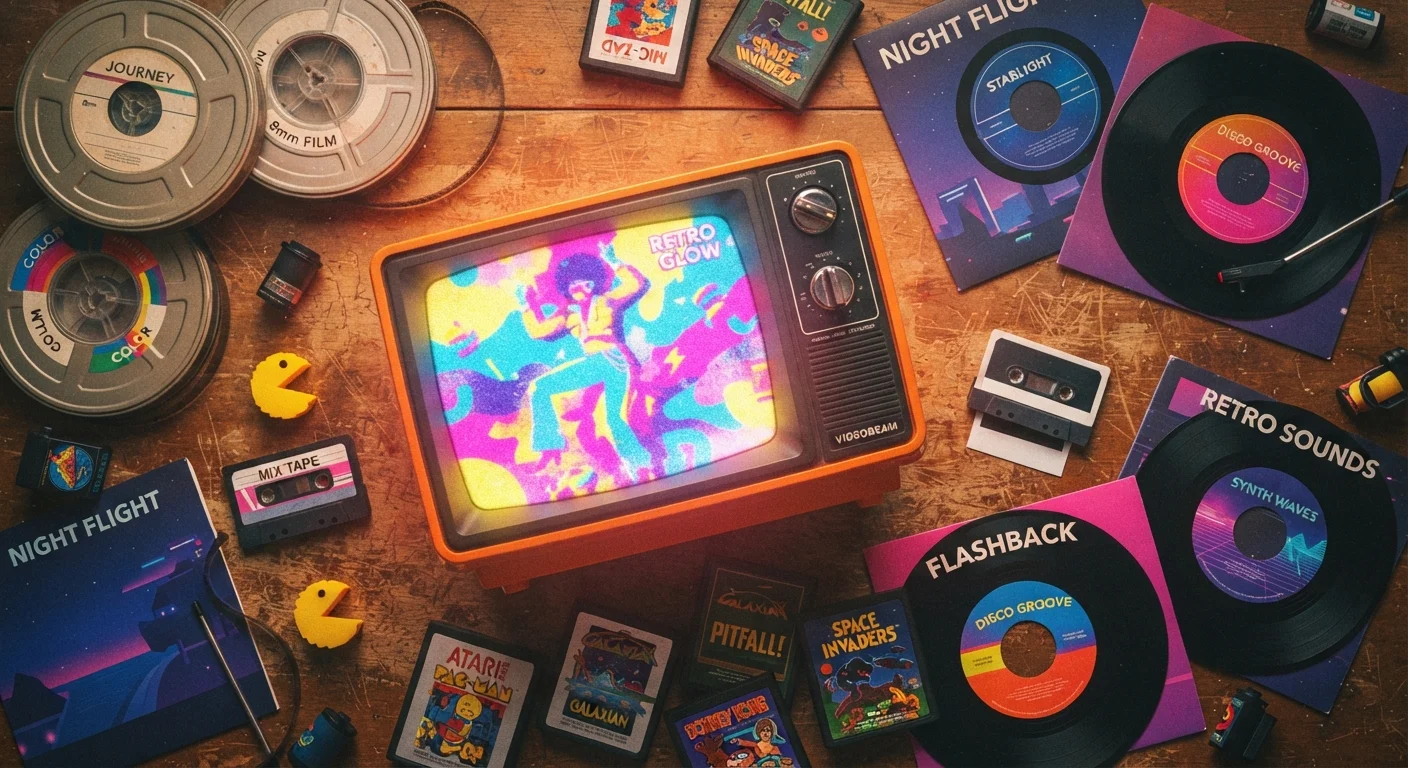
Photo: faqsvault.com editorial
Key Takeaways
- Nostalgia reduces perceived risk for studios and streaming platforms investing in content.
- Psychological research links nostalgic feelings to stronger emotional engagement and social bonding.
- Generational cycles mean that roughly every 20–30 years, a cultural era gets revived by a new audience.
- Retro aesthetics can function as cultural critique, not just commercial comfort.
- Audience fatigue with reboots is real, yet demand for them continues — a tension the industry actively navigates.
The Feeling Is Real — and the Industry Knows It
Before nostalgia became a business strategy, it was simply a feeling. The word itself has clinical origins — coined in the 17th century to describe the distress soldiers felt when separated from home. Today, psychologists understand nostalgia as a largely positive emotion: it strengthens social bonds, boosts mood, and anchors identity. It's the mental equivalent of a warm blanket on a cold night.
Entertainment executives figured this out a long time ago. When you watch a reboot of a show you loved at age 12, you're not just watching a TV show — you're chemically revisiting a version of yourself. That emotional potency is extraordinarily valuable. It's also, conveniently, highly marketable.
For studios and streaming platforms operating in an increasingly fragmented attention economy, nostalgia functions as a built-in audience guarantee. Launching a continuation of a beloved franchise is simply less financially risky than green-lighting something no one has ever heard of. The calculus is blunt but effective: familiar titles travel better across social media, convert casual browsers into committed subscribers, and generate the kind of cultural conversation that sustains a show beyond its premiere weekend.
“Nostalgia is a powerful force — it doesn't just make us feel good; it makes us feel like we belong. That's why it's so effective as a cultural and commercial tool. It's selling identity, not just content.”
— Clay Routledge, Behavioral scientist and researcher specializing in nostalgia psychology
How Generational Cycles Power the Revival Machine
There's a widely observed pattern in how cultural nostalgia moves: whatever was popular when you were roughly 12 to 18 years old tends to resurface as cultural currency about 20 to 30 years later. This isn't accidental. That adolescent window is when we form our deepest emotional attachments to music, film, and TV — and when those kids grow up, gain disposable income, and reach positions of creative or purchasing power, they pull the culture back toward what shaped them.
This is why the 1980s dominated so much of 2010s pop culture, why Y2K aesthetics flooded fashion and music in the early 2020s, and why there's every reason to expect a full-blown 2000s nostalgia wave to intensify over the next several years. For a deeper look at the sociology behind this pattern, the Y2K revival and the pull of the recent past is worth exploring in full.
What's different now is the speed. Social media compresses these cycles significantly. Trends that once took a decade to resurface can re-emerge in a matter of months when enough creators on short-form video platforms start posting affectionately about something they grew up with. The nostalgia engine hasn't just been maintained — it's been turbocharged.
40+
Major franchise reboots released in a single recent year
Industry analysts tracking theatrical and streaming releases have noted that franchise sequels, reboots, and IP adaptations now account for the majority of large-budget entertainment spending.
~25 years
Average nostalgia cycle length in pop culture
Cultural historians and media researchers have broadly documented a generational pattern where popular aesthetics resurface roughly every two to three decades as the original audience reaches new life stages.
79%
Adults who say nostalgia makes them feel connected to others
A widely cited study published in the journal Personality and Social Psychology Bulletin found that nostalgia reliably triggers feelings of social connectedness and belonging.
Nostalgia With a Purpose — and Without One
Not every revival is created equal, and it's worth separating nostalgia as a commercial shortcut from nostalgia as genuine creative foundation. Some of the most celebrated recent projects use a familiar property to ask genuinely new questions. A beloved franchise can be the vehicle for updated representation, social critique, or genre subversion — and familiarity with the original can actually heighten the impact of those departures.
On the other end of the spectrum, nostalgia is sometimes deployed as pure packaging. The legacy IP exists to create comfort; the content beneath it is interchangeable. Audiences have gotten reasonably good at telling the difference, even if they keep showing up regardless. This tension between appreciation and exhaustion is explored further in our piece on what drives trend fatigue in the streaming era.
It's also worth noting that nostalgia doesn't always point backward uncritically. Some of the most interesting contemporary work uses retro aesthetics to interrogate the era they reference — treating the past not as a paradise to be recaptured but as a lens for examining what we've changed (and what we haven't). That's nostalgia with some intellectual bite.
What Keeps the Cycle Going
If audiences are fatigued by reboots and sequels, why doesn't the industry simply stop making them? The answer is embedded in the economics. Original IP carries enormous upfront risk — building an audience from scratch, in a saturated content environment, is genuinely difficult. Familiar properties arrive pre-loaded with fan communities, social media presence, and media coverage that original work has to earn slowly and expensively.
There's also the platform dynamic to consider. Streaming services are essentially fighting for catalog depth and appointment viewing simultaneously. A nostalgia property serves both — it fills the library and generates event-level buzz on launch. The mathematics of subscriber retention make beloved revivals extremely attractive even when critics are tired of them.
The interesting question — and one the industry is quietly grappling with — is what happens when the nostalgia well runs dry. There are only so many properties worth reviving, and diminishing returns do eventually set in. Understanding how trends move from subculture to mainstream helps explain why some revivals land with cultural force while others fizzle quietly. The pop culture that survives its own recycling tends to find something genuinely new to say — even while wearing a familiar face. And that, when it works, is less nostalgia for its own sake and more a conversation between past and present that neither generation could have alone.
Frequently Asked Questions
All published content on this website is for informational and educational purposes only and should not be taken as professional advice. We recommend that readers seek expert opinion before making any decisions. The website is not responsible for any actions taken based on the information provided on this website. We are not liable for any inaccuracies, modifications, or omissions in information. Moreover, external links or third-party content are provided for convenience; we are not liable for their correctness. Users are advised to verify every piece of information before they use it for any purpose.