
Whole Foods vs. Processed Foods: What the Difference Really Means for Your Diet

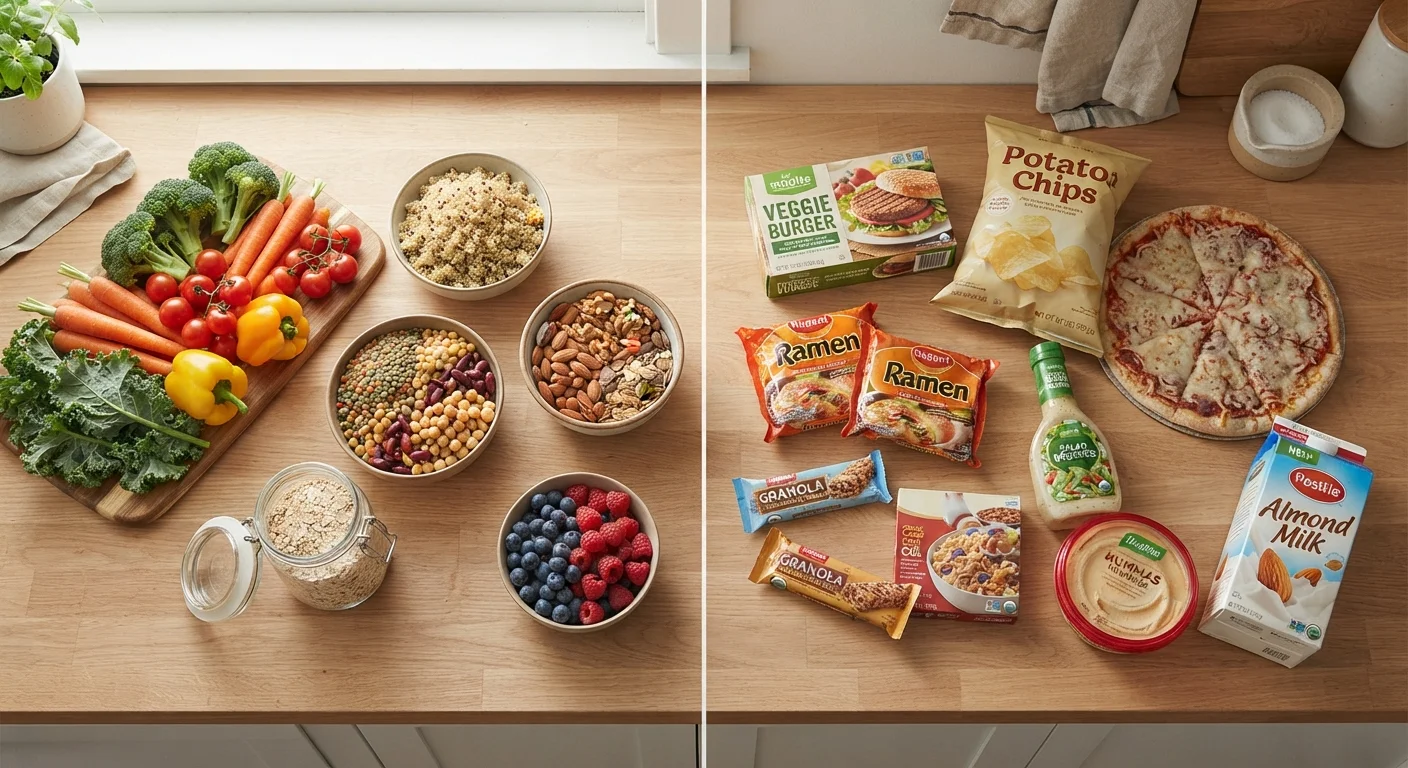
Photo: faqsvault.com editorial
Key Takeaways
- Processing exists on a spectrum — canned beans and packaged cookies are not equally processed.
- Whole foods tend to retain more fiber, vitamins, and phytonutrients lost during heavy manufacturing.
- Some minimally processed foods, like frozen vegetables or plain yogurt, offer genuine nutritional value.
- Ultra-processed foods are linked in research to higher intake of added sugars, sodium, and unhealthy fats.
- Flexible, mostly whole-food eating patterns are more sustainable than rigid all-or-nothing approaches.
- Reading nutrition labels helps you navigate processed options more confidently day to day.
What Do These Terms Actually Mean?
"Whole foods" and "processed foods" are two of the most frequently used phrases in nutrition conversations — and two of the most misunderstood. A whole food is generally one that has been altered as little as possible from its natural state: think a raw apple, a handful of walnuts, or dried lentils. These foods arrive on your plate close to how they exist in nature, with their original fiber, vitamins, and phytonutrients (beneficial plant compounds) largely intact.
Processing, on the other hand, is not a single thing. It exists on a continuum. Washing and bagging spinach is processing. So is turning corn into a shelf-stable snack product with artificial flavors and fifteen added ingredients. Treating those two scenarios as equivalent would be misleading.
Nutrition researchers commonly use a classification system called NOVA, which groups foods into four categories based on the extent and purpose of processing — from unprocessed or minimally processed foods (fresh produce, plain yogurt, eggs) through to ultra-processed foods, which are industrially formulated products containing additives rarely found in a home kitchen. Understanding this spectrum is more useful than a simple binary.
| Criterion | Whole Foods | Processed Foods |
|---|---|---|
| Definition | Minimally altered from natural state | Altered by industrial or culinary methods |
| Fiber retention | Generally intact | Often reduced in heavy processing |
| Added sugars & sodium | Naturally occurring, typically low | Frequently added, especially in ultra-processed |
| Convenience | Varies; fresh produce needs prep | High; shelf-stable, ready to eat |
| Nutrient density | Typically higher per calorie | Varies widely by product type |
| Cost | Varies; staples like legumes are affordable | Varies; ultra-processed can be inexpensive |
| Examples | Oats, apples, lentils, eggs, walnuts | Canned beans, frozen veg, packaged snacks |
What Processing Does — and Doesn't — Take Away
Heavy processing can strip foods of naturally occurring fiber and micronutrients. Refining whole wheat into white flour, for instance, removes the bran and germ — the parts of the grain richest in fiber, B vitamins, and minerals. Similarly, juicing a fruit extracts its sugar while leaving behind most of the fiber that would otherwise slow its absorption.
That said, processing is not always destructive. Freezing vegetables shortly after harvest can preserve nutrients effectively — often better than fresh produce that has spent days in transit. Fermentation creates beneficial compounds not found in the raw ingredient. Fortification adds nutrients like iron and folate to foods where they'd otherwise be absent. The question is always what a specific process adds or removes, not whether any processing occurred at all.
Ultra-processed foods are where the evidence becomes most consistent. Research published in journals such as The BMJ and JAMA Internal Medicine has associated high intake of ultra-processed foods with greater consumption of added sugars, saturated fats, and sodium — nutrients most dietary guidelines suggest limiting. These associations don't mean any single ultra-processed food causes harm, but they do suggest that eating patterns dominated by them tend to displace more nutrient-dense options.
Practical Ways to Navigate the Spectrum Every Day
Rather than sorting foods into good or bad categories, a more useful framing is asking: how close is this to its original form, and what has been added or removed? A can of chickpeas in water is minimally processed and nutritionally valuable. A flavored chickpea snack with added oils, salt, and sweeteners sits further along the spectrum — not necessarily harmful in occasional amounts, but different in nutritional profile.
Some practical anchors that nutrition educators often suggest:
- Build meals around ingredients, not products. Grains, legumes, vegetables, fruits, eggs, and plain dairy are all strong foundations.
- Check the ingredient list as much as the numbers. A short list of recognizable ingredients is generally a good sign. Our guide to reading nutrition labels can help you decode what you find there.
- Embrace minimally processed convenience. Frozen vegetables, canned fish, plain oats, and unsweetened nut butters make whole-food eating more realistic on busy days.
- Consider the overall pattern, not individual foods. Dietary patterns studied in populations around the world — explored in depth in research on global eating patterns — suggest that consistency and variety matter more than occasional indulgences.
If you eat mostly plant-based foods, it's also worth knowing that whole-food plant sources and processed plant-based alternatives can differ significantly in nutrients like protein, iron, and B12. Plant-based eating nutritional considerations covers this in more detail.
This article is for general informational and educational purposes only and does not constitute medical or dietary advice. Please consult a qualified healthcare professional or registered dietitian for guidance specific to your health needs.
All published content on this website is for informational and educational purposes only and should not be taken as professional advice. We recommend that readers seek expert opinion before making any decisions. The website is not responsible for any actions taken based on the information provided on this website. We are not liable for any inaccuracies, modifications, or omissions in information. Moreover, external links or third-party content are provided for convenience; we are not liable for their correctness. Users are advised to verify every piece of information before they use it for any purpose.