
Questions Worth Asking Before Any Contractor Sets Foot in Your Home

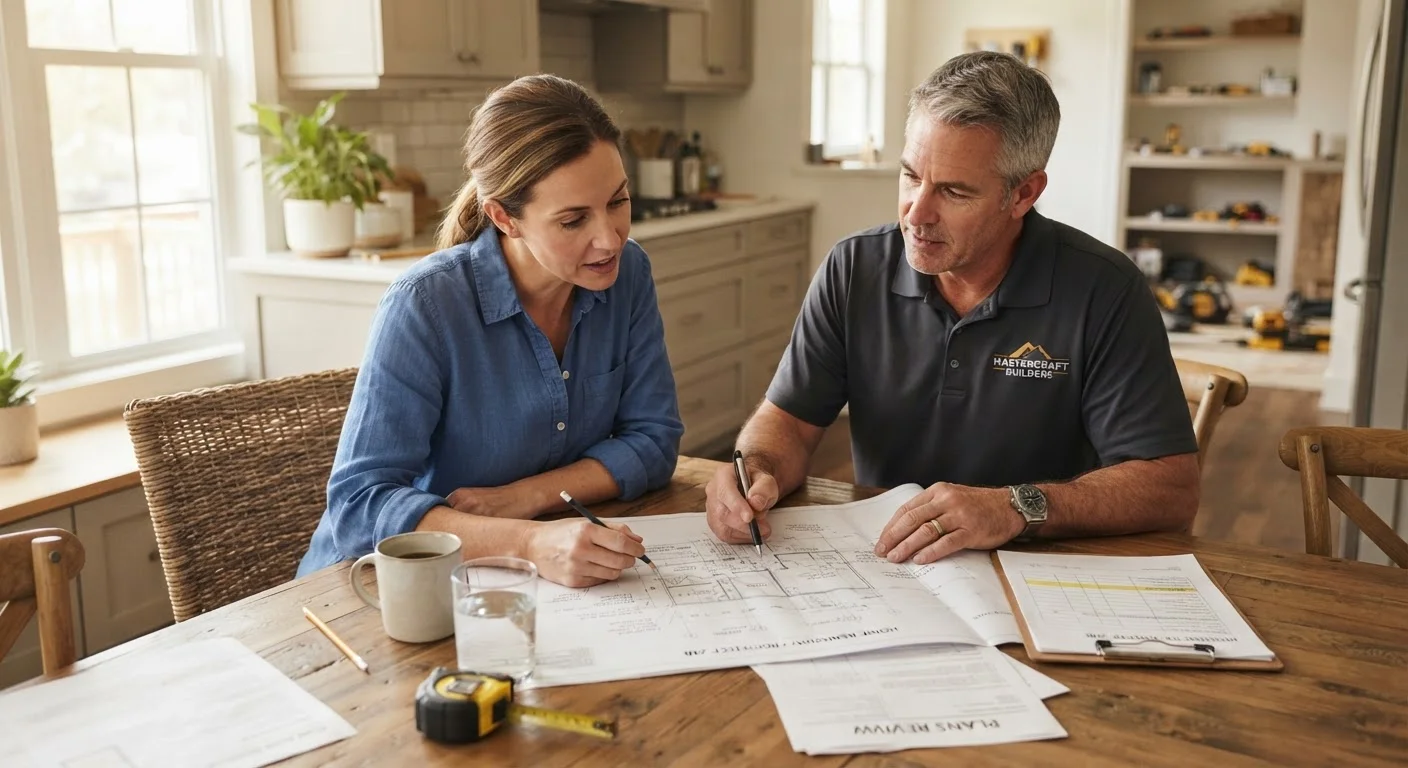
Photo: faqsvault.com editorial
Key Takeaways
- Always verify a contractor's license, insurance, and bond status before work begins.
- A written contract with detailed scope, timeline, and payment terms is non-negotiable.
- Confirm who is responsible for permits — and make sure they're actually pulled before work starts.
- Ask specifically about subcontractors, since they may not share the same vetting as your primary hire.
- Request references from recent, comparable projects — then actually call them.
Why the Questions You Ask Before Work Starts Matter Most
Hiring a contractor is one of the most consequential decisions a homeowner makes. Whether it's a bathroom remodel, a new roof, or a basement finish, the work will affect your home's value, safety, and livability for years. Yet many homeowners spend more time researching a new appliance than vetting the person they're handing tens of thousands of dollars to.
The pre-hire conversation isn't just about comparing prices — it's about establishing accountability, understanding legal exposure, and making sure the person you're trusting has the credentials and processes to do the job right. If you're newer to navigating improvement projects, our grounded starting point for first-time projects covers the foundational thinking you'll want before even requesting quotes.
Below are the key questions worth asking every contractor before a single tool enters your home — and why each one matters.
Are you licensed for this type of work in this state?
Licensing requirements vary significantly by state and by trade. An electrician in California faces different requirements than one in Texas, and a general contractor may hold a state license that doesn't cover specialized plumbing or HVAC work. Ask directly which license applies to your project, and ask to see the license number — then verify it independently through your state's contractor licensing board website.
Working with an unlicensed contractor can void your homeowner's insurance coverage for work-related damages and leave you with no formal recourse if something goes wrong. This is a non-starter question, not a nicety.
Verify the license number directly through your state's contractor licensing board — never rely on the contractor's word alone.
Do you carry liability insurance and workers' compensation?
Liability insurance covers damage the contractor causes to your property. Workers' compensation covers injuries sustained by workers on your job site. Without both, you could be legally liable for an injured worker's medical costs or left paying out of pocket for property damage that occurred during the project.
Ask for certificates of insurance — not just a verbal confirmation — and verify that the policy is current. Policies can lapse between when a contractor first showed you proof and when work begins. A quick call to the insurer to confirm active coverage is a reasonable step for larger projects.
A lapsed insurance policy offers zero protection — always verify coverage is active before work begins.
Who exactly will be doing the work?
Many contractors subcontract portions of a job, sometimes the majority of it. This isn't inherently problematic, but it does mean the person you interviewed and vetted may not be the one swinging the hammer. Ask which parts of the project will be handled by employees versus subcontractors, and ask whether those subcontractors are licensed and insured as well.
You have every right to know who will be in your home. If a contractor is vague or dismissive about this question, that's worth noting before you proceed.
The contractor you hire may not be the one doing the work — ask specifically about subcontractors and their credentials.
Who is responsible for pulling permits?
For many projects — structural changes, electrical upgrades, new plumbing, room additions — permits are legally required. Some contractors prefer to skip this step because inspections slow down the work. But unpermitted work can create real problems: it may not meet code, it can complicate a future home sale, and your insurance company may not cover losses tied to unpermitted modifications.
Make it explicit in the contract that the contractor is responsible for obtaining all required permits and scheduling inspections. Never assume permits are being handled unless it's written down. For more on why this matters, see what permits actually cover and when you need one.
Unpermitted work can complicate a future home sale and void relevant insurance coverage — get permit responsibility in writing.
Can you provide references from similar recent projects?
A portfolio of photos is useful, but a conversation with a past client is invaluable. Ask for references specifically from projects similar in scope and type to yours — completed within the last two years ideally. Then call those references and ask targeted questions: Was the project completed on time? Did the final cost match the estimate? How did the contractor handle problems that came up mid-project?
A contractor who hesitates to provide references, or provides only one, should prompt more scrutiny. A professional with a strong track record will have no trouble connecting you with satisfied clients.
Always call references directly and ask how the contractor handled unexpected problems — that's where character shows.
What does your payment schedule look like?
How a contractor structures payment reveals a lot about their financial stability and professional practices. A reasonable payment schedule is typically tied to project milestones — an initial deposit, payments at defined stages, and a final payment on satisfactory completion. Be wary of any contractor who demands a large upfront sum (often more than 10–30% is a red flag, though norms vary by trade and project size) or who wants full payment before work is done.
Payment terms should be explicitly spelled out in the contract. This protects you from a contractor who disappears mid-project and gives you leverage to withhold final payment if the work isn't completed to the agreed standard.
Milestone-based payment schedules protect you from contractors who collect upfront and underdeliver.
What's the realistic timeline, and what might cause delays?
Asking for a timeline isn't just about managing your own schedule — it's a way to gauge how organized and experienced the contractor is. A professional should be able to give you a realistic start date, an estimated completion range, and a candid list of factors that could push that timeline: material lead times, weather, permit inspection delays, or discoveries once walls are opened.
A contractor who promises an unrealistically fast timeline to win the job, or who can't articulate potential delays, may be setting you up for a frustrating experience. Build in reasonable buffer time, and make sure the contract includes language around how schedule changes are communicated.
A contractor who can articulate what might cause delays is showing you they've thought the project through carefully.
Putting It All Together Before You Sign
Every answer a contractor gives you verbally should eventually appear in writing. A detailed contract protects both parties and gives you a clear benchmark if disputes arise. Ambiguity in a contract almost always benefits the contractor, not the homeowner — so push for specificity on scope, materials, timelines, and payment milestones. Our guide on reading a builder's quote without getting caught off guard walks you through what to look for in the numbers before you sign.
It's also worth understanding the permit landscape. Some contractors will attempt work without pulling the required permits to save time or avoid inspection — a shortcut that can leave you with unpermitted work that's difficult to sell around and costly to retroactively address. For a clear breakdown of which projects trigger permit requirements and what happens if they're skipped, see what building permits actually cover.
None of this is meant to make the process feel adversarial. Most contractors are skilled professionals who want the job to go smoothly. Asking thorough questions signals that you're an informed homeowner — and that tends to bring out the best in the people you hire.
Get Everything in Writing Before Work Starts
All published content on this website is for informational and educational purposes only and should not be taken as professional advice. We recommend that readers seek expert opinion before making any decisions. The website is not responsible for any actions taken based on the information provided on this website. We are not liable for any inaccuracies, modifications, or omissions in information. Moreover, external links or third-party content are provided for convenience; we are not liable for their correctness. Users are advised to verify every piece of information before they use it for any purpose.