
Cinematic Universes: Why Building One Is Harder Than It Looks

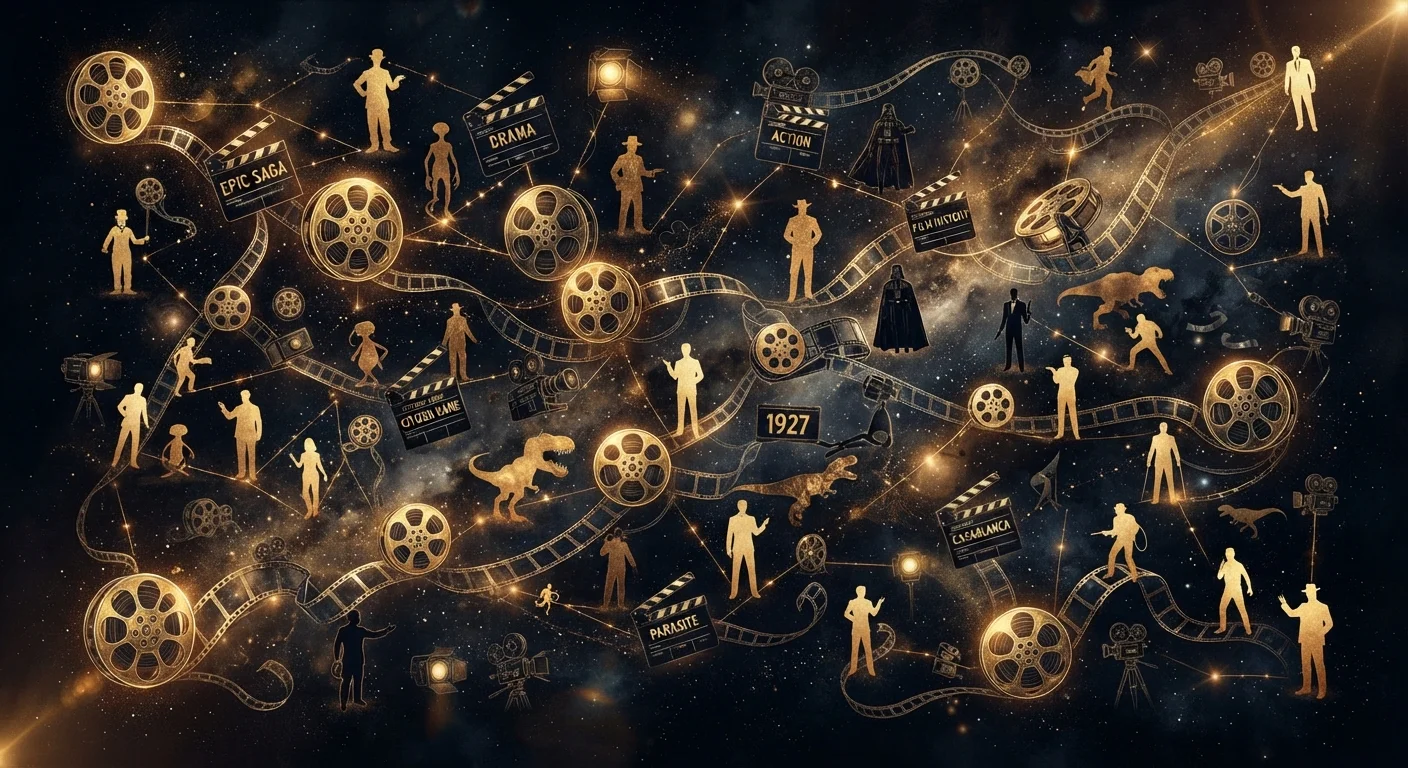
Photo: faqsvault.com editorial
Key Takeaways
- A cinematic universe requires a consistent, documented story bible that every creative team must follow.
- Audience fatigue is a real risk when studios prioritize volume of releases over quality storytelling.
- The most successful universes earn viewer investment by making standalone films genuinely satisfying on their own.
- Shared continuity demands careful long-term planning — retrofitting lore after the fact rarely works cleanly.
- Creative tension between filmmaker vision and franchise obligations is one of the hardest challenges to manage.
The Appeal of a Shared World
There's something deeply satisfying about the moment two characters from different stories unexpectedly inhabit the same scene. It delivers a jolt of recognition — the thrill of a world that feels larger than any one film. That pleasure is at the heart of why studios pursue cinematic universes so aggressively, and why audiences have, at various points, shown up in enormous numbers to watch them unfold.
The concept taps into something storytellers have understood for centuries: expansive, interconnected worlds invite deeper immersion. When the fictional world has its own history, geography, and rules that persist across stories, viewers become invested not just in characters but in the place those characters inhabit. Done well, each new entry feels like a return to somewhere familiar rather than a fresh start from scratch.
For studios, the business logic is obvious. A successfully established universe means built-in audiences, marketable characters, and a content roadmap that can span decades. But the commercial appeal of the model has also contributed to its most common failure: launching the infrastructure before the storytelling foundation is solid.
What Actually Has to Work Behind the Scenes
The invisible architecture behind a functioning cinematic universe is staggering in scope. At minimum, it requires a living, detailed story bible — a master document tracking every character's arc, every established rule of the world, and every event in the shared timeline. Without it, contradictions creep in across productions, eroding the very coherence that makes the universe worthwhile.
Creative oversight is equally essential. Someone — or a small team — has to hold the long view across every film and series being developed simultaneously. This is harder than it sounds. Different directors bring different sensibilities, different writers interpret characters in different ways, and production schedules rarely align neatly. Maintaining a coherent creative voice while accommodating genuine filmmaking talent is one of the central tensions the model creates.
The Story Bible Is Non-Negotiable
Then there's the audience side of the equation. A cinematic universe only functions if viewers are willing to follow it across multiple entries. That loyalty is earned incrementally, film by film, and it evaporates faster than it accumulates. If a string of entries feels obligatory rather than exciting — connective tissue rather than compelling stories — audiences stop showing up.
For a deeper look at how filmmaking craft shapes what we see on screen, the language of film is worth understanding — it reframes how you evaluate what's working and what isn't in any given entry.
The Standalone Problem: Every Film Has to Work Alone
The most underappreciated rule of successful shared universes is that every individual entry must function as a satisfying film in its own right. This sounds straightforward, but it runs directly against the commercial instinct to use each film as a trailer for the next three.
When a film's climax exists primarily to set up a future sequel, or when its most interesting plot threads are left unresolved to pay off elsewhere, it fails the audience who came to see that story. And it particularly alienates casual viewers — the ones who don't track release schedules or catch every streaming spin-off. A universe that requires extensive homework to appreciate is one that's slowly shrinking its own audience.
The strongest entries in any shared franchise tend to be the ones where filmmakers were given enough creative latitude to tell a complete, emotionally grounded story. The connective tissue to the wider universe works best when it feels organic rather than mandated.
Why Audience Fatigue Is the Real Long-Term Threat
Frequency is a double-edged instrument. Release too little and momentum fades; release too much and audiences struggle to stay emotionally invested across dozens of entries. Franchise fatigue — a genuine, measurable drop in audience enthusiasm after prolonged exposure to a franchise — has become one of the most discussed phenomena in contemporary film culture.
It's not simply about quantity. Audiences can sustain interest in prolific universes when quality remains high and when each entry feels like it matters. The problem arises when studios treat the universe as an assembly line: when entries feel interchangeable in tone, when stakes feel artificial because audiences know key characters are never truly at risk, and when the shared world stops surprising anyone.
Whether you're watching on a streaming platform or in a theater, the question of what each format does best is worth considering — streaming versus cinema shapes how universe entries land with different audiences in meaningful ways.
Ultimately, a cinematic universe is only as strong as the emotional investment it sustains. That investment has to be renewed, not assumed. The franchises that manage it long-term are the ones that treat each new film as an opportunity to earn their audience all over again — and if you want to develop sharper instincts for evaluating what's working, reflective viewing habits can genuinely transform how you engage with franchise storytelling.
Frequently Asked Questions
All published content on this website is for informational and educational purposes only and should not be taken as professional advice. We recommend that readers seek expert opinion before making any decisions. The website is not responsible for any actions taken based on the information provided on this website. We are not liable for any inaccuracies, modifications, or omissions in information. Moreover, external links or third-party content are provided for convenience; we are not liable for their correctness. Users are advised to verify every piece of information before they use it for any purpose.